 Polski

Mouse information – care, housing, nutrition, behavior & taming








Mouse information – care, housing, nutrition & selection guide
 Mice are small, smart, and active pets that you'll especially appreciate with their natural behavior: climbing, foraging, nest-building, and socializing. This comprehensive information page explains how to keep mice responsibly: group composition, habitat and furnishings, bedding and nest, nutrition, taming/handling, and health. DRD Rodent Shop® has been a specialist since 2011 and helps you choose based on well-being, safety, and a logically designed habitat.
Directly to the Mouse shop:Mouse (all) · Mouse cages & enclosures · Mouse bedding · Mouse food
Quick to:
Mouse checklist (quick, good basic)
- ✓ Keep mice social : choose a suitable group composition and offer multiple hiding places/feeding points.
- ✓ Choose a spacious, escape-proof enclosure with plenty of floor space and climbing opportunities.
- ✓ Use dust-free, diggable ground cover and provide plenty of nesting material for nest building.
- ✓ Provide tunnels, houses, platforms/ladders and daily enrichment (foraging/gnawing material).
- ✓ Provide complete mouse food and add controlled variety (herbs/seeds/snacks, appropriate for the species).
- ✓ Check daily: food/drink , activity, coat/eyes/nose and the nest; if in doubt, consult a vet sooner rather than later.
✓ Social & safe
Group tranquility is created by sufficient space, multiple hiding routes and "more than one" of everything (houses/food/water).
✓ Climbing + nest building
Mice combine climbing with nest building. A rich environment and good nesting material make all the difference in their well-being.
✓ Dust-free & fresh
Choose low-dust materials, prevent ammonia odor with smart cleaning (spot cleaning) and good ventilation.
Mouse species – information pages
Not every mouse is "the same." Species, temperament, and size determine what makes sense for housing, feeding, and furnishings. That's why DRD offers species-specific information pages:
- Colored Mouse – Information
- African Harvest Mouse – information
- Dormouse – information
- Spiny mouse – information
- Field mouse – information
- Vole – information
Behavior & keeping together
Mice are naturally active, curious, and social . You'll see plenty of natural behavior when they have enough space to climb, hide, and forage. A well-designed enclosure creates established routes, a nesting zone, and distinct "safe spots."
Group composition (practical): a group of females is often the most stable. Unneutered males together generally pose a risk of conflict. A neutered male in a suitable combination is sometimes possible, but seek proper advice (and prevent unwanted litters by always confirming the sexes).
Important for group peace: provide multiple feeding and watering points, at least one large sleeping house for "sleeping together," and additional hiding places so animals can avoid each other. Conflicts often arise from insufficient space, insufficient hiding routes, or a bottleneck in the layout.
Housing & furnishings
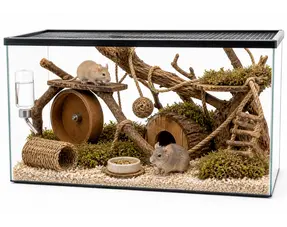
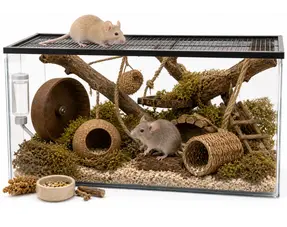
The best environment for mice is a habitat with ample floor space , good ventilation, and sufficient height for climbing. A terrarium or closed container with ventilation grilles facilitates deeper bedding , while a cage with fine bars requires extra attention to prevent escapes.
Guideline: Bigger is always better. Don't just consider "size," but also consider layout: routes, hiding places, and zones (nesting/food/activity). Avoid sharp edges, unstable stacks, and heavy items that could shift.
Practical starting points: Mouse cages & enclosures · Cage accessories · Platforms & ladders · Tunnels · Hammocks · Exercise wheels · Play & foraging
Water & feeding: Use sturdy bowls or suitable bottle/water bowls and check daily. Links: Food bowls · Drinking bottles & water bowls
Ground cover & nest
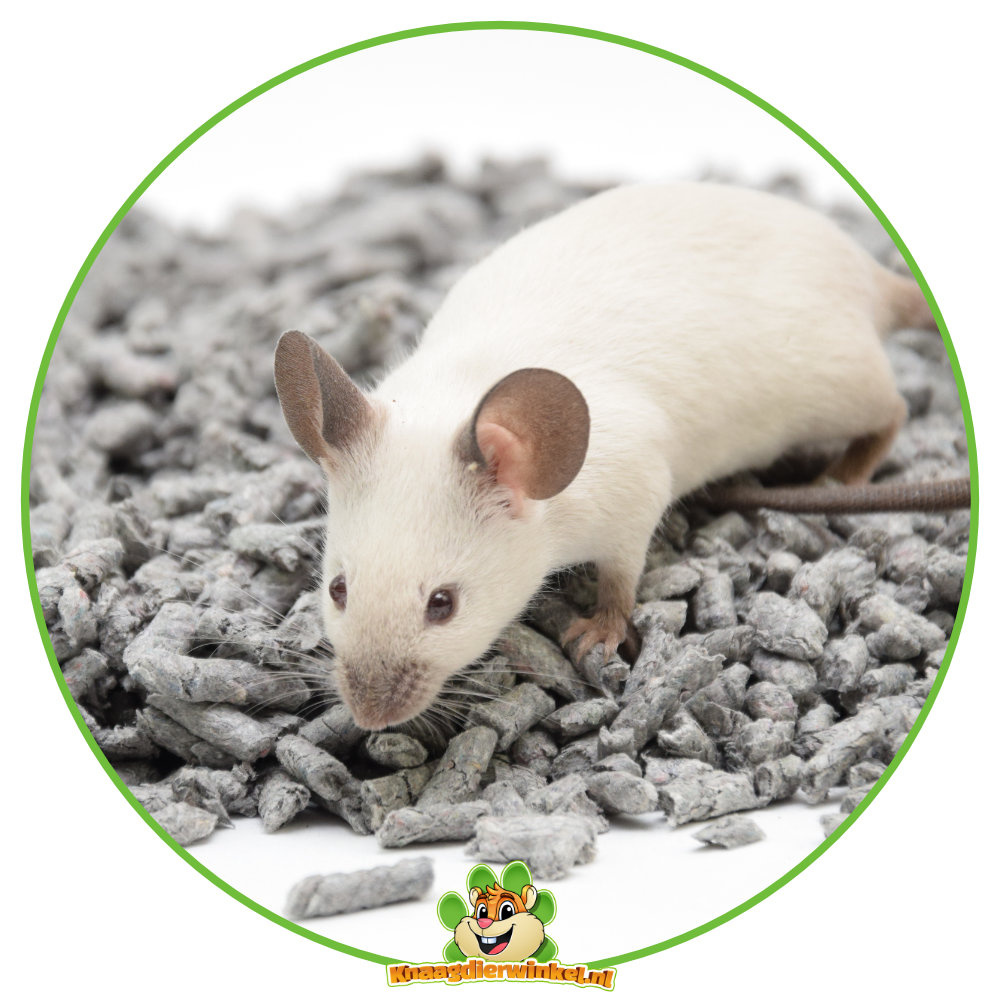
A good substrate should be dust-reducing , absorbent, and preferably somewhat diggable . Mice like to create burrows and "work zones," and a thick layer also helps prevent odor buildup. Pay extra attention to dust: mice can be sensitive to dusty substrates or strongly scented wood.
Choose your route here: Mouse ground cover · Mouse nesting material
Nesting material: Mice are excellent nest builders. Provide plenty of nesting material that is easy to work with. Avoid materials with long, strong fibers or "cotton wool" that can entangle their feet. A mix of soft paper-like material and natural fibers often works well.
Be smart about hygiene: it's better to frequently "spot clean" (wet areas, toilet area) than to sterilize everything every time. Leave a small amount of clean, dry nesting material so the group doesn't have to "start over" every time and peace is maintained.
Food & snacks
Mice are naturally opportunistic: seeds and plant parts often form the basis, with (depending on the species and situation) also a need for animal protein. Therefore, choose a complete mouse food as a base and add controlled variety. Give snacks in moderation: "small animal" means that small portions quickly become a lot.
Useful categories: Mouse food · Hay, herbs & seeds · Mouse snacks · Dried fruit & vegetables
Practical feeding tips: distribute some of the food throughout the enclosure (foraging) instead of putting it all in one bowl. This provides mental stimulation, exercise, and prevents boredom eating. Also use: Play & Forage .
Taming & Handling
Mice often become quite tame, but the pace varies by animal and species. Build trust through predictability: set times, gentle movements, and rewards. Mice are prey animals; "catching" them from above quickly becomes a bit nerve-wracking.
- Week 1: Get used to the smell/sound. Talk calmly around the enclosure, without immediately grabbing.
- Week 2: Reward with the hand (small snack) and place your hand quietly in the enclosure.
- Then: let the mice step up on their own (e.g., in a tube/hand), lift them briefly, and then immediately return safely. Build up slowly.
Safe handling: always support the body, avoid pinching, and never pull on the tail. For children: always supervise them, and it's better to observe/hand-feed them than to pick them up.
Handy for quiet travel or a visit to the vet: Mouse transport boxes .
Health & prevention
Mice often hide illness for long periods of time. Therefore, brief daily observations are important: appetite, drinking behavior, activity, breathing, fur, and feces. If in doubt, it's wise to consult a (rodent-savvy) veterinarian early on.
Pay extra attention to: sneezing/shortness of breath (environment/materials), runny eyes/nose, puffy eyes, rapid weight loss, reluctance to eat, diarrhea/wet bottom, wounds or bumps. Always ensure a draft-free location, fresh air (without a cold draft), and dust-free materials.
Practical categories: Mouse health · Mouse care
Read more (extra depth)
Want even more background information and practical examples? See also:
Useful Mouse Shopping Links (Most Relevant)
Accommodation & furnishings:
Mouse cages · Cage accessories · Houses · Tunnels · Platforms & ladders · Hammocks · Exercise wheels · Play & forage · Gnawing material
Bottom & nest:
Ground cover · Nesting material
Power supply:
Mouse food · Hay, herbs & seeds · Snacks · Dried fruit & vegetables
Practical:
Feeding bowls · Drinking bottles & water bowls · Transport boxes · Packages · Winter products
For general background information you can also consult the LICG .
FAQ – Mice
What is most important for “happy mice”?
A social group (suitable composition), sufficient space, dust-free ground cover, plenty of hiding routes and daily enrichment (climbing/foraging/nest building).
Why do mice sometimes smell quickly?
Urine marking is normal. A thick, absorbent base, good ventilation, and spot cleaning in wet areas will keep the litter much fresher than frequently replacing everything completely.
Do mice need a running wheel?
It's not always a "must," but many mice enjoy using a suitable wheel as an additional activity. Always choose a suitable size and safe construction. See: Mouse wheels .
How long does taming take on average?
This varies from animal to animal, but with a calm routine and rewards, you'll often see clear progress within a few weeks. Don't force it; trust is built through repetition and predictability.
Tip: Want to quickly choose from the selection? Start with the main Mice category:Mice .
✓ Carefully selected range for responsible farming
✓ Selection assistance and in-depth information from a specialist since 2011
✓ Practical tips for a dust-free, rich and safe interior
