Polski

Roborovski dwarf hamster – care, housing, nutrition & behavior
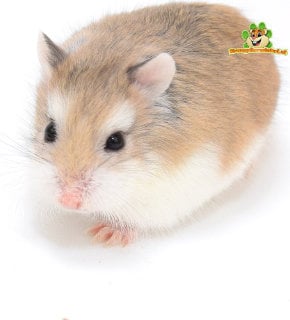 The Roborovski dwarf hamster is also called the desert dwarf hamster . This is fitting: it naturally inhabits (semi-)desert regions in countries such as Russia, China, Manchuria, and Mongolia. It is the smallest and often also the fastest dwarf hamster species. That's precisely why a safe, quiet, and logically designed habitat is important: plenty of clarity, fixed zones (nest, sand, digging, runs), and hiding routes. This information page explains how to keep Roborovski hamsters responsibly: from taming them (without pressure) to cage, sand area, bedding, diet, and health. DRD Rodent Shop® has been a specialist since 2011 and helps you make choices based on well-being and safety.
Head-body length: up to 7 cm
Weight: usually 25 – 40 grams (depending on build and condition)
Life expectancy: average 1.5 – 2 years
Directly to the Hamster shop: Hamster (all) · Hamster cages & enclosures · Sand & sand bath · Bedding · Hamster food · Exercise wheels
Quick to:
- Behavior & daily routine
- Taming & Handling (without stress)
- Keeping together: when is it possible and what should you pay attention to?
- Housing & hamster scaping (sand section + digging section)
- Temperature & humidity
- Houses, tunnels & shelters
- Running wheel: size & safety
- Ground cover & excavation layer
- Sand part & sand bath
- Nesting material & nest building
- Nutrition (incl. animal proteins)
- Gnawing material & teeth
- Health & prevention
- Useful shopping links
- FAQ
Roborovski checklist (quick, good foundation)
- ✓ Choose a spacious enclosure with plenty of floor surface (guideline: at least 80 x 40 cm; bigger is better).
- ✓ Create fixed zones: sand part (guideline: ± 1/3) + digging part with firm ground cover.
- ✓ Provide hiding places : several houses, tunnels and shelters so that your hamster does not have to be "out in the open".
- ✓ Install a safe running wheel (at least 20 cm) with a closed running surface.
- ✓ Feed complete hamster food and sprinkle some as forage (fun and natural).
- ✓ Train quietly: letting them choose works better than “catching” (especially with fast Roborovskis).
- ✓ Check daily: food/drink , activity, coat/skin and feces; if in doubt, consult a vet early.
✓ Sand zone + digging zone
Roborovskis are desert dwellers: a large sandy area and a sturdy digging area provide the most natural behavior.
✓ Quiet contact
These little speed devils are often tamed best through routine, rewards and “letting them mount on their own”.
✓ Skin & coat in balance
Regular sand baths help keep the coat fresh. Too little sand can lead to increased fat and skin problems.
Behavior & daily routine
Roborovski dwarf hamsters are crepuscular : you'll see the most activity in the evening and early morning. They often sleep in short bursts (cyclically), so you'll also see them awake regularly during the day. They are prey animals: a safe environment with plenty of shelter will encourage your hamster to come out and display natural behaviors like running, foraging, sand bathing, and digging.
Taming & Handling (without stress)
Roborovskis are often curious, but also incredibly fast . This can sometimes make picking them up more difficult, especially for children. The goal isn't necessarily for your hamster to enjoy being held in your hand for extended periods. Many Roborovski owners actually enjoy building rapport through watching, feeding, and short, calm interactions .
- Week 1: Rest and routine. Speak softly around the area and make movements slowly.
- Week 2: Reward with the hand. Place your hand still and let your hamster come sniff.
- Next: let your hamster step onto a tube or your hand. Lift briefly and low, and then put it back down gently.
With children: it's better to observe and hand-feed together than to handle them too much. If handling is necessary, always supervise and keep them low over a soft surface . Roborovskis have poor depth perception and can suddenly sprint away if startled.
Tip: Many Roborovski dwarf hamsters find dried amphipods (Gammarus) a nice, small training reward.
Keeping together: when is it possible and what should you pay attention to?
Roborovski dwarf hamsters are often described as "more sociable" and can sometimes be kept together. In practice, it's important to remember that this doesn't always go smoothly . Group dynamics can change, leading to sudden stress or conflict.
If you keep Roborovskis together, make it as easy as possible: plenty of space , multiple hiding places, and more than one of everything (houses, food, water, sand baths, and preferably several exercise wheels). If you see chasing, biting, or animals that are reluctant to eat or sleep, then separating them is the safest option.
Housing & hamster scaping (sand section + digging section)
A spacious enclosure gives Roborovskis the opportunity to display their natural behavior. A common guideline is a minimum of 80 x 40 cm (LICG), but bigger is always better—especially since ideally, with this species, you'll want to use a sand section and a digging section .
In the wild, Roborovskis build a relatively simple burrow system: often a straight tunnel with a nest chamber at the end. The burrow can be around 1 meter deep and is often 50 to 100 cm long. This explains why hamster scaping is so well-suited for hamsterscaping .
A terrarium is often a good choice because you can easily fit deep substrate and clearly define the sand area. Ensure good ventilation (preferably multiple vents). Shop: Hamster Cages & Enclosures .
Practical furnishing links: Cage accessories · Houses · Tunnels · Play & forage
Temperature & humidity
Roborovskis are desert dwellers and are less accustomed to high humidity. A practical guideline is often a temperature of around 20-24°C and a humidity below 70% . A "comfortable" humidity of around 55% is often mentioned for Roborovskis. Measurements can be made with a digital thermohygrometer .
Houses, tunnels & shelters
Roborovskis prefer to move from "safe spot to safe spot." Therefore, we recommend at least two houses (a sleeping house + an extra hiding place/storage area) and several tunnels/bridges. At least one house should be a bit larger to accommodate supplies.
Shop: Hamster houses · Hamster tunnels
Running wheel: size & safety
A running wheel is an important part of the setup. Roborovskis are real runners and often use a good wheel intensively. Always choose a wheel with a closed running surface and the right size.
Guideline: an exercise wheel for the Roborovski dwarf hamster preferably has a diameter of at least 20 cm and a closed running surface .
If you keep multiple animals together, it often helps to provide multiple exercise wheels to reduce tension. Shop: Hamster exercise wheels
Ground cover & excavation layer
In addition to the sand section, Roborovskis need a burrowing area with firm, diggable substrate. The ideal height for this burrowing area is often around 15-20 cm or more, depending on your enclosure. The goal: to create burrows that remain intact as much as possible.
Examples of diggable soils include humus , burrowed sand , and fiber-rich soils such as cotton and cotton . Many people make a stable mix, for example, cotton and hemp fiber or cotton and wood fiber . A combination of wood fiber , hemp fiber, and hay can also work well.
View all in: Hamster Bedding .
Sand part & sand bath
A generous sand area is especially important for Roborovskis. A practical division that often works well is about one-third sand and the rest a diggable substrate. Chinchilla sand is often used for the sand area. Keep in mind that you can't dig stable burrows in the sand itself; therefore, a digging area with substrate remains essential.
Sand has a degreasing and therefore cooling effect, but it is also drying. If you have skin problems (red patches, bald spots, scabs, wounds), you can temporarily remove the sand bath and consult your vet. Shop: Hamster sand & sand bath
Nesting material & nest building
Roborovski dwarf hamsters are excellent nest builders. Always provide enough nesting material for your hamster to line the nest (practically: 15-25 grams ). In the wild, they gather fine fibers (such as camel fur) to soften the nest.
Choose nesting material that is soft, absorbent, and easy to work with. Avoid materials with long, strong fibers that can entangle hamster legs. See: Hamster nesting material
Nutrition (incl. animal proteins)
Roborovski hamsters are granivores (seed eaters). Their diet consists primarily of seeds, with small supplements (e.g., herbs) and a limited amount of animal protein (in the wild, they eat small insects). Compared to some other dwarf hamsters, Roborovski hamsters generally have a lower need for animal protein, but a small, appropriate contribution can still be part of a complete diet.
Useful categories: Hamster food · Herbs & seeds · Animal proteins
Practical tip: Scatter some of the food throughout the enclosure (foraging) instead of putting it all in one bowl. This provides challenge, exercise, and calmer eating behavior. See also: Play & Foraging .
Dental formula: 1013/1013 (incisors continue to grow)
Teeth don't grow
Stomach: consists of two chambers (ante- and glandular stomach)
Small appendix: limited ability to process crude fiber
For dwarf hamsters, it is often assumed that the proportion of crude fiber in the diet does not have to be extremely high; around 10% is often cited as a practical upper limit for good digestibility.
Gnawing material & teeth
Roborovski dwarf hamsters are rodents with continuously growing incisors. They therefore always need suitable gnawing material to wear down their teeth. Some hamsters gnaw vigorously, others less so—this can also vary depending on the season.
Gnawing wood helps rodents maintain their growing incisors at a healthy length. Therefore, always offer it as a base in the enclosure.
Shop: Hamster gnawing material
Recognizing dental problems
For example, watch out for: enthusiastically wanting to grab food but not eating, drooling, a wet chin, weight loss, or visibly abnormal teeth. If in doubt, it's wise to consult a veterinarian.
Reproduction (basic information)
In the wild, Roborovskis also live in small family groups. Once they have young, the parents care for them together until they leave the nest. Practical advice for pets: prevent unplanned litters by confirming the sexes and not "trying to figure them out."
Sexually mature: from 5 – 6 weeks
Ready to breed: females from 12 weeks
Litter size: average 7 (max. 10)
Gestation period: 19–21 days
Weaning time: from week 3
Health & prevention
Roborovski dwarf hamsters are generally quite hardy animals. A recurring concern is their skin and coat . Due to their desert background, they are accustomed to a drier environment; sufficient sand (space) helps keep their coat in balance. If there's too little sand, the coat can become oily more quickly and the skin can become unbalanced.
Safety & when to consult a veterinarian?
Pay extra attention to signals such as:
- Teeth/food: drooling, wet chin, not eating (properly), losing weight, not being able to process food.
- Skin/coat: bald patches, lots of scratching, scabs, wounds, bumps/lumps.
- General: wet/dirty bottom, drinking a lot, falling over, listlessness, abnormal stools or clearly different behavior.
Practical categories: Hamster care · Transport boxes
Read more (extra depth)
Useful Hamster shopping links (most relevant)
Accommodation & furnishings:
Hamster cages · Cage accessories · Houses · Tunnels · Exercise wheels · Play & foraging · Hamsterscaping
Soil, sand & nest:
Ground cover · Sand & sand bath · Nesting material
Power supply:
Hamster food · Herbs & seeds · Animal proteins
Practical:
For general background information you can also consult the LICG .
FAQ – Roborovski dwarf hamster
Why does a Roborovski need such a large sand area?
Because they're desert dwellers, sand bathing is part of their natural grooming routine and helps keep their coat and skin in balance. Always combine it with a digging activity.
Will a Roborovski ever become “cuddly”?
It varies by animal. Many Roborovskis enjoy gentle contact and hand feeding, but prolonged handling isn't ideal for this fast-paced species. Respect your hamster's pace.
What is the minimum size of the accommodation?
A commonly used guideline is a minimum of 80 x 40 cm, but larger is better — especially to ensure a good combination of sand, digging, and safe routes.
Which reward works well for taming?
Small portions that your hamster can quickly devour, like Gammarus , often work well. Keep it small: with such a small animal, "a little" is often enough.
Tip: Want to quickly choose from our selection? Start with: Hamster .
✓ Clear explanation of the sand section, digging section and safe layout
✓ Useful shopping links to find the right products immediately
✓ Selection assistance and in-depth information from a specialist since 2011