Polski

Chinese dwarf hamster information – care, cage, food & behavior

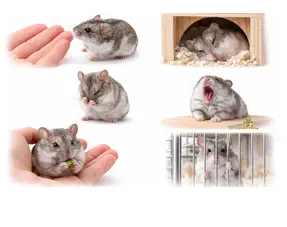

Chinese dwarf hamster – care, housing, nutrition & behavior
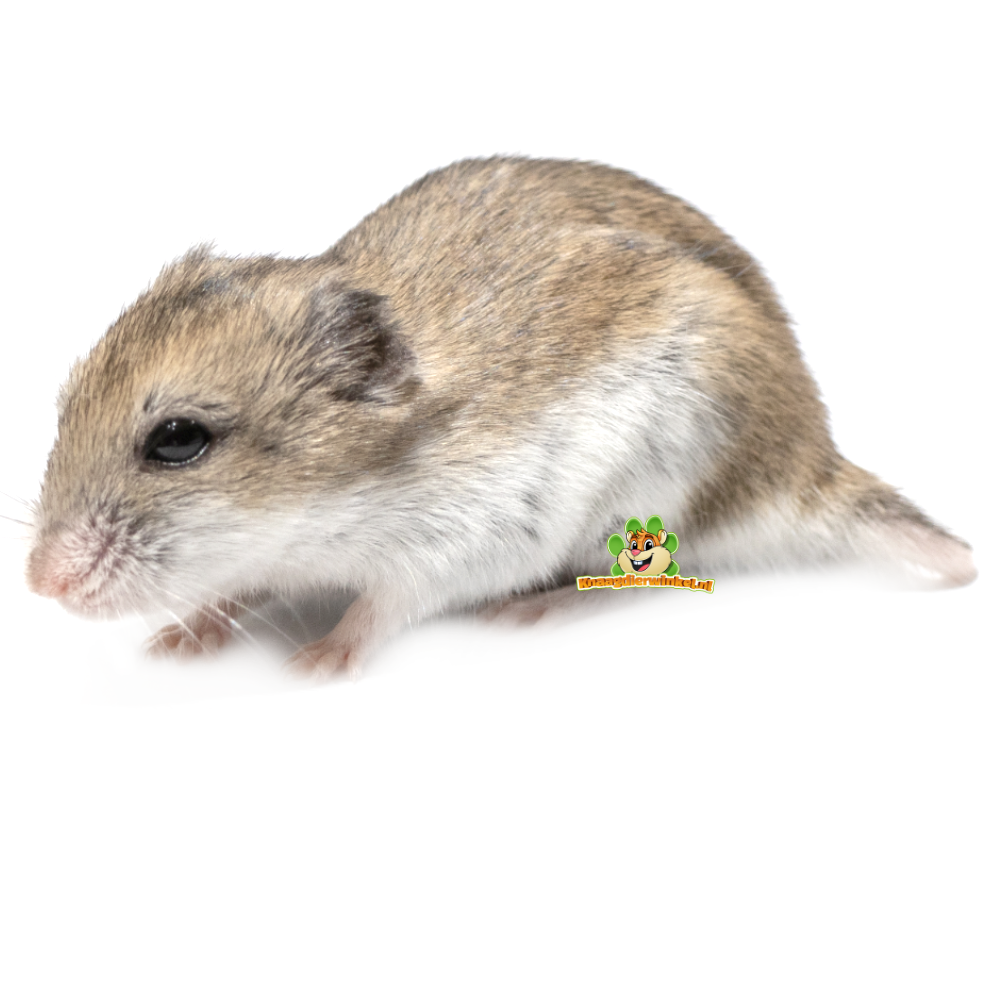 The Chinese dwarf hamster ( Cricetulus griseus ) belongs to the long-tailed dwarf hamster family . You can recognize it by its slender, slightly longer body and, of course, its longer tail . This tail helps it balance, for example, when climbing or moving nimbly through its surroundings. Many people find this "little Chinese" a surprisingly enjoyable pet: curious, active, and often eager to forage, dig, and explore. With a gentle approach and a well-designed enclosure, you can enjoy observing and building bonding opportunities. DRD Rodent Shop® has been a specialist since 2011 and helps you choose based on well-being and safety.
The Chinese dwarf hamster was initially considered a subspecies of the Daurian dwarf hamster ( Cricetulus barabensis ). They are very similar, but are now considered separate species.
Head-body length: male 11 – 12.5 cm · female 9 – 11 cm
Weight (guideline): male ± 45 g · female ± 38 g (build and condition count)
Life expectancy: 2 – 3 years
Directly to the Hamster shop: Hamster (all) · Hamster cages & enclosures · Bedding · Sand & sand bath · Exercise wheels · Hamster food
Quick to:
- Behavior & daily routine
- Taming & Handling (calm and friendly)
- Keeping them together? (Chinese dwarf hamsters are solitary)
- Housing & hamster scaping
- Safe climbing: how to organize it smartly
- Temperature & humidity
- Houses & shelters
- Running wheel: size & safety
- Ground cover & excavation layer
- Sand bath
- Nesting material
- Power supply
- Gnawing material & teeth
- Health & signals
- Useful shopping links
- FAQ
Chinese dwarf hamster checklist (good start)
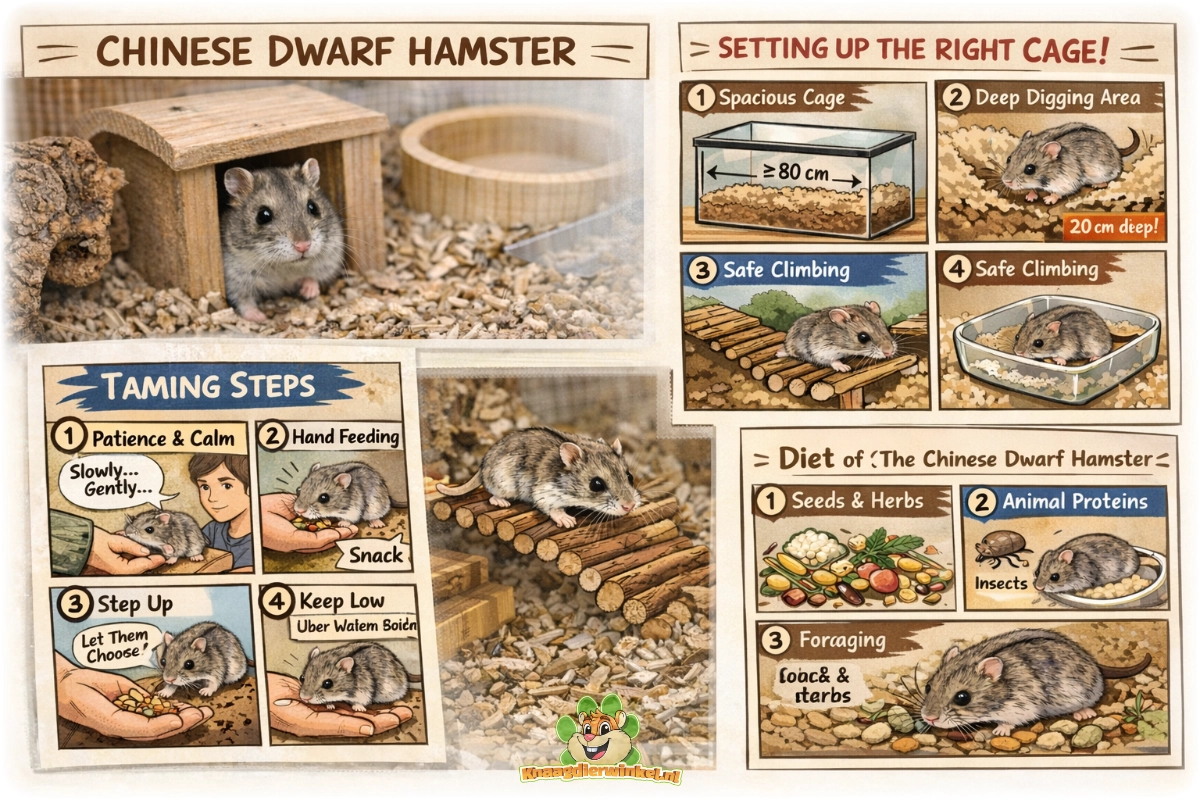
- ✓ Choose a spacious enclosure with plenty of floor surface (guideline: at least 80 x 40 cm; bigger is better).
- ✓ Create a deep digging layer (guideline: around 20 cm) with firm, diggable ground cover.
- ✓ Add safe climbing options (low, stable, with fall breakers and shelters).
- ✓ Install a safe running wheel (at least 20 cm) with a closed running surface.
- ✓ Always provide nesting material (15–25 g) and several hiding places/houses.
- ✓ Give a sand bath and check the skin/coat (remove temporarily if irritation occurs).
- ✓ Keep the Chinese dwarf hamster solitary (not together).
✓ Solitary and quiet
A Chinese dwarf hamster often feels safest in its own territory. Peace, routine, and freedom of choice foster trust.
✓ Digging + climbing
This species likes to combine digging with some climbing. Therefore, choose deep soil and safe, low climbing routes.
✓ Contact at pace
Many Chinese dogs become tame through gentle hand-feeding and "letting them choose." Brief positive moments build trust.
Behavior & daily routine
Chinese dwarf hamsters are crepuscular : you'll see the most activity in the evening and early morning. They often sleep in short bursts (cyclical), so you'll also see them awake regularly during the day. They're generally somewhat shy hamsters, but with a safe environment and a calm approach, they often exhibit very attractive behavior: foraging, digging, running, and (carefully) climbing.
Taming & Handling (calm and friendly)
The goal of taming isn't to "pick them up as quickly as possible," but to build trust . Many Chinese dwarf hamsters find it nerve-wracking when your hand suddenly enters their enclosure. If you follow their pace, you'll often see them become curious and eager to sniff. Their longer tails often help them maintain their balance well, and some Chinese hamsters later even enjoy walking across your hand and moving between your fingers.
- Start with a routine: feed and groom at set times, talk softly, move slowly.
- Hand = something positive: put your hand down quietly and let your hamster come by itself (don't "chase").
- Short bursts of success: reward calm sniffing and stepping up; only pick up your hamster when it is relaxed.
- Low and safe: when handling, always stay low over a soft surface; avoid making startled movements.
Tip: Train with very small rewards. This keeps it fun, without your hamster getting "full" or only coming for snacks.
Looking for the right products for calming contact and enrichment? See: Play & Foraging .
 Keeping them together? (Chinese dwarf hamsters are solitary)
The Chinese dwarf hamster is solitary : in the wild, they generally only come together during mating season. In housing, this means: don't keep them together . Keeping them together carries a high risk of stress, hunting, and biting. Solitary keeping is usually the calmest and safest option for this species.
Housing & hamster scaping
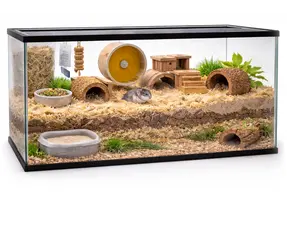
Chinese dwarf hamsters need a spacious enclosure of at least 80 x 40 cm . A good enclosure primarily provides floor space and a deep digging layer, as well as some safe climbing opportunities. In the wild, they build extensive burrows; therefore, digging remains a basic necessity.
Hamster scaping is therefore very suitable for Chinese dwarf hamsters: you furnish the enclosure with natural zones (digging, hiding, foraging), which makes the animal feel safer and allows it to show more.
Many owners choose a terrarium because it allows for easy storage of deep substrate and a stable setup. Ensure good ventilation (preferably multiple vents). Shop: Hamster Cages & Enclosures
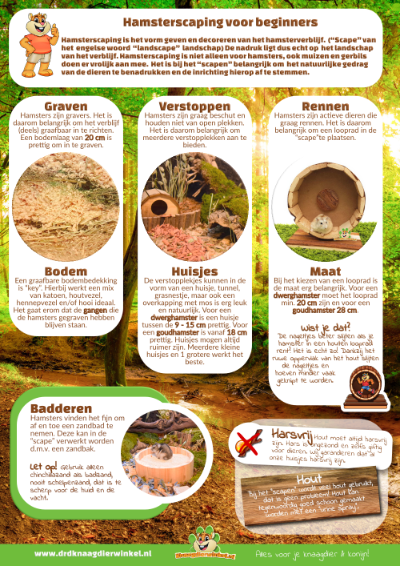 A good starting point is: first the basics (ground, houses, exercise wheel), then enrichment (tunnels, foraging areas, safe climbing routes).
Safe climbing: how to organize it smartly
Chinese dwarf hamsters enjoy climbing and balancing. That doesn't mean you should build "heights." The safest approach is: low, wide, and stable , with multiple descents and soft "fall breakers" (e.g., bedding and hiding places).
- Choose low platforms and sturdy bridges rather than narrow, high structures.
- Create routes along walls and hiding places (prey = likes cover).
- Avoid open “jumps” downwards: make steps or slopes.
Additional inspiration for natural interior design: Hamsterscaping
Temperature & humidity
Chinese dwarf hamsters do not tolerate high temperatures combined with high humidity. A practical guideline is often a temperature of around 20-24°C and humidity below 70% . Measurements can be made with a digital thermohygrometer .
Houses & shelters
Chinese dwarf hamsters are prey animals and feel safer when they don't have to roam freely. Our recommendation: at least two houses (a sleeping house + an extra hiding/storage area) and several hiding routes (tunnels, cork, bridges). At least one house should be a bit larger to accommodate food.
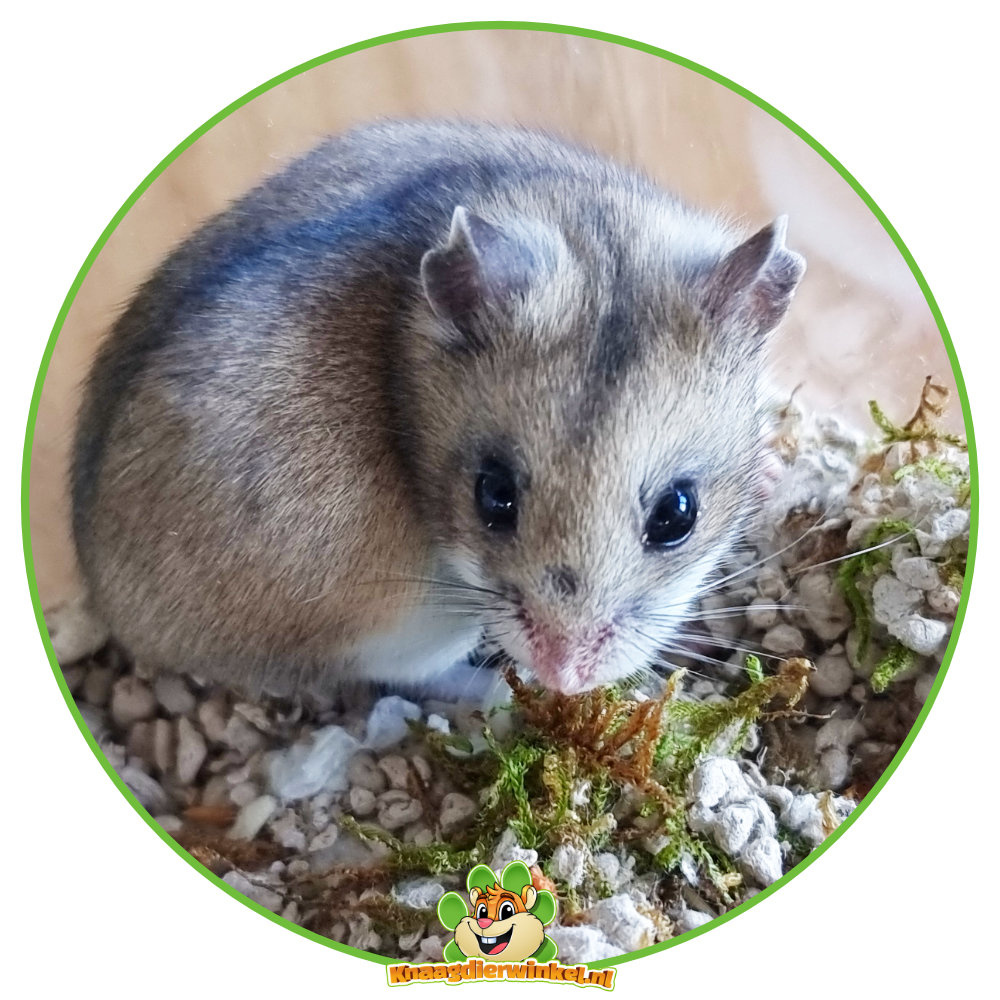 The safer your hamster feels, the more likely he is to show himself more often and become calmer in contact.
Running wheel: size & safety
The exercise wheel is an important part of the setup. Chinese dwarf hamsters are active animals that love to run, often in the evening/night. Choose an exercise wheel with a closed running surface so that paws and nails can't get caught.
Guideline: an exercise wheel for the Chinese dwarf hamster has a minimum diameter of 20 cm and a closed running surface .
View: Hamster exercise wheels
Ground cover & excavation layer
The substrate must be diggable : your hamster should be able to create tunnels and burrows in it, leaving as much of it intact as possible. An ideal depth for digging is often around 20 cm (more is always acceptable if your enclosure allows it).
Examples of diggable soils: humus , burrowing sand , and fiber-rich soils such as cotton and cotton . Many people make a stable mix, for example: cotton and hemp fiber or cotton and wood fiber . A combination of wood fiber , hemp fiber, and hay can also work well.
View all in: Hamster Bedding
Sand bath
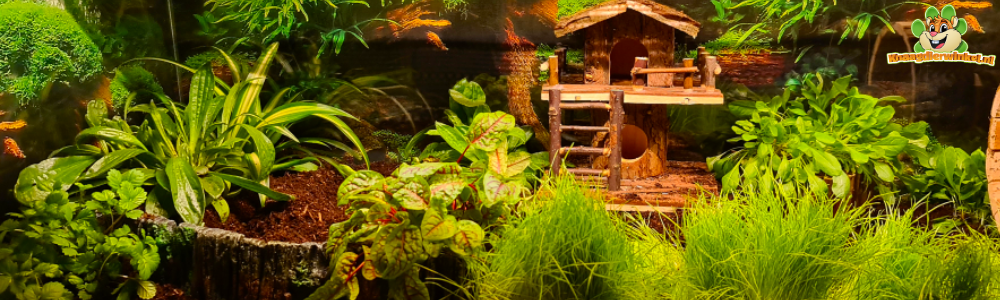
Chinese dwarf hamsters enjoy taking a sand bath occasionally. Sand has a degreasing and cooling effect, but it is also drying. Monitor their bathing behavior and temporarily remove the sand bath if they develop skin problems (red patches, bald spots, scabs, or wounds).
View: Hamster sand & sand bath
Nesting material
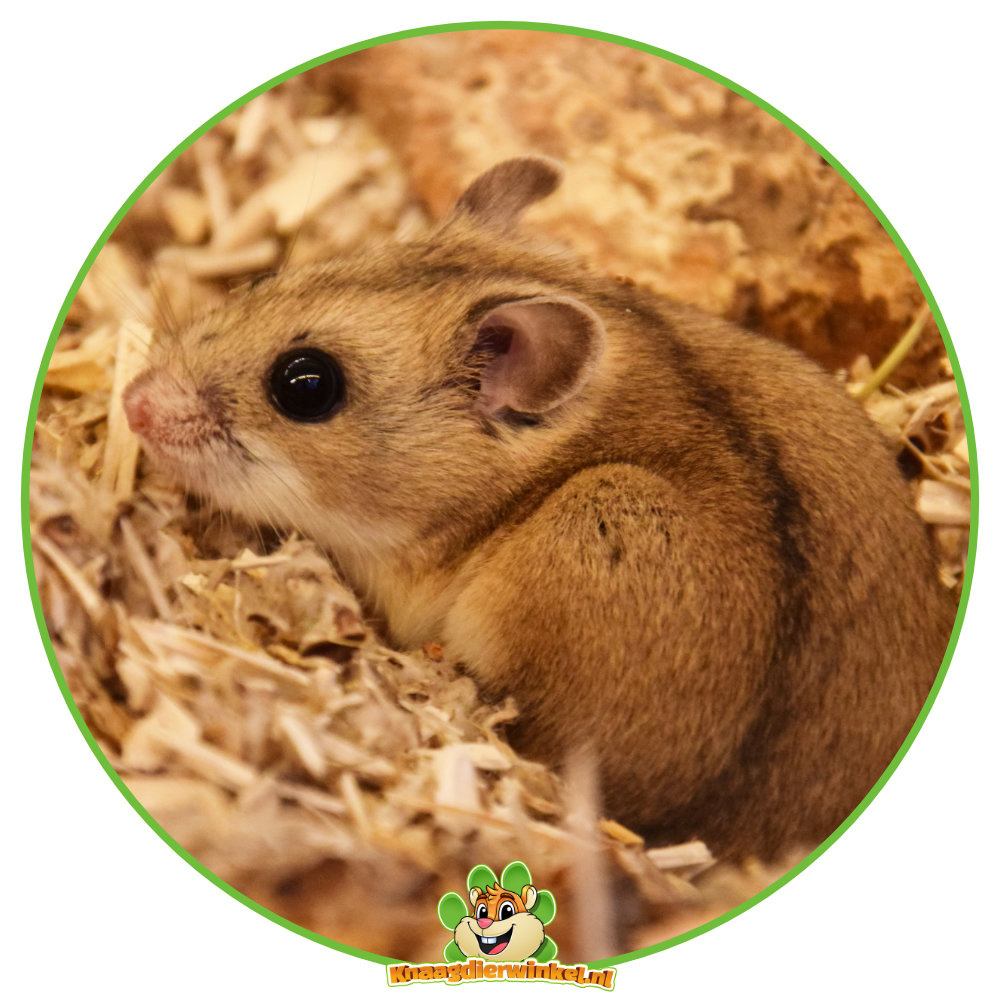 Chinese dwarf hamsters are excellent nest builders. Always provide enough nesting material for your hamster to line the nest (practically: 15-25 grams ). Choose material that is soft, absorbent, and easy to work with.
View: Hamster nesting material
Power supply
Chinese dwarf hamsters are granivores (seed eaters). Their diet consists primarily of seeds, supplemented with herbs and seed mixes. Animal proteins are a small part of their natural diet (such as insects), but for this species, that's usually a minor component.
Useful categories: Hamster food · Herbs & seeds · Animal proteins
Chinese dwarf hamsters transport food in their cheek pouches: they stuff it inside and quickly transport it to their storage area. This is normal hamster behavior and part of their "hoarding." A fun way to encourage this natural behavior is foraging (scattering some of the food around the enclosure).
Dental formula: 1013/1013 (incisors continue to grow)
Teeth don't grow
Stomach: consists of two chambers (ante- and glandular stomach)
Small appendix: limited ability to process crude fiber
In practice, it is often assumed that the proportion of crude fiber in the total diet of dwarf hamsters does not need to be very high; a guideline: below 10% is often mentioned for good digestibility.
Gnawing material & teeth
Chinese dwarf hamsters have continuously growing incisors. Therefore, they always need suitable gnawing material to wear down their teeth. Some animals gnaw vigorously, others less so; always offer it so your hamster can choose for itself.
Gnawing wood helps keep growing incisors at a healthy length. Therefore, offer it regularly in the enclosure.
View: Hamster gnawing material
Recognizing dental problems
For example, watch out for: enthusiastically wanting to grab food but not eating, drooling, a wet chin, weight loss, or visibly abnormal teeth. If in doubt, it's wise to consult a veterinarian.
Reproduction (basic information)
Chinese dwarf hamsters are solitary and, in the wild, mainly congregate during mating season. After birth, the mother cares for the young until they are independent. Practical advice for pets: prevent unplanned litters by keeping your Chinese dwarf hamster solitary.
Sexually mature: from 4 weeks
Ready to breed: females from 12 weeks
Litter size: average 7 (max. 10)
Gestation period: ± 19 days
Weaning time: from week 3
Health & signals
Chinese dwarf hamsters are generally quite healthy animals. Common concerns include dental problems , diabetes , and eye problems . A calm environment, appropriate nutrition, and early detection of changes help identify problems early.
When should you consult a veterinarian?
Pay extra attention to signals such as:
- Teeth/food: drooling, wet chin, not being able to eat food (properly), weight loss, abnormal teeth.
- Skin/coat: bald patches, lots of scratching, scabs, wounds, bumps/lumps.
- General: wet/dirty bottom, drinking a lot, falling over, listlessness, noticeably different stools or noticeably different behavior.
Practical: Hamster care · Transport boxes
For general background information you can also consult the LICG .
Useful Hamster shopping links (most relevant)
Accommodation & furnishings:
Hamster Cages · Hamsterscaping · Exercise Wheels · Play & Foraging
Soil, sand & nest:
Ground cover · Sand & sand bath · Nesting material · Gnawing material
Power supply:
Hamster food · Herbs & seeds · Animal proteins
Questions? Visit our service page: drdknaagdierwinkel.nl/nl/service/
FAQ – Chinese dwarf hamster
Can a Chinese dwarf hamster live with another hamster?
No, this species is solitary. Keeping it solitary is usually the most peaceful and prevents stress, hunting, and biting incidents.
Is a Chinese dwarf hamster suitable for children?
He's especially fun as a "watch and care" dog. Gentle hand feeding is often fine. He doesn't need to be handled frequently; if he is handled, always calmly and under supervision.
How deep should the ground cover be?
A guideline is around 20 cm (more is fine). The goal is for your hamster to be able to make proper runs and retreat safely.
Which size running wheel is suitable?
Choose at least 20 cm with a closed running surface. This way, your hamster can run with a nice straight back and its paws will stay safe.
✓ Calm, practical explanation (also for beginners)
✓ Smart housing with excavation layer + safe climbing options
✓ Selection aid and shopping links from specialists since 2011