 Polski

Guinea pig droppings: what is normal and when should you watch out?
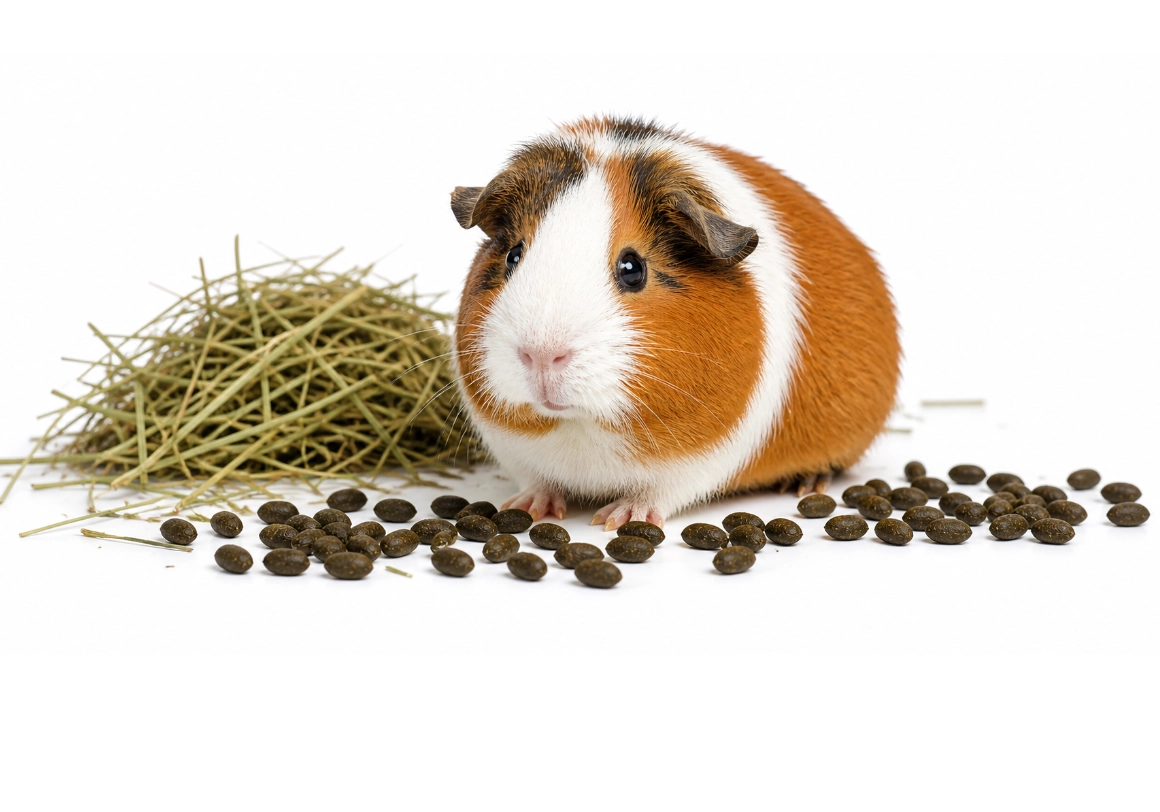 Guinea pig droppings tell a lot about how your guinea pig is feeling. Because guinea pigs eat throughout the day and need fiber, changes in eating habits, hay intake, fluid balance, and bowel function are often reflected in the droppings. Normal guinea pig droppings are usually firm, dry, oval to elongated, and fairly uniform in shape.
However, there is no single perfect dropping that is the same for every guinea pig. Color, size, and quantity can vary due to diet, hay, vegetables, fluid intake, age, and individual predisposition. Therefore, it is especially important that you learn to recognize the normal droppings of your own guinea pigs.
At DRD Knaagdierwinkel®, we examine droppings as part of the daily health check. Not to make diagnoses ourselves, but to quickly identify when diet, hay intake, or health requires extra attention. Is your guinea pig eating less, stopping eating, or producing fewer or no droppings? Then please contact a veterinarian.
✓ Normal guinea pig droppings are firm, dry, and fairly uniform in shape
✓ Many smaller, softer, wetter, or conversely far fewer droppings require attention
✓ Eating less and producing fewer droppings is always important for guinea pigs
✓ Selected and explained by DRD Knaagdierwinkel® – Specialist since 2011
Quick links
In short • Normal droppings • Abnormal droppings • Cecal droppings • Possible causes • Diet & hay • Daily check • When to see a vet? • FAQ
Look at the shape
Normal droppings are oval to elongated, firm, and fairly uniform. Many small, pointed, or deformed droppings stand out.
Look at the quantity
A guinea pig should produce droppings regularly. Fewer or no droppings, especially combined with eating less, is an important signal.
Look at behavior
Never assess droppings loose. Also pay attention to hay eating, appetite, posture, movement, weight, and alertness.
In short: what do normal guinea pig droppings look like?
Normal guinea pig droppings are usually firm, dry, oval to elongated, and brown to dark brown. They should be fairly uniform in shape and not have a strong odor. Freshly defecated droppings may be slightly shiny, but they should not be wet, slimy, or mushy.
Abnormalities to look out for are: much smaller droppings, dry hard droppings, soft or sticky droppings, diarrhea, mucus, blood, droppings sticking to the hindquarters, a sudden decrease in the number of droppings, or no droppings at all.
A single abnormal dropping can happen. A noticeable change, combined with reduced appetite, or a guinea pig that appears quieter, puffier, in pain, or lethargic, is reason to contact a veterinarian quickly.
Recognizing normal guinea pig droppings
Normal droppings are a good daily check. You see them when cleaning, at the hay corner, on pee pads, and in hiding places. Above all, learn what is normal for your own guinea pigs, because not every guinea pig has droppings of exactly the same size or color.
| Feature | Normal image | What do you look out for? |
|---|---|---|
| Form | Oval to elongated | Reasonably uniform in shape, not continuously pointed or deformed. |
| Structure | Sturdy and dry | Not mushy, watery, slimy, or sticky. |
| Colour | Brown to dark brown | Color can vary due to diet, but a sudden, clear change is noticeable. |
| Quantity | Regularly and abundantly available | Fewer or no droppings is important, especially when eating less. |
| Scent | Not strongly smelling | A strong odor is more associated with wet spots, diarrhea, or hygiene problems. |
Abnormal guinea pig droppings: what might stand out?
Abnormal droppings do not automatically mean you know exactly what is wrong. They are primarily a signal to take a closer look at diet, hay intake, fluids, vegetables, stress, teeth, abdomen, and general condition.
| What do you see? | Possible meaning | What are you doing? |
|---|---|---|
| Much smaller droppings | May be consistent with reduced eating, decreased hay intake, or early intestinal sluggishness. | Check appetite, hay, behavior, and weight. If eating less: call the vet. |
| Dry, hard droppings | May be related to reduced fluid intake, reduced food intake, or slowed bowel function. | Look at drinking, greens, hay intake, and general condition. |
| Soft, sticky droppings | Can be caused by diet, too rapid vegetable digestion, or a gut upset. | Check their diet and contact a veterinarian if it persists or your guinea pig is eating less. |
| Watery diarrhea | Can quickly become serious in guinea pigs. | Contact a veterinarian immediately. |
| No or almost no droppings | Important warning sign, especially if your guinea pig is eating less or not at all. | Contact a veterinarian immediately. |
| Mucus or blood in droppings | May indicate irritation, inflammation, or another health problem. | Consult a veterinarian. |
| Droppings stick to the hindquarters | Can be caused by soft stools, being overweight, pain, age, coat, or inadequate grooming. | Check the hindquarters and consult a veterinarian if there is a recurrence or skin irritation. |
Cecal pellets in guinea pigs: normal behavior
In addition to regular droppings, guinea pigs also produce soft cecal pellets. These are also known as cecotropes. Guinea pigs normally eat these immediately. That might sound strange, but it is part of their digestion.
You usually don't see cecal droppings lying around very often, because your guinea pig picks them up directly from its hindquarters. Do you occasionally see a softer, shiny, or somewhat sticky dropping, and is your guinea pig otherwise active, eating well, and are its normal droppings normal? Then that doesn't necessarily have to be a cause for concern.
Do you often see soft masses lying around, does feces stick to the hindquarters, or is your guinea pig eating less? Then it is not wise to dismiss this as normal cecal droppings. Investigate further and consult a veterinarian if in doubt.
What can cause guinea pig droppings to change?
Droppings can change due to something simple, such as new vegetables, but also due to something that requires immediate attention. Therefore, always look at the big picture: is your guinea pig eating well, eating hay, drinking normally, moving normally, and are the droppings still coming?
Power supply
Changing feed too quickly, too many vegetables, new feed, or less hay can affect droppings.
Eat less hay
Hay is the fiber basis. Lower hay intake is often reflected in smaller or fewer droppings.
Teeth or pain
If eating becomes more difficult, stool production may change. Watch out for messiness, slow eating, or selective eating.
Stress or change
Moving, bonding, busyness, or sudden change can affect eating behavior and droppings.
Moisture balance
Eating a lot of moist vegetables or drinking less can affect the texture of droppings.
Health problems
Intestinal problems, parasites, dental problems, or other complaints can change droppings.
Feeding, hay, and droppings: what can you do daily?
The best daily foundation for normal droppings is a calm feeding routine. Hay should be readily available, guinea pig food must be specifically intended for guinea pigs, and vegetables should be introduced slowly. Changes too rapidly can disrupt the intestines.
Useful routes: guinea pig hay , guinea pig food and nutrition , all-in-one guinea pig food , guinea pig vegetable list and guinea pig food selection guide .
Daily poop check for guinea pigs
✓ Are there enough droppings today?
✓ Are the droppings firm, dry, and reasonably uniform in shape?
✓ Does your guinea pig eat normal hay?
✓ Is your guinea pig eating its normal guinea pig food and vegetables?
✓ Is the hindquarters clean and dry?
✓ Is your guinea pig alert and moving normally?
✓ Does the weight remain stable with regular monitoring?
When should you contact a veterinarian?
For guinea pigs, eating less is always important. Do not wait if your guinea pig eats less, does not eat, has fewer or no droppings, has diarrhea, is lethargic, seems to be in pain, or has a bloated belly.
✓ Your guinea pig eats less or stops eating.
✓ Clearly fewer or no droppings.
✓ There is watery diarrhea or stool with blood/mucus.
✓ Your guinea pig is puffed up, grinds its teeth, moves less, or seems to be in pain.
✓ The belly feels distended or your guinea pig looks distressed or lethargic.
✓ The hindquarters remain dirty or wet and the skin becomes irritated.
DRD makes the choice: viewing droppings as a daily routine
At DRD, we view droppings not as a dirty detail, but as valuable daily information. A guinea pig that eats hay well, is active, and produces normal droppings often shows that the basics are running smoothly at that moment.
That is why the droppings check is part of the same routine as replenishing hay, checking water, feeding, removing wet spots, and just checking on your guinea pigs. This way, you notice changes sooner.
Good to know
This page helps you better recognize droppings, but it is not a substitute for a veterinary examination. Droppings can provide guidance, but they never tell the whole story.
Is your guinea pig eating less, stopping eating, producing fewer or no droppings, or do you notice diarrhea, blood, mucus, signs of pain, or lethargy? Contact a veterinarian.
Frequently asked questions about guinea pig droppings
What do normal guinea pig droppings look like?
Normal guinea pig droppings are usually firm, dry, oval to elongated, and brown to dark brown. They are fairly uniform in shape and do not have a strong odor.
How many droppings does a guinea pig make per day?
Guinea pigs eat and defecate throughout the day. The exact number varies per animal, but there should be a large number of droppings regularly. Significantly fewer or no droppings is an important signal.
Why are my guinea pig's droppings smaller?
Smaller droppings can be consistent with reduced eating, decreased hay intake, stress, dental problems, dehydration, or early signs of sluggishness. Pay close attention to appetite and behavior, and contact a veterinarian if in doubt.
Why does my guinea pig have soft droppings?
Soft droppings can be caused by diet, too rapid vegetable intake, or intestinal upset. If it persists, sticks to the hindquarters, or your guinea pig is eating less, contact a veterinarian.
What does diarrhea mean in a guinea pig?
Watery diarrhea is a serious sign in guinea pigs. Contact a veterinarian immediately, especially if your guinea pig is eating less, is lethargic, or shows signs of pain.
What if my guinea pig has no droppings?
Having no or almost no droppings is important, especially if your guinea pig is eating less or not at all. Contact a veterinarian immediately.
Do guinea pigs eat their own droppings?
Yes, guinea pigs normally eat special soft cecal pellets, also called cecotropes. They often ingest these directly from their hindquarters. That is part of their digestion.
Why do droppings stick to my guinea pig's butt?
This can be caused by soft stools, being overweight, pain, age, long hair, reduced mobility, or skin problems. Check the hindquarters and consult a veterinarian if it recurs.
Can vegetables or herbs change the droppings?
Yes, new vegetables, lots of moist vegetables, or rapid changes in diet can alter the droppings. Introduce new vegetables gradually and always provide hay as a base.
What helps with normal guinea pig droppings?
Plenty of hay, suitable guinea pig food, a gradual introduction of vegetables, sufficient water, exercise, regularity, and daily checks help maintain a good foundation.
Useful to look at as well
✓ Guinea pig food and nutrition
✓ All-in-one guinea pig food and pellets
✓ Recognizing guinea pig droppings: normal, soft, small, dry, or abnormal
✓ With explanation regarding hay, nutrition, cecal pellets, and daily checks
✓ Practical for owners who want to notice changes faster
✓ Specialist since 2011
Are you unsure about your guinea pigs' diet, hay, or daily care? Feel free to contact us via our contact page . If they are eating less, have no droppings, diarrhea, signs of pain, or lethargy, contact a veterinarian.
