 Polski

Mouse tunnels & tubes – safe routes to hide, climb and explore

- Voor 17 uur besteld, dezelfde dag verzonden!
- Rodent specialist since 2011
- Dispatched from our own stock


- Voor 17 uur besteld, dezelfde dag verzonden!
- Rodent specialist since 2011
- Dispatched from our own stock
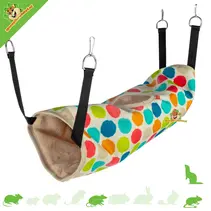
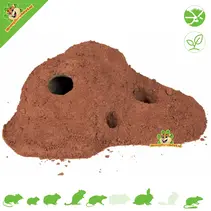
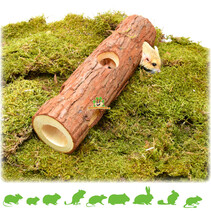



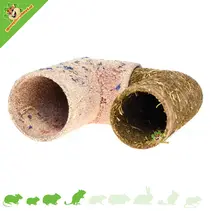
Mouse tunnels & tubes – safe routes to hide, climb and explore
Mice (colored mice) are curious, active, social animals that thrive when their habitat has multiple routes, hiding places, and passageways. Tunnels and tubes help with this: they provide security (quick escape and hiding), encourage movement (climbing, running, exploring), and make the habitat more interesting. In this category, you'll find a carefully selected range of mouse tunnels and tubes: from natural tree trunk tunnels and cork tunnels to grass tunnels, plastic tubes, and terracotta tunnels. Practical, safe, and tailored to natural mouse behavior.
Tunnels provide mice with a safe passage and a place to quickly hide. Combine this with a good base of mouse bedding for extra comfort and more hiding places.
Many tunnels are ideal for hiding snacks or making routes more challenging. Add some clever challenges through play and foraging for more exercise and less boredom.
Mice are real climbers. Work in layers with routes, bridges, and rest stops. Combine tunnels with platforms and ladders and comfortable resting places like hammocks .
Which tunnels are right for your mice?
Not every mouse uses a tunnel in the same way. Some create a permanent "highway," while others use tunnels primarily for shelter or to rest for a while. That's why you'll find several types in this category:
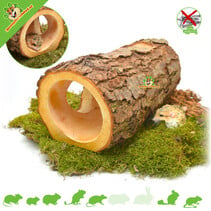
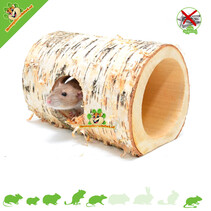
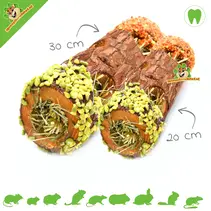
- Natural tree trunk tunnels (birch/alder) – sturdy, natural and perfect as a shelter and walking route.
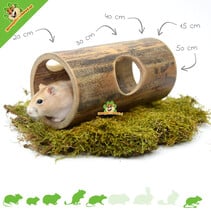
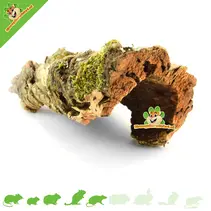
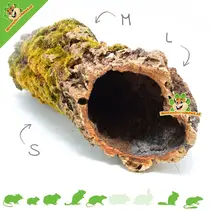
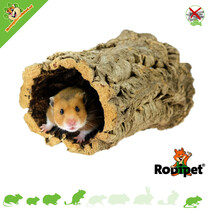
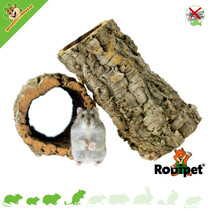
- Cork & bamboo – light, natural, and ideal for building routes or as an extra hiding place.
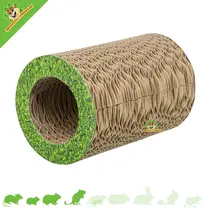
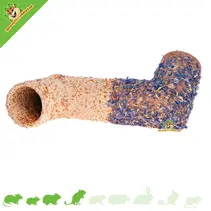
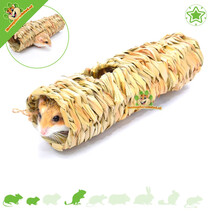
- Grass tunnels – fun to crawl through and often attractive to nibble on.
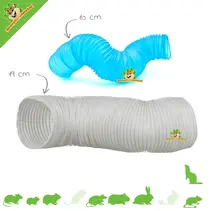
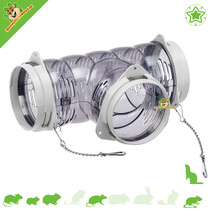
- Plastic pipes & connectors – useful for modular routes (straight, curves, splits) and easily removable.
- Terracotta/ceramic – cool, heavier, and stable; good as a "permanent" tunnel location.
Tip: Work with variety . One natural tunnel as a permanent hiding place plus one "route tunnel" (e.g., a tube or grass tunnel) quickly creates a much more dynamic environment in the enclosure.
Creating a route plan: how to build a mouse-proof tunnel network
A smart tunnel network doesn't have to be complicated. With this foundation, you'll immediately make your stay more enjoyable and organized:
- Make at least one “circuit” : from hiding place to climbing zone and back (mice like to follow fixed routes).
- Combine high and low : a tunnel below + a passage higher up provides natural variety.
- Create “rest stops” with a small platform, bridge or hammock as a fall arrest and rest area.
- Hide a snack in or near a tunnel (foraging) every now and then, but keep it small and responsible .
Want to make it extra natural? Combine tunnels with a nice hiding place made from mouse houses and add soft material like mouse nesting material .
Smart design: combine tunnels with climbing, hiding and gnawing
Mice want to be able to climb, hide, nibble, and explore . Tunnels lay the foundation, but the best design comes from clever combinations:
- Hiding : place a tunnel partly under/next to ground cover and create multiple “entrances”.
- Climbing : connect a tunnel with a platform or ladder: platforms & ladders .
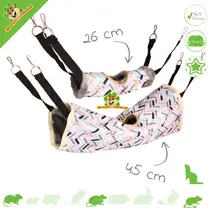
- Comfort : provide a higher resting place with hammocks (ideal as a halfway station and fall protection).
- Gnawing & keeping busy : prevent boredom by offering sufficient gnawing material and enrichment.
Extra tip: vary the route occasionally (e.g., a bend in the path, move the tunnel). Small changes keep mice curious without causing stress.
Maintenance & hygiene: keeping tunnels fresh and safe
- Check tunnels weekly for wet spots, deposits and wear.
- Wood/cork/grass : it is better to wipe it down and let it dry thoroughly than to wet it completely.
- Plastic/ceramic : usually easy to clean and dries quickly.
- In case of strong urine odor, preferably use an enzymatic cleaner (and let everything dry well) and also see mouse care .
- Want to better manage wet areas? Combine tunnels with smart design using mouse cage accessories .
Checklist: good tunnels for mice
Before you build a tunnel route, check this list:
✔ Diameter/size fits: mice can easily pass through without getting stuck
✔ No sharp edges, splinters or loose parts
✔ Minimum 2 “routes” (so that dominant animals don't block everything)
✔ Combine with ground cover and nesting material for extra safety
✔ Tunnels are stable or securely attached
✔ You can easily remove them for cleaning/inspection
Safety warnings
- Place tunnels so that mice can always escape (preferably with multiple entrances/alternative routes).
- Check natural materials regularly for splinters, sharp edges and excessive wear.
- Suspension tunnels and routes at height: provide fall protection (e.g. a wide hammock or platform underneath).
- If a tunnel becomes extremely wet or smells strongly, remove it temporarily, clean it, and let it dry completely, or replace it.
- When in doubt about safety or appropriate size, choose a more spacious/stable option and observe its use.
FAQ – Frequently Asked Questions about Mouse Tunnels
Which tunnel is best for mice: wood, cork or plastic?
That depends on your goal. Wood/cork is natural and enjoyable to nibble on; plastic tubes are useful if you want to build a route that's easy to adjust and clean. Many customers combine: one natural tunnel as a permanent hiding place and one tube/route tunnel for a dynamic environment.
How many tunnels do I need for a group of mice?
Start with at least two hiding/passage options and expand based on your group size and behavior. In a group, additional options are helpful, so mice are less likely to trap each other in a single route.
My mice are chewing everything up. What now?
Chewing is normal behavior. Always provide plenty of gnawing material and enrichment. Natural tunnels (cork, grass, or wood) are often specifically designed for gnawing.
Can tunnels also be made in ground cover?
Absolutely. Tunnels work particularly well when combined with bedding . Just make sure they're stable (don't collapse) and that you can remove them for inspection and cleaning.
What makes a tunnel “mouse-proof”?
A good tunnel is appropriately sized, has no sharp edges, and is stable. In a climbing enclosure, it's also important to incorporate intermediate platforms and fall arrest. Also, consider platforms and ladders for a safe layout.
Why buy mouse tunnels from DRD Rodent Shop®?
✔ Specialist since 2011
✔ Ordered before 5 PM = shipped the same day
✔ Delivered from our own stock
✔ Smartly selected range for well-being & safety
