Polski

African Harvest Mouse information – care, terrarium, food & selection guide
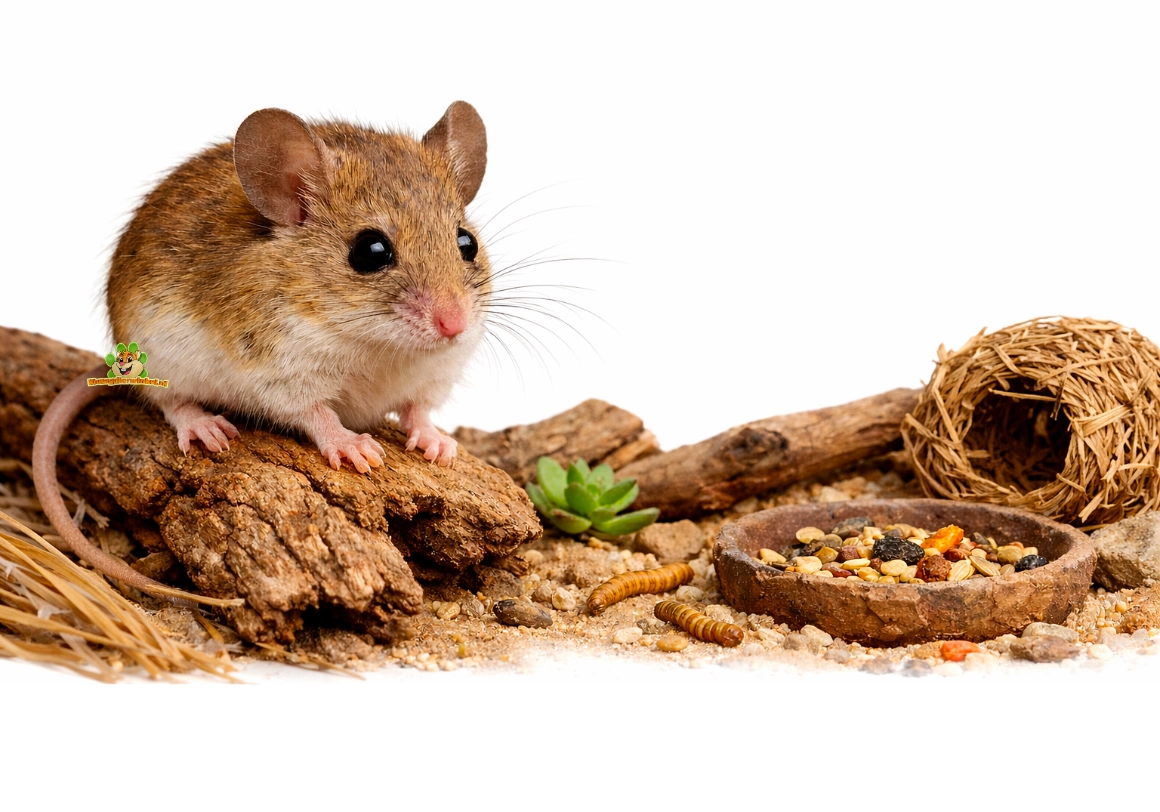 The African pygmy mouse ( Mus minutoides ) is a tiny, lightning-fast rodent that's especially enjoyable for viewing. They're often most active at dusk and night, displaying beautiful natural behaviors: foraging, sheltering, digging, and building routes. This comprehensive information page (not a product overview) explains how to keep them responsibly: group composition, escape-proof terrarium/aquarium, substrate & nest, animal protein diet, moving/transport, and health. DRD Rodent Shop® has been a specialist since 2011 and helps you choose based on well-being, safety, and a logically designed habitat.
Directly to the Mouse shop:Mouse (all) · Mouse cages & enclosures · Mouse bedding · Mouse food
Quick to:
African pygmy mouse checklist (quick, good basic)
- ✓ Keep them social : a stable group (same sex) with multiple hiding places and routes.
- ✓ Choose an escape-proof terrarium/aquarium (cracks as small as possible; ventilation mesh with fine mesh).
- ✓ Provides plenty of surface area and height for climbing, plus a safe, stable design.
- ✓ Use dust-free, diggable ground cover and provide plenty of safe nesting material (no “cotton wool”).
- ✓ Feed small seeds as a base + controlled variation; regularly provide a small protein source (insects).
- ✓ Observe briefly daily: eating/drinking , activity, breathing, coat/eyes/nose and feces; if in doubt, consult a veterinarian immediately.
✓ Watchful and nocturnal
Make the habitat rich and safe, and you will see the most beautiful behavior: foraging, hiding, climbing and nest building.
✓ Escape-proof = priority
A small crack is enough. Choose "closed" (terrarium/aquarium) and check seals, grilles, and cracks regularly.
✓ Variation in feed
Small seeds often form the basis. Controlled additions (greens/fruit + insect protein) keep the menu appropriate and interesting.
Mouse species – information pages
Not every mouse is "the same." Species, temperament, and size determine what makes sense for housing and feeding. See also:
- Colored Mouse – Information
- African Harvest Mouse – information (this page)
- Dormouse – information
Behavior & keeping together
African pygmy mice are fast, skittish animals that feel safe with plenty of cover. In a well-furnished enclosure, you'll see established routes, a nesting zone, and clearly defined "safe spots." They are also sociable and should live in groups.
Group composition (practical): preferably choose a group that has grown up together and keep the group calm and stable. Introducing adult animals often causes stress and unrest. To ensure a peaceful group, it's especially important to provide multiple hiding places and more than one of everything (food, water, sleeping areas).
Stress signals include frequent fright, excessive hiding, chasing/quarreling, biting when approached, or suddenly stopping eating. Often, providing more hiding places, more space, calmer feeding/grooming, and less "handling in the enclosure" helps.
Housing & furnishings (terrarium/aquarium)
The best base is a terrarium or aquarium with good ventilation and a securely closing lid/grid. Wire cages are usually less suitable, as the openings (or gaps near the doors) can quickly become too large for such small animals. Also pay attention to sliding doors: always check that there are no gaps.
Space & layout: Choose ample floor space and designate zones: nesting/hiding, foraging/activity, and "routes." Use platforms, bridges, and safe climbing areas, but prevent the risk of falling by placing everything stably and cleverly breaking up the height with intermediate platforms.
Temperature: Provide a comfortable, stable spot in your home (draft-free, out of direct sunlight). A slightly warmer area can be pleasant, as long as there's always a cooler spot where they can also lie down.
Practical starting points: Mouse cages & enclosures · Cage accessories · Platforms & ladders · Tunnels · Houses · Play & foraging · Gnawing materials
Water & feeding: Use sturdy bowls and check daily. Provide multiple feeding stations for groups to prevent stress. Links: Feeding bowls · Drinking bottles & water bowls
Ground cover & nest
A good substrate is dust-reducing , absorbent, and preferably diggable . African pygmy mice like to build hiding places and nesting zones. A thicker layer of substrate also helps keep the habitat fresh for longer.
Nesting material: Provide plenty of nesting material that is easy to work with (paper-like material and natural fibers). Avoid materials with long, strong threads or "cotton" that can entangle their legs.
Choose your route here: Mouse ground cover · Mouse nesting material
Be smart about hygiene: it's better to frequently "spot clean" (wet areas, toilet area) than to sterilize everything every time. Leave a small amount of clean, dry nesting material so the group doesn't have to "start over" every time and peace is maintained.
Nutrition & proteins
African pygmy mice generally enjoy eating small seeds and plant parts, but also need animal protein (such as insects) as a supplement. Therefore, choose a suitable mouse food as a base and add a controlled variety.
Practical feeding tips: distribute a portion of the food throughout the enclosure (foraging) instead of putting it all in one bowl. This provides mental stimulation, exercise, and prevents boredom eating. See also: Playing & foraging .
Snack in moderation: "Small animal" means that small portions can quickly become a lot. Give small amounts of vegetables and fruit and remove leftovers before they spoil.
Useful categories: Mouse food · Hay, herbs & seeds · Mouse snacks · Dried fruit & vegetables
Handling & moving (safe)
African pygmy mice are generally not cuddly . Due to their small size and speed, handling them frequently is often stressful and risky. Therefore, choose safe transport instead of handling them: let them walk into a tube or small container and then gently move them to a transport box.
- Always approach calmly and predictably (no quick movements).
- Use a tube/container as a “shuttle” to move around.
- Never pull the tail or try to “grab” from above.
- For children, the following applies: watch and feed calmly , always under supervision.
Handy for traveling and visits to the vet: Mouse transport boxes .
Health & prevention
Mice often hide symptoms for a long time. Therefore, brief daily observations are important: appetite, drinking behavior, activity, breathing, fur, and feces. If in doubt, it's wise to consult a (rodent-savvy) veterinarian early on.
Pay extra attention to: sneezing/shortness of breath (dust/environment), runny eyes/nose, puffy eyes, rapid weight loss, reluctance to eat, diarrhea/wet bottom, wounds or bumps. Ensure a draft-free location, fresh air (without cold airflow), and dust-free materials.
Practical categories: Mouse health · Mouse care
Read more (extra depth)
Want even more background information and practical examples? See also:
Useful Mouse Shopping Links (Most Relevant)
Accommodation & furnishings:
Mouse cages · Cage accessories · Houses · Tunnels · Platforms & ladders · Hammocks · Exercise wheels · Play & forage · Gnawing material
Bottom & nest:
Ground cover · Nesting material
Power supply:
Mouse food · Hay, herbs & seeds · Snacks · Dried fruit & vegetables
Practical:
Feeding bowls · Drinking bottles & water bowls · Transport boxes · Packages · Winter products
For general background information you can also consult the LICG , including the species page: African pygmy mouse .
FAQ – African pygmy mouse
Are African pygmy mice tame?
Usually not. They're fast, delicate, and avid spectators. You can build up their habit with calm routines and hand-feeding, but frequent handling often causes stress.
Which housing is the safest?
An escape-proof terrarium/aquarium with good ventilation. Check cracks and closures extra carefully; with this species, a "small hole" is often large enough.
What do they like to eat most?
They often thrive on a diet of small seeds with a controlled variety. A suitable protein source (e.g., insects) can be a valuable addition. Always give treats in moderation. See: Mouse food and Mouse snacks .
How do I move them without stress?
Use a tube or small container as a "shuttle" and let them climb in on their own. This prevents them from grabbing and escaping. For transport: Mouse transport boxes .
How do I keep the room fresh without disturbing the group?
Use a "spot clean" method: remove wet spots and soiled corners, and don't replace everything at once. Leave a small amount of clean, dry nesting material for a recognizable scent and a calming effect.
Tip: Want to quickly choose from the selection? Start with the main Mice category:Mice .
✓ Carefully selected range for responsible farming
✓ Selection assistance and in-depth information from a specialist since 2011
✓ Practical tips for a dust-free, rich and safe interior