 Polski

Dwarf Rat Ratscaping – natural setup for small rats



- Voor 17 uur besteld, dezelfde dag verzonden!
- Rodent specialist since 2011
- Dispatched from our own stock
- Voor 17 uur besteld, dezelfde dag verzonden!
- Rodent specialist since 2011
- Dispatched from our own stock


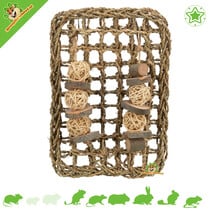
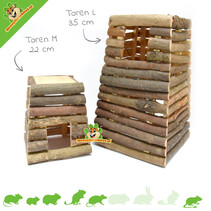
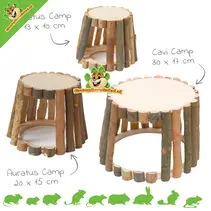

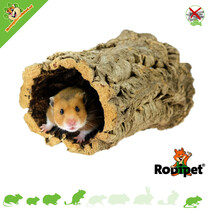
Dwarf Rat Ratscaping – natural setup for small pet rats
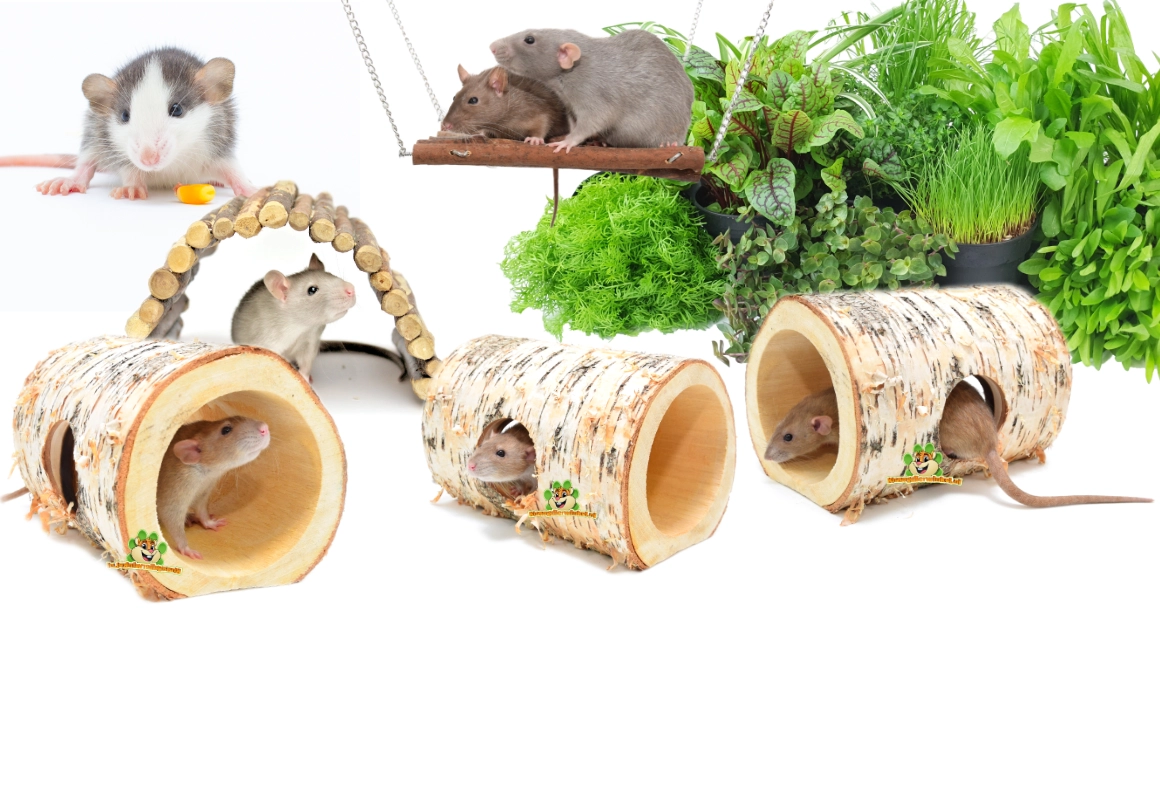 Dwarf rat ratscaping is the natural and thoughtful design of an enclosure for small pet rats. Dwarf rats are intelligent, social, and curious, but due to their smaller size, you can sometimes work more precisely with bedding layers, tunnels, houses, natural routes, and sniffing zones. As a result, ratscaping for dwarf rats can be structured slightly differently than for regular pet rats.
At Dwarf Rat Ratscaping, DRD focuses primarily on product fit: does it suit the actual size of your animals, does the enclosure remain well-ventilated, is the substrate low in dust, and can you easily monitor urine spots, houses, and tunnels? In a wire cage, the emphasis is often on practical routes, hiding places, and hygiene. In a spacious terrarium or Black Scape-style setup, you can work more with hamsterscape-style substrates, digging zones, cork, wood, natural decorations, and height variations, but adapted for dwarf rats.
Combine Ratscaping with a safe dwarf rat cage , low-dust dwarf rat bedding , suitable dwarf rat houses , and, where appropriate, a spacious enclosure such as the Black Scape Terrarium . For food, simply choose good rat food .
In short
✓ Dwarf Rat Ratscaping revolves around natural routes, hiding places, sniffing zones, digging areas, and a safe design.
✓ In a spacious terrarium, you can work more with substrate layers, height variations, and a hamsterscape-like structure.
✓ Because dwarf rats can vary in size, always match tunnels, houses, passages, and routes to your animals.
Quick links
Why Ratscaping? · Cage or terrarium · Basic setup · Creating zones · Choosing materials · Safety & hygiene · Checklist · Shopping routes · FAQ
Natural routes
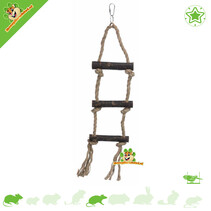
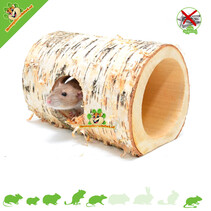
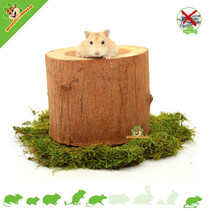
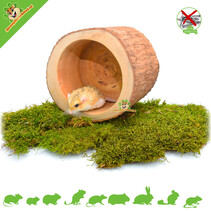
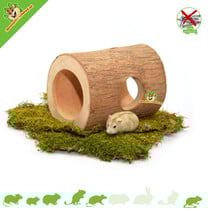
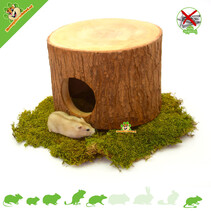
With tunnels, cork, wood, houses, and platforms, you create routes where pygmy rats can walk, sniff, and choose.
Soil as landscape
In a spacious terrarium, substrate can do more than absorb moisture: you use it to build zones, layers, and sniffing spots.
Keep under control
A beautiful scape only remains enjoyable when you can properly control moisture, scent, urine spots, tunnels, and hiding places.
Why Ratscaping suits dwarf rats so well
Dwarf rats are curious, social, and active animals. They use their enclosure not only to eat and sleep, but also to explore, forge routes, rest together, sniff around, and discover new spots. Ratscaping helps give more room to that natural curiosity.
Ratscaping is particularly interesting for dwarf rats because you can work with finer precision than with large domesticated rats. Houses, tunnels, cork pieces, bedding layers, and sniffing zones can be built up more compactly. At the same time, it remains important to remember that dwarf rats are not hamsters: they are social, intelligent, can climb, and use their enclosure in a rat-like manner.
That is why DRD at Dwerratten Ratscaping opts for functional furnishings rather than loose decorations: what can your animals do with it, can they move safely, does the enclosure stay fresh, and can you monitor everything properly?
Dwarf Rat Ratscaping in a cage or terrarium
Dwarf rat ratscaping can be done in various types of enclosures. In a wire cage, the emphasis is often on safe routes, hanging spots, houses, tunnels, and practical hygiene. In a spacious terrarium or Black Scape-style setup, you can work more with substrate layers, natural structures, and digging/sniffing zones.
- In a wire cage, you can work with tunnels, houses, hanging spots, platforms, and separate sniffing zones.
- In a spacious terrarium, you can use substrate as a landscape with layers, zones, and pathways.
- A Black Scape-style setup allows for a more natural ground structure and decoration.
- Ventilation remains important, especially in deeper layers, humus parts, or natural zones.
- Hygiene remains the guiding principle: urinals, drinking points, and resting areas must remain accessible.
- The interior must suit the actual size and build of your dwarf rats.
Good to know
✓ In a cage, Ratscaping is often more focused on routes, hiding places, and practical enrichment.
✓ In a large terrarium, you can build more with substrate layers, height differences, and natural structures.
✓ Dwarf rats remain rats: ventilation, low-dust materials, and hygiene always remain important.
The basis of a dwarf rat scape
A good dwarf rat scape starts with a logical foundation. First, consider the enclosure, ventilation, substrate, routes, and cleaning. Then, add decoration, natural materials, and sniffing spots. This way, the setup remains both beautiful and practical.
- Choose a safe cage or spacious terrarium that suits your animals.
- Use low-dust bedding as a fresh base.
- Create clear routes with tunnels, cork, wood, small houses, or platforms.
- Use multiple shelters so that animals can rest both together and separately.
- Add sniffing areas or digging zones for natural searching behavior.
- Keep drinking water, feeding areas, urination areas, and resting areas easily accessible.
For the basics, you logically combine this category with Dwarf Rat Bedding , Dwarf Rat Cage , and Dwarf Rat Houses .
Creating zones: rest, routes, sniffing and digging
A strong dwarf rat scape consists of zones. This makes the enclosure easy to keep track of for you and interesting for your animals. Think of a quiet sleeping zone, a feeding zone, a sniffing zone, a digging zone, and clear walking routes. Dwarf rats can then choose where they want to be and how they move through the enclosure.
- Create a sleeping zone with multiple houses or hiding places.
- Create a sniffing zone where you can hide small amounts of food or herbs.
- Use a digging zone or humus corner when your animals like to explore.
- Connect zones with tunnels, cork, wood, or natural bridges.
- Keep urine spots organized so that cleaning remains easy.
- Use decoration to support behavior, not just for appearance.
Practical scape tip
✓ Don't build everything at once; start with ground, houses, and routes, and then add sniffing zones.
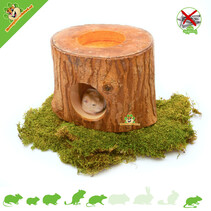
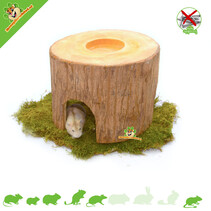
✓ Use a little dried moss or light natural decoration to make houses and tunnels blend more beautifully into the scape.
✓ Regularly check if your dwarf rats are still using the routes safely and comfortably.
What materials do you use for Dwarf Rat Ratscaping?
Choose materials that support behavior: hiding, walking, sniffing, climbing, digging, and resting. Because dwarf rats can vary in size, always check that tunnels, entrances, houses, and passageways are suitable for your animals.
- Low-dust bedding as the basis for hygiene and comfort.
- Cork, wood, and natural tunnels for routes and shelter.
- Small houses and shelters for resting together and taking refuge.
- Humus or sniffing zones for searching, digging, and exploring.
- Herbs, small food rewards, or dried vegetables as a foraging stimulus.
- Practical accessories to keep drinking points, feeding areas, and cleaning organized.
Do not use fine sand or chinchilla sand as a sand bath for dwarf rats. Dwarf rats do not bathe in sand like chinchillas or degus, and their respiratory systems are sensitive. Instead, choose low-dust bedding, natural sniffing zones, and easily controlled digging areas.
Safety, ventilation and hygiene in a natural scape
A natural dwarf rat scape may be beautiful, but above all, it must remain safe and practical. Dwarf rats are smart and agile. They may try to crawl through cracks, move materials, and choose fixed urination spots. Therefore, regularly check that everything remains stable, dry, and easily accessible.
- Ensure good ventilation, especially during terrarium construction and in deeper layers.
- Use low-dust materials and avoid stuffy, damp areas.
- Check huts, tunnels, humus zones, and burrowing areas for moisture and odor.
- Place heavy materials stably so that they cannot tip over or sag.
- Keep drinking points, feeding areas, and urination areas accessible.
- Check that pygmy rats cannot get stuck anywhere in tunnels or passages.
For practical cleaning and care, you can also look at Rat Care , Rat Toilets , and Rat Pee Mats .
Checklist: how to properly build up Dwarf Rat Ratscaping
✓ The base is low-dust, fresh, and well-ventilated.
✓ The setup matches the enclosure type: wire cage, terrarium, or Black Scape-style setup.
✓ Tunnels, houses, passages, and routes match the actual size of your dwarf rats.
✓ There are multiple zones: sleeping, eating, drinking, sniffing, digging, and walking.
✓ Moisture, odor, urine spots, and food residue remain easily controllable.
✓ The scape is beautiful and practical: you can clean it without having to dismantle the entire enclosure every time.
Handy shopping routes for Dwarf Rat Ratscaping
Dwarf Rat Ratscaping works best when you combine products based on function: substrate, enclosure, hiding, routes, sniffing, digging zones, and care.
Soil & stay
Start with a safe base: a cage or terrarium, a low-dust substrate, and enough space for zones.
Dwarf Rat Ratscaping
Dwarf Rats Substrate
Blackscape Terrarium
Shelters & routes
Create routes with small houses, tunnels, cork, wood, and natural hiding places.
Nutrition & enrichment
Use food, herbs, and small rewards to stimulate sniffing and searching.
Learn more about pygmy rats and natural living
Would you like more guidance regarding pygmy rats, enclosure types, and natural setups? These information pages align well with this category:
FAQ – Frequently Asked Questions about Dwarf Rat Ratscaping
What is Dwarf Rat Ratscaping?
Dwarf Rat Ratscaping is the natural and functional design of an enclosure for dwarf rats. You work with bedding layers, routes, houses, tunnels, sniffing zones, digging areas, and natural materials, allowing your animals more opportunities to explore and choose.
Is Dwarf Rat Ratscaping the same as hamsterscaping?
Not entirely. The setup can look similar when working with a spacious terrarium, deep substrate layers, and natural structures. However, dwarf rats remain social rats, so the layout, routes, ventilation, and hygiene must remain adapted accordingly.
Can dwarf rats live in a Black Scape-style terrarium?
That can be interesting if the enclosure is spacious enough, well-ventilated, and remains practically easy to keep clean. In that case, you can work more with natural bedding layers, tunnels, cork, wood, humus zones, and sniffing areas.
What should you look for in tunnels and houses for pygmy rats?
Because dwarf rats can vary in size, always match tunnels, entrances, and houses to your animals. They must be able to pass through, turn, rest, and not get stuck anywhere.
Can you use sand in Dwarf Ratten Ratscaping?
Do not use fine sand or chinchilla sand as a sand bath for dwarf rats. Dwarf rats do not need a sand bath and their airways are sensitive. Preferably choose low-dust bedding, humus or sniffing zones, and natural structures.
How do you keep a natural dwarf rat scape clean?
Work with clearly defined zones, check urine spots, keep drinking points dry, and remove old food residues promptly. With deep or natural layers, monitoring moisture, odor, and ventilation is especially important.
DRD chooses Dwarf Rat Ratscaping based on behavior, product fit, and controllable natural setup.
At DRD Knaagdierwinkel®, when it comes to Dwarf Rat Ratscaping, we look at more than just a beautifully furnished enclosure. A good scape provides dwarf rats with routes, hiding places, sniffing opportunities, bedding layers, and freedom of choice, while the enclosure remains dust-free, ventilated, and practically clean to keep.
Undecided between substrate, terrarium setup, houses, tunnels, digging zones, or natural decorations? Then check out the Dwergrat Webshop or contact us via Service & Contact . We are happy to help you decide.
✓ Dwarf Rat Ratscaping with attention to natural routes, ground layers, houses, tunnels, and sniffing zones
✓ Suitable for cage furnishing and Black Scape-style terrarium construction, provided it is well-ventilated and inspectable.
✓ Always adjust to the actual size and build of your dwarf rats
✓ Smartly combines with dwarf rat bedding, houses, cage, Black Scape, and good rat food
✓ Specialist since 2011
✓ Ordered before 17:00, shipped the same day from our own stock
