Polski

The Algerian gerbil (Gerbillus nanus) has been on the Dutch pet and hobby list since July 1, 2024. This means that, on paper, this species is permitted to be kept and traded. It may sound like a common pet, but in practice, it's hardly a "pet species" within the pet hobby.
This species is generally unavailable or hardly available in regular shops, and there is little to no broad practical experience with keeping it as a pet in the Netherlands. Therefore, this page is primarily intended as a theoretical guideline , based on general knowledge of Gerbillus species and responsible basic management (housing, substrate, sand, food, and enrichment).
Want a gerbil as a real pet with a wealth of reliable practical knowledge? Then consider the Mongolian gerbil or start with Gerbil information (overview) . Specialist since 2011.
Algerian gerbil as a pet (Gerbillus nanus)
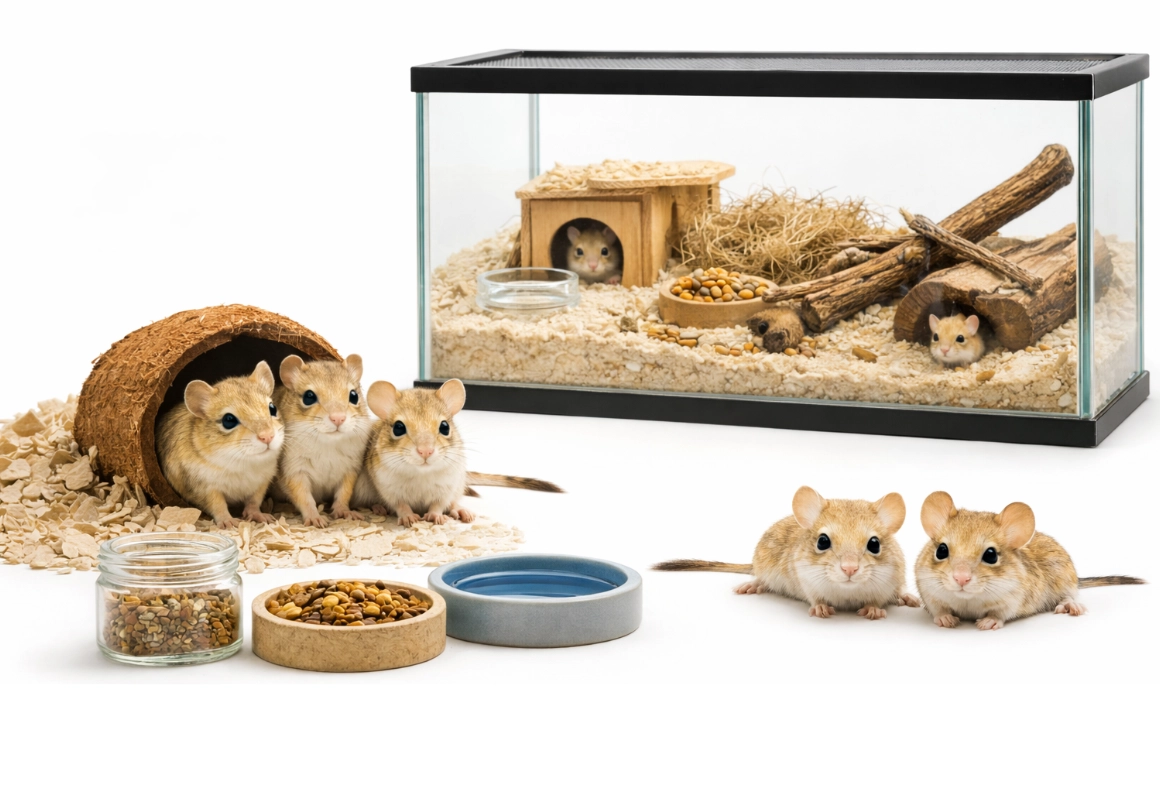
Directly to the Gerbil shop (useful for furnishing & basics): Gerbil (all) · Gerbil cages & terrariums · Gerbil substrate · Gerbil food & nutrition
Shoplinks
Characteristics of the Algerian gerbil
Head-body: ± 6–10 cm • Tail: ± 8–14 cm
Active • Alert • Often mobile and fast
Dry (semi)desert areas in North Africa to West Asia
Many Gerbillus species are crepuscular and nocturnal . In a home hobby setting, you'll therefore likely see them most often in the early evening and later in the day.
Practical expectation: no stuffed animals. If handling does occur, it usually happens at the animal's own pace and with short, calm interactions.
Keeping together: theory and points of interest
In the wild, different Gerbillus species often live near each other, but territorial issues and interspecific tensions can play a role. If you ever keep this species, space and the ability to move around are especially important.
- Often a stable pair or a small group that has become accustomed to each other from a young age is assumed (e.g. littermates).
- Introducing adult animals is more difficult; only approach this with experience and always have a plan B (an additional enclosure).
- If you don't want litters: choose a group of the same sex (here too: observe behaviour critically).
If you see serious unrest or injuries, divorce is the safest option.
Accommodation & dimensions
A glass terrarium or aquarium with a well-fitting mesh lid is usually the most practical. Wire cages are often less suitable because substrate flies out and drafts develop more easily.
- 2 animals: minimum 80 × 40 × 40 cm (l × w × h)
- Group: go wider (think of 120 × 60 × 60 cm as a good base)
- Cover: always, because gerbils can jump and climb well
Place the enclosure in a quiet location (no direct sunlight, no drafts). Keep the temperature stable and prevent rapid cooling at night.
Ground cover: digging as a base
Gerbils are real diggers. A thick layer of substrate, which allows for burrowing, works well as a starting point. A mix often provides more structure and stability.
- Preferably choose a low-dust bedding and add structure (e.g. hay/straw/paper material).
- For the nest: hay, straw, tissues or shredded paper.
- Avoid “cotton wool/fibre” and loose, stringy textiles (legs can get caught).
Practical: always place heavy decorations (stones, ceramics) on the ground and then place ground cover around it, so that nothing can shift when digging underneath.
Sand(zone): coat care & natural behavior
Gerbils often use a sand area for rolling, grooming, and activity. How essential this is for this specific species in a home hobby setting is difficult to say with certainty – but a spacious sand area is, in practice, a staple for many gerbil owners.
- Use suitable bath sand (dry and clean). Some owners choose fine bath sand, others desert sand as a firmer sand zone.
- Make the sand area generous: as a guideline , ⅓ of the enclosure should function as a sand area.
- Maintenance: Sift weekly, remove wet spots and top up where necessary.
Nutrition: lean as a starting point
Many desert dwellers are adapted to a relatively meager diet. A complete gerbil diet is a logical starting point, with supplements provided in small quantities. Exact needs can vary by species and individual, so observe their weight and behavior closely.
- Avoid fatty mixtures; give energy-rich seeds and kernels sparingly.
- Greens: small amounts (e.g., leafy greens, bell peppers, a small piece of carrot). Build up gradually.
- Fruit: sparingly.
- Animal protein : a few times a week (e.g. crickets/grasshoppers/buffalos; mealworms sparingly).
Water: Always offer water via a drinking bottle or a heavy ceramic water bowl (stable, not easy to knock over).
Furnishings & enrichment: tunnels, climbing and foraging
Gerbils are often curious and energetic. Set up their habitat so they have options: digging, hiding, climbing, and searching. Keep changes small and manageable.
- Hiding places: multiple houses/dens so that each animal has somewhere to hide.
- Tunnels & tubes: safe material (ceramic, wood, sturdy plastic) and always stably positioned.
- Foraging: scatter food (partly), use foraging toys and hide spots in the sand.
- Running wheel: choose a solid wheel (no bars) and a guide size of around Ø 25 cm .
Vary, but don't change everything at once. Small adjustments keep things interesting without causing disruption.
Care & handling
Gerbils aren't generally meant to be handled frequently. If you do want to establish contact, calm, routine, and rewards usually work best.
- Get them used to your hand in the enclosure (possibly with a small piece of food).
- Preferably pick up from below (hands held above often feel threatening).
- If necessary, use a tube/jar to move it safely.
- Never lift by the tail ; the tail may be damaged.
- Daily: Check nest/supply for moist food scraps and remove.
- Weekly: sift sand, scoop out wet spots, clean containers.
- Periodically: partially replace the substrate (not all at once, maintain familiar scent areas).
- Just because something is “allowed” doesn’t automatically mean it’s suitable or common in the hobby.
- If you see mutual aggression, injuries or long-term stress signals: separate immediately and seek advice.