 Polski

Rat Tunnels & Tubes – routes, hiding, and active play




- Voor 17 uur besteld, dezelfde dag verzonden!
- Rodent specialist since 2011
- Dispatched from our own stock






- Voor 17 uur besteld, dezelfde dag verzonden!
- Rodent specialist since 2011
- Dispatched from our own stock




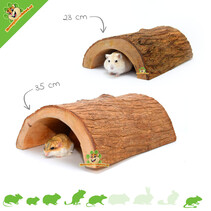

Rat Tunnels & Tubes – building routes, hiding, and active play
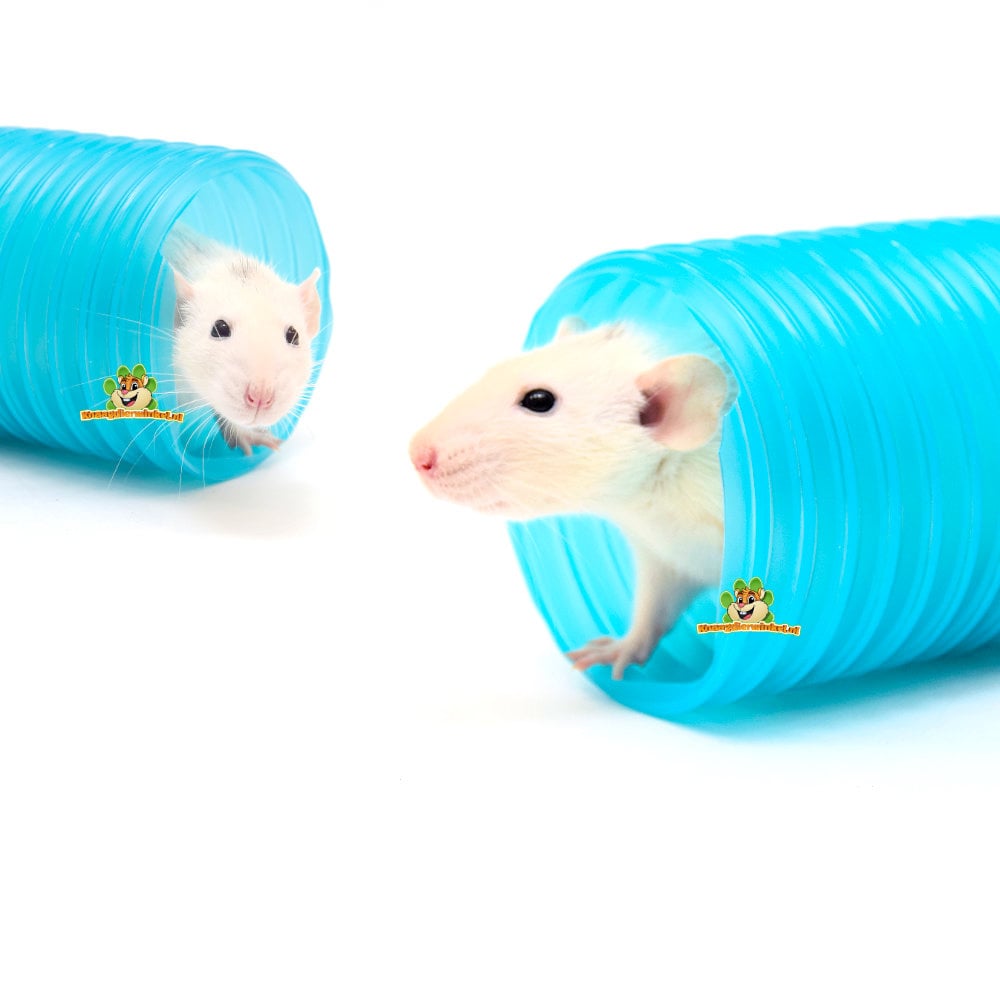 Rat tunnels and tubes make a rat cage much more active and logical. Rats are curious, social, and agile. They enjoy running routes, crawling through things, seeking sheltered passages, and using tunnels as play areas, hiding places, or connections between different parts of the cage. Therefore, when it comes to tunnels, DRD looks not only at “does it fit in the cage?”, but primarily at size, material, ventilation, cleaning, placement, and how the tunnel fits within a safe route.
DRD selects tunnels and tubes that contribute to a complete rat cage: play tunnels for exercise, hanging tunnels as a soft route, sturdy tubes for connections, and natural tunnels for hiding and exploring. Combine tunnels, for example, with rat platforms & ladders , rat hammocks , rat digging boxes , and Ratscaping .
In short
✓ Tunnels and tubes help create safe routes, passages, and hiding places in the rat cage.
✓ Always choose a size in which your rats have plenty of room to move, turn around, and pass each other.
✓ Regularly check tunnels for urine, food residue, gnawing damage, fraying, and adequate ventilation.
Quick links
Why tunnels? · Choosing a tunnel · Types of tunnels · Size & clearance · Installation & routes · Hygiene & inspection · Checklist · Shopping routes · FAQ
Creating routes
Tunnels connect levels, platforms, hammocks, and floor sections. This makes the cage feel less empty and provides rats with clear routes.
Hiding & playing
A tunnel is simultaneously a passageway, a hiding place, and a play element. Curious rats, in particular, enjoy using tunnels to explore.
Connect securely
A well-placed tunnel helps to make height safer to use, especially in combination with platforms, ladders, and intermediate steps.
Why tunnels and tubes are important for rats
Rats love movement, routes, and sheltered passages. In a well-designed rat cage, tunnels are therefore much more than just toys. They make the cage more functional, connect different areas, and give your rats more freedom of choice. A tunnel can be a route to a hammock, a passage to a platform, a hiding place on the floor, or a play element in a digging or foraging zone.
Routes are particularly important in tall cages. A tall cage without good connections can feel empty or awkward. Tunnels, tubes, ladders, and platforms make the height usable. This allows rats to move around more easily without having to constantly make large jumps.
Tunnels are also useful for group animals. They provide passageways and escape routes. Especially when keeping multiple rats, it is pleasant not to have just one route or one resting place. Multiple routes help to organize the cage more calmly and logically.
Choosing a rat tunnel: what to look for?
A good tunnel for rats matches the body size of your rats, its function in the cage, and your cleaning routine. Therefore, do not choose based solely on appearance, but primarily on passage, length, material, ventilation, and placement. A tunnel must be spacious enough to walk through comfortably and easy enough to inspect.
- Choose a tunnel that your rats can easily pass through and won't get stuck in.
- Check whether adult rats, larger males, or multiple rats can use the tunnel comfortably.
- Choose the material based on the function: playing, sleeping, connecting, hiding, or destroying.
- Check if the tunnel can be cleaned or replaced in time.
- Do not use tunnels as the only route to high places, but combine them with platforms or ladders.
- Check regularly for gnawing damage, frayed edges, sharp edges, or accumulated urine.
Unsure about the layout of the cage? Then also check out the rat cage setup information page and the rat cage selection guide .
What types of tunnels and tubes are there for rats?
Not every tunnel serves the same function. Some tunnels are primarily intended for running through, while others are softer and more suitable as a resting place or a hanging route. By combining different types, you make the cage more varied.
Play tunnels
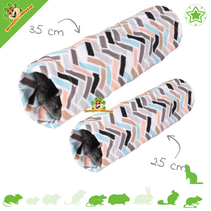
Play tunnels are ideal for walking through, exploring, and using during playtime. They can be placed loosely in the cage, used in a run, or offered temporarily during outdoor playtime. Pay close attention to the diameter so that your rats have plenty of room to pass through.
Hanging tunnels and fleece tunnels
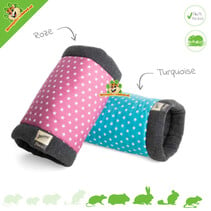
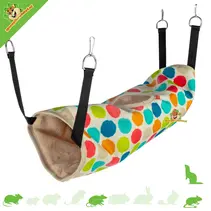
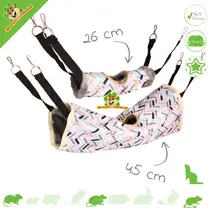
Hanging tunnels and fleece tunnels combine a route and a resting place. Rats can crawl through them, but also lie inside them. This type of tunnel pairs well with hammocks and soft sleeping spots. Regularly check fabric tunnels for urine, odor, fraying, and loose threads.
Modular piping systems
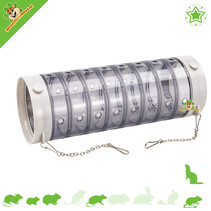
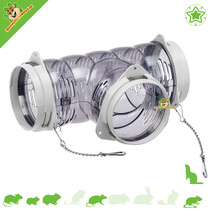
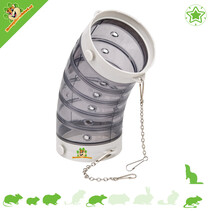
Modular pipe systems are useful when you want to build actual routes with bends, crossovers, or connections. They can help link floors or zones. Pay extra attention to sufficient space, ventilation, and cleaning, as pipes can become dirty more quickly if rats eat or urinate in them.
Natural tunnels
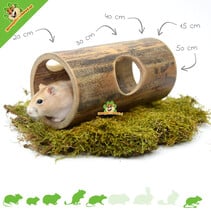
Natural tunnels made of, for example, wood, cork, willow, or similar materials give the cage a more natural look. They are suitable as a hiding place, passageway, or part of Ratscaping. Also, regularly check natural materials for moisture, dirt, and sharp or loose parts.
Cardboard tunnels and demolition material
Cardboard tunnels are fun as temporary enrichment. Rats can walk through them, gnaw on them, and investigate the material. Because cardboard can absorb moisture and odor, replace it as soon as it gets wet, dirty, or damaged.
Size & passage: choose enough space for rats
Size is very important for tunnels and tubes. A tunnel that seems spacious for young or small rats may become too cramped for adult rats. Therefore, always consider the body size of your own rats and not just the species name on the product.
- Your rat must be able to walk through the tunnel easily without straining.
- The tunnel must be spacious enough to turn around or to reverse smoothly.
- In groups, it is preferable if rats do not constantly block each other in a single narrow passage.
- For larger male rats, you would prefer an extra spacious tunnel or wide passage.
- Use narrow parts only when they clearly match the body size of your rats.
A handy rule of thumb: if you notice that your rat has to push, wriggle, or has difficulty turning, the tunnel is not practical enough for daily use.
Safely place tunnels in the rat cage
A tunnel works best when it is part of a logical route. So, do not just place it anywhere in the cage, but observe where your rats like to walk, sleep, or climb. A tunnel can connect the bottom of the cage to a platform, two resting spots, or a digging box and a foraging area.
- Lay tunnels down stably so that they do not constantly roll away or shift.
- Hang tunnels securely when they are used as an elevated route.
- Prevent large open fall spaces under high tunnels.
- Combine tunnels with platforms, ladders, or hammocks as intermediate steps.
- Ensure that you can reach the tunnel for cleaning and inspection.
- Do not place tunnels directly under a water bottle or designated potty spot.
Good to know
✓ A tunnel is most valuable when it has a real function: route, hiding place, play area, or connection.
✓ Always use safe intermediate steps at height so that your rats do not have to jump unnecessarily.
✓ Check narrow or closed pipes extra carefully for cleanliness, odor, and ventilation.
Hygiene & inspection of tunnels and tubes
Rats use tunnels extensively. They run through them, sleep in them, carry food, or sometimes urinate in them. Therefore, tunnels are part of the regular cleaning routine for the rat cage. Fabric tunnels, cardboard tunnels, and closed tube systems, in particular, require regular inspection.
- Check tunnels for urine, odor, wet spots, and old food residue.
- Wash fabric tunnels according to the product's washing instructions.
- Replace the cardboard when it is wet, dirty, or damaged.
- Clean plastic pipes thoroughly and let them dry before returning them.
- Check natural tunnels for moisture, mold, sharp edges, or loose parts.
- For enclosed ducts, ensure sufficient air circulation and accessibility for cleaning.
Combine tunnels with a clearly marked rat toilet zone and practical pee pads . This way, play and resting areas stay fresh more easily.
Checklist: how to choose the right tunnels and pipes
✓ The tunnel is spacious enough for the body size of your rats.
✓ Your rats can safely get in, through, and out of the tunnel.
✓ The tunnel has a clear function: route, hiding place, play area, or connection.
✓ The tunnel can be cleaned, washed, or replaced in time.
✓ There are no sharp edges, loose threads, fraying, or broken suspension points.
✓ The tunnel is safely installed and does not create a large drop space.
Handy shopping routes for tunnels, routes, and cage fittings
Tunnels and tubes work best when they are part of the entire rat cage. With these routes, you quickly create a logical combination of connections, resting places, and enrichment.
Routes & altitude
Make the height of the cage usable with tunnels, platforms, ladders, and safe intermediate steps.
Rat Tunnels & Tubes
Rat Platforms & Ladders
Rat Cage Accessories
Sleeping & sheltering
Combine tunnels with soft and sheltered spots so your rats can choose where to rest.
Enrichment & Ratscaping
Use tunnels as connections to digging zones, foraging areas, and natural landscaping.
Learn more about routes and rat cage setup
Do you want more guidance on creating a safe, active rat cage? These information pages are a good fit for this category:
FAQ – frequently asked questions about rat tunnels and tubes
Why are tunnels fun for rats?
Tunnels align well with curious and active rat behavior. Rats can walk through them, hide, create routes, play, and explore new places. In a tall cage, tunnels also help connect zones.
Which tunnel is suitable for rats?
A suitable tunnel is spacious enough, stable to place, and easy to inspect. Pay particular attention to the passage, the material, and cleaning. For adult or larger rats, it is better to choose an extra-spacious tunnel than a narrow passage.
What is better: a play tunnel or a tube system?
That depends on your goal. A play tunnel is nice for running, exploring, and temporary use. A tube system is handy when you want to create fixed routes with bends, shortcuts, or connections. Many rat cages work well with a combination.
Are fleece or plush tunnels suitable for rats?
Yes, fleece and plush tunnels can be suitable as a soft route or resting place. However, check them regularly for urine, odor, fraying, and loose threads. Wash fabric tunnels on time and replace them when they are damaged.
Where do you place tunnels in a rat cage?
Place tunnels in locations where they truly serve a function: as a route to a plateau, a connection between resting areas, a passage to a digging box, or a play element on the ground. Ensure that the tunnel is positioned stably or securely suspended.
How do you clean rat tunnels?
That depends on the material. Wash fabric tunnels according to the product instructions. Plastic tubes can be wiped down and allowed to dry thoroughly. Replace cardboard as soon as it is wet or dirty. Regularly check all tunnels for food residue, urine, and damage.
DRD chooses tunnels that combine movement, routes, and safety
At DRD Knaagdierwinkel®, we view tunnels and tubes as part of the entire rat cage. A tunnel should not only be fun but also suit the size of your rats, the route within the cage, the cleaning routine, and the way your rats use the cage. This way, you turn a standalone tunnel into a smart connection, hiding place, or enrichment spot.
Undecided between a play tunnel, hanging tunnel, natural tunnel, or tube system? Then check out the Ratten Webshop or contact us via Service & Contact . We are happy to help you decide.
✓ Tunnels, tubes, and play tunnels for routes, hiding, and active play
✓ Smartly combines with platforms, ladders, hammocks, and Ratscaping
✓ Specialist since 2011
✓ Ordered before 17:00, shipped the same day from our own stock
