Polski

Houses for Rodents & Rabbits – rodent houses in every style



- Voor 17 uur besteld, dezelfde dag verzonden!
- Specialist sinds 2011
- Delivery from our own stock



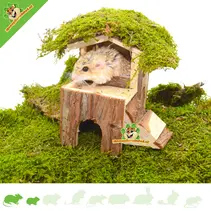


- Voor 17 uur besteld, dezelfde dag verzonden!
- Specialist sinds 2011
- Delivery from our own stock



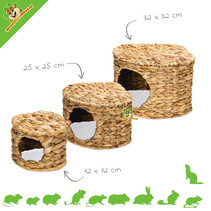


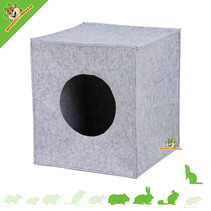
Rodent House & Rodent Houses – Houses for Rodents and Rabbits
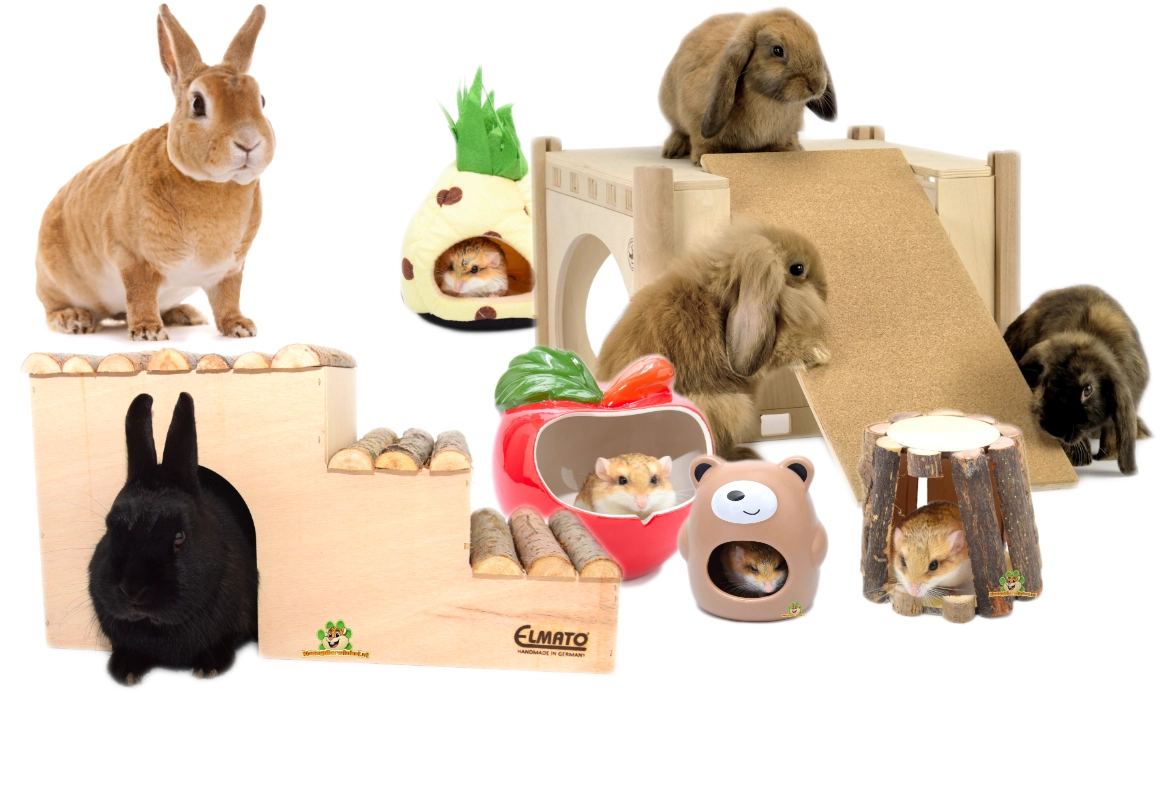 A good rodent house is more than just a "nice little house": it's a permanent hiding place, sleeping area, and resting place within the enclosure. In this category, you'll find all the houses together – from wood and ceramic to terracotta, plastic, resin, and natural (herb/grass) hiding places. We clearly indicate the animal species and sizes for each product. DRD Rodent Shop® has been a specialist since 2011: we help you choose what works practically and is comfortable for your pet.
Quickly to
1) Choose wisely: size, openings & location
✔ Spacious enough to turn and lie down
✔ Preferably multiple entrances/exits where logical
✔ Stable position (especially for climbers)
2) Material = ease of use
✔ Natural: wood or herbs/grass
✔ Cool & sturdy: ceramic or terracotta
✔ Easy to maintain: plastic/ceramic
3) Peace in the group
✔ Group animals like to sleep together: choose more widely
✔ Multiple hiding places prevent crowds
✔ Combine houses with tunnels & routes
Types of houses: choose the material that suits your animal
Wooden houses
Natural look, ideal for incorporating into ground cover.
View wooden houses →
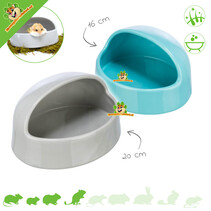
Ceramic houses
Sturdy and often extra comfortable in warm weather; easy to clean.
View ceramics →
Terracotta houses
Natural and cool, beautiful in a natural interior.
View terracotta →
Plastic houses
Practical and easy to maintain; useful for regular cleaning routines.
View plastic →
Resin houses
Robust, often more nibble-resistant and easy to clean.
View synthetic resin →
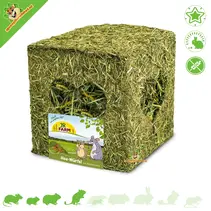
Herb/grass houses
Natural and fun as an extra hiding place (often edible too).
View herbs/grass →
How to choose the right rodent house
1) Size: Think about interior space, not just exterior dimensions
A house should be spacious enough for them to turn around and lie down comfortably. For group animals (such as mice, gerbils, rats, and often guinea pigs/rabbits together), it's best to choose one spacious "main house" that everyone can fit into, plus additional hiding places throughout the enclosure.
2) Inputs: one or two?
Two entrances provide many animals with extra peace and quiet: there's always a second route if a companion is lying "in front of the door." This is often helpful in practice for multiple animals or larger species.
3) Open bottom or closed bottom
An open floor is ideal for making a house disappear into the substrate (popular in hamster scaping), and spot cleaning is often faster. A solid floor can be useful on a platform or in a dry spot in the enclosure.
4) Placement: create routes and zones
Place hiding places along walking routes, not just in the middle of the cage. This helps prey move safely through the enclosure.
Advice per animal species (quickly to your animal)
- (Dwarf) hamster: often ideal: a multi-room house with an extra hiding place. View hamster houses .
- Mice: group sleepers; choose more spacious and multiple sleeping areas. View mouse houses .
- Gerbils: A burrow-like atmosphere works best with a larger house and tunnels. View gerbil houses .
- Rats: clever climbers; combine houses with hanging/climbing spots. View rat houses .
- Guinea pig: Choose a stable and spacious enclosure, preferably with two entrances. View guinea pig houses .
- Rabbit: Go for a generous size and sturdy construction. View rabbit houses .
Popular brands: are you looking for a Trixie rodent house?
Many customers search specifically by brand, for example, " Trixie rodent house ." You can easily find all Trixie houses and accessories via the brand page: Trixie .
Complete the interior
- Tubes & tunnels – additional shelters and “safe movement”.
- Platforms & ladders – more living space and smart walking routes.
- Bedding + nesting material – for comfort and natural behaviour.
- Gnawing material – activity and nibbling fun.
- Playing & foraging – mental challenges in the enclosure.
- Sandboxes + sand – for a fine sand zone where appropriate.
Checklist: choosing a rodent house
✔ Spacious enough: turning + lying down
✔ Entrance(s) appropriate for the animal species (preferably 2 where logical)
✔ Stable position, no unstable construction
✔ No sharp edges or splinters; check regularly
✔ Material chosen for your situation (natural/cool/easy to clean)
✔ Extra hiding places for groups: one large + several small ones
Safety: what should you pay extra attention to?
✔ Check weekly for wear, splinters and loose parts
✔ Place houses stably and prevent falls from roofs/platforms
✔ Choose sufficient ventilation (especially for compact models)
✔ Replace the house when it is no longer sturdy or safe
Frequently asked questions about rodent houses
What is the difference between a "rodent house" and a "rodent house"?
In practice, people usually mean the same thing: a hiding place and a place to sleep. The most important thing is that the size and openings suit your animal and (in groups) the group size.
Which rodent houses are suitable for group animals?
For mice, gerbils, and rats, one spacious enclosure that fits everyone, plus additional hiding places throughout the enclosure, often works. Multiple entrances provide extra peace and quiet.
Which material is the easiest to keep clean?
Ceramic and plastic are usually the easiest to maintain. Wood remains a favorite for its natural look, but requires a bit more spot cleaning and thorough drying.
I'm looking for a "Trixie rodent house." Where can I find one?
You will find all Trixie houses and accessories clearly arranged at Trixie .
✔ Ordered before 5 PM, shipped the same day
✔ Specialist since 2011
✔ Delivered from our own stock