Polski

Guinea pig urine & bladder – stimulating drinking & balanced nutrition
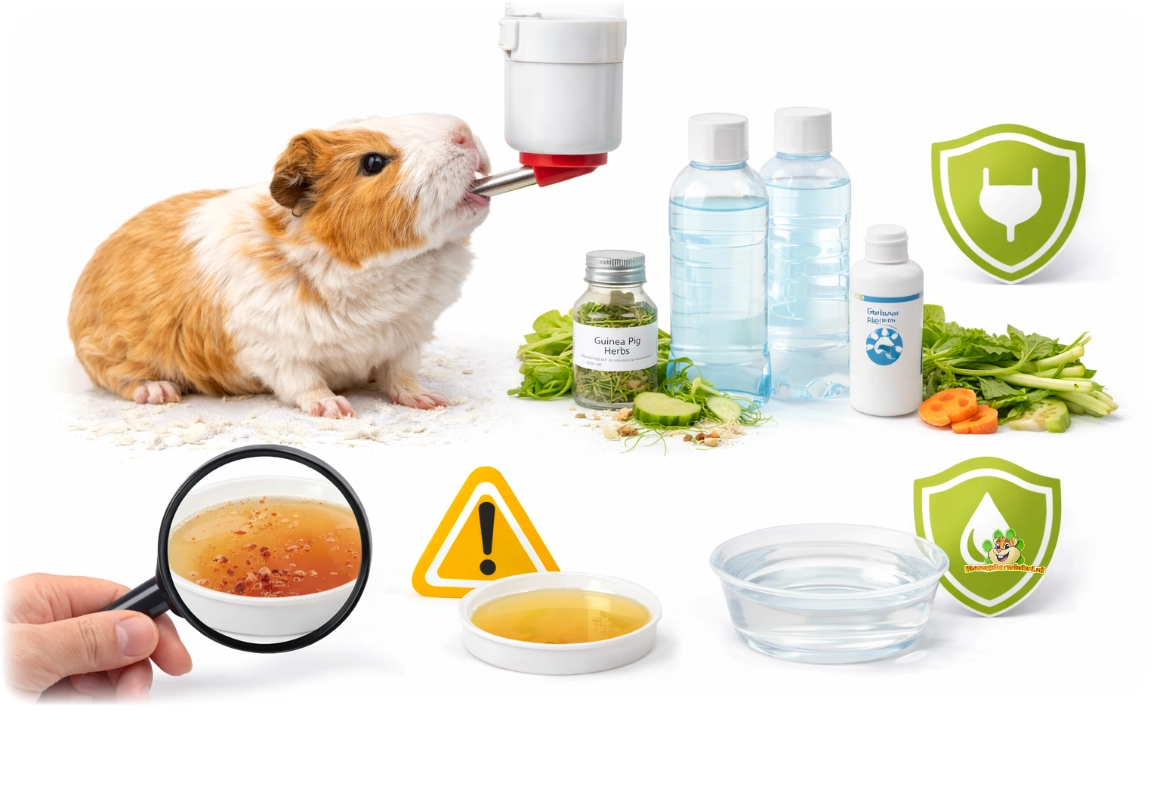 Changes around puddles or noticeably wet spots in the enclosure are signs to pay extra attention. You can often achieve a lot with a strong foundation: sufficient drinking opportunities, plenty of hay, pellets in moderation, and a smart vegetable and herb routine. On this page, you'll find a clear approach and practical shopping links. DRD Rodent Shop® has been a specialist since 2011.
1) What should you pay attention to?
- Frequency: Does your guinea pig pee more or less than you are used to?
- Behavior: Does your guinea pig stay in one place for a noticeably long time, or does it return more often?
- Coat/hindquarters: do the hindquarters get wet or dirty more quickly?
- Accommodation: Do large wet areas develop quickly (especially near the hay/toilet area)?
- General: Does your appetite and normal daily rhythm remain the same?
2) Encourage drinking (bowl, bottle and placement)
Encouraging more guinea pigs to drink starts with accessibility. Especially with two or more guinea pigs, it's often helpful to offer more than one drinking point.
- Water bowl: Choose a heavy, stable bowl that won't tip over easily.
- Drinking bottle: check daily that the spout flows smoothly and does not leak.
- Combining: placing a bowl and bottle next to each other can be helpful if your guinea pig has a preference or if you want to create extra drinking opportunities.
- Placement: Place the water in a clean, dry place and not in the middle of the largest puddle area.
Shop: drinking bottles & water bowls .
3) Balanced nutrition (hay, pellets, vegetables & herbs)
If you want to pay extra attention to the "bladder foundation," it's primarily about a consistent diet with plenty of fiber and sufficient fluids. Below are the most important components.
Hay: always the leading role
- Provide unlimited hay and refresh it small but often (fresh hay is eaten better).
- Work with a hay rack + an extra hay place, so that the hay stays cleaner.
Shop: guinea pig hay and guinea pig hay racks .
Pellets and staple food: supplement, not the main part
- Pellets are intended as a supplement to hay and green fodder.
- Preferably choose a guinea pig food that suits the life stage (young/adult) and keep the portion manageable.
- Avoid too many extras at once (multiple snacks, lots of "additional food"): it is better to choose one clear routine.
Shop: guinea pig food & nutrition and guinea pig pellets .
Adding “extra” minerals?
Supplementing minerals through gnawing stones/mineral blocks isn't necessary for most guinea pigs when feeding a complete basic diet. Not sure? It's best to stick to a strict diet (hay + appropriate food + vegetables/herbs) and seek professional advice. Mineral stones can often do more harm than good, as they can potentially cause bladder grit.
4) Vegetables & herbs: smart choices and routine
Vegetables and herbs provide moisture and variety. Stick to a consistent routine: choose a few "go-to" vegetables and alternate them gradually. Major changes or too many different varieties at once can make the menu confusing.
- Start simple: 1–2 types of vegetables, then gradually expand.
- Combine with herbs: dried herbs can be used as a small addition, fresh herbs as a tasty variation.
- Snacks: Keep sweets/snacks small and functional (not the basics).
Shop: guinea pig herbs , fresh guinea pig herbs and guinea pig snacks .
5) Accommodation: dryness, toilet area and comfort
A dry floor helps keep the hindquarters clean and makes it easier to spot changes around urination. A fixed toilet area saves time and keeps the rest of the enclosure cleaner.
- Create one permanent toilet/pee zone with a toilet bin or pee mat.
- Spot-clean wet areas daily and refresh the area more often than the rest.
- Choose bedding that suits your cleaning rhythm (dry and comfortable).
Shopping links: guinea pig toilets , ground mats & pee mats , guinea pig bedding and guinea pig cleaning products .
6) Next step: when to seek advice
If you notice significant changes in urinating behavior, if your guinea pig gets wet/dirty around its hindquarters more quickly, or if you're concerned about the rate of change, it's wise to seek professional advice. A good transport box is helpful for transportation. For general support and care products, please see guinea pig health and guinea pig care .
- Always unlimited hay available (preferably via a hay rack + extra hay spot).
- At least 1–2 drinking points (bowl and/or bottle), cleaned and filled daily.
- Pellets in clear portions as a supplement, not as main food.
- Vegetables and (fresh/dried) herbs in a fixed routine: alternate calmly.
- Additional minerals “loose” (gnawing stones/mineral blocks) are usually not necessary with complete food.
- Set up a toilet/pee area so that you notice changes more quickly.
- Always change food gradually; avoid major menu changes at once.
- Limit “extras” when you want to figure something out: choose one clear routine and observe.
- Do not give any medicine or remedy without professional advice.
What is the most important diet if I want to pay extra attention to my urine/bladder?
Hay remains the foundation. Combine that with pellets as a supplement and a consistent routine of vegetables/herbs for moisture and variety.
Does it help to place a water bowl next to a drinking bottle?
This can actually be useful: some guinea pigs prefer to drink from a bowl, and with two drinking points you give them more drinking opportunities.
Which herbs can I give?
Use herbs as a supplement and vary your diet. Check out our selection of guinea pig herbs and fresh herbs .
Read more: Guinea pig information . Background information: LICG .
Would you like us to help you choose the right products for your menu and drinks setup? Then check out our service page .