 Polski

Guinea pig information – nutrition, housing, behavior and care
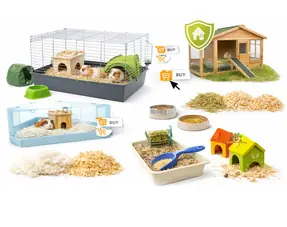


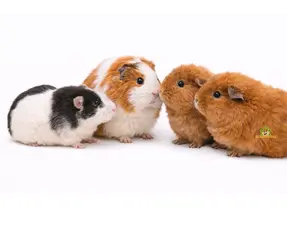


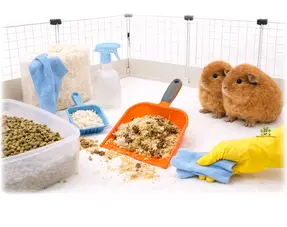

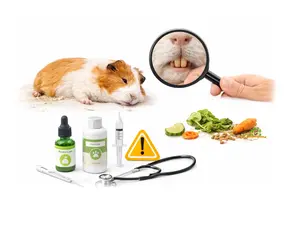
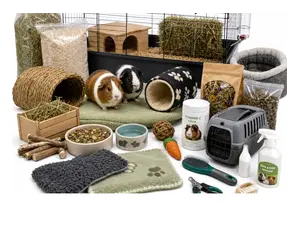
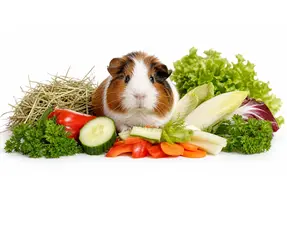
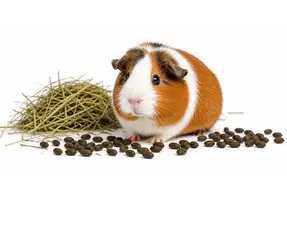
Guinea pig information: practical guides for nutrition, housing, behavior, and care
 Are you looking for clear guinea pig information? On this page, you will find the most important buying guides and information pages all in one place. From what you need for guinea pigs and the guinea pig cage buying guide to nutrition, vitamin C, vegetables, droppings, bonding, taming, guinea pig language, and health.
Guinea pigs are social ground animals with clear needs. They require plenty of guinea pig hay , suitable guinea pig food , daily attention to vitamin C, sufficient floor space, companions, hiding places, and a dry, easy-to-clean substrate.
At DRD Knaagdierwinkel®, we use these information pages as the knowledge base behind our product range. We look not only at what a product is, but especially at what it does for your guinea pig: does it help with eating, resting, hiding, hygiene, behavior, exercise, or daily checks? This way, guinea pig information becomes directly applicable to your enclosure and care routine. Specialist since 2011.
✓ Practical guinea pig information for beginners and experienced guinea pig owners
✓ Selection aids for cage, food, vitamin C, bedding, behavior, and care
✓ Direct routes to the correct guinea pig categories and in-depth pages
✓ Selected and explained by DRD Knaagdierwinkel® – Specialist since 2011
Quick links
Starting with guinea pigs • Selection guides • Nutrition & vitamin C • Housing & bedding • Behavior & bonding • Health & care • Daily check-ups • Shop routes • FAQ
Starting with guinea pigs: what do you need to know first?
A good start begins with understanding the basics. Guinea pigs prefer to live together, primarily use floor space, eat a lot of hay, and require daily vitamin C through appropriate food. Additionally, they need multiple hiding places so they feel safe and can avoid each other.
When you are just starting out, it makes sense to first look at housing, nutrition, and daily care. After that, you can delve deeper into behavior, bonding, taming, cleaning, and health checks. This way, you build a guinea pig routine that works, step by step.
What do you need for guinea pigs?
Complete checklist for enclosure, hay, guinea pig food, vitamin C, bedding, houses, tunnels, care, and transport.
Guinea pig cage selection guide
For choosing a spacious, practical, and easy-to-furnish guinea pig enclosure.
Guinea pig food selection guide
For hay, guinea pig food, pellets, herbs, snacks, vegetables, and vitamin C.
Guinea pig selection guides: quickly to the right basics
Our selection aids help you choose not just a product, but a suitable solution. This is important because nutrition, enclosure, bedding, hay, water, and shelter are interconnected.
Guinea pig cage selection guide
For floor area, layout, hiding places, hay corners, and ease of cleaning.
Guinea pig food selection guide
For hay, feed, pellets, mixed feed, herbs, snacks, and vitamin C.
What do you need for guinea pigs?
For the complete basics: cage, hay, food, bedding, shelter, transport, and care.
Guinea pig diet: hay, guinea pig food, vegetables and vitamin C
Nutrition is one of the most important topics for guinea pigs. Hay forms the daily basis, guinea pig food provides targeted supplementation, and vitamin C always deserves attention. Herbs, snacks, flowers, and leaves can provide nice variety, but remain supplementary.
Do not use food merely as “something in a bowl,” but as part of behavior and care. Hay stimulates chewing and activity, herbs can make hay time more interesting, and foraging gives guinea pigs something to do quietly.
Guinea pig food and nutrition
Choose food that is tailored to guinea pigs and their need for vitamin C.
All-in-one chunks
Handy for picky eaters, because every kibble has the same composition.
Vitamin C in guinea pigs
Guinea pigs do not produce their own vitamin C. Read how to practically incorporate this into your daily routine.
Guinea pig vegetable list
Which vegetables can a guinea pig eat, what should you give in moderation, and what is it better not to give?
Guinea pig droppings
Droppings reveal a lot about eating, hay intake, and bowel function. Handy for a daily check.
Guinea pig housing: space, substrate, hiding places, and movement routes
A good guinea pig enclosure has plenty of usable floor space. Guinea pigs are ground-dwelling animals and benefit more from horizontal space than from high levels. The layout must allow room for walking, resting, eating hay, drinking water, hiding, and avoiding each other.
Think in zones: a hay corner, water spot, feeding area, hiding places, tunnels, resting spots, and a floor that is dry and practically easy to keep clean. With multiple guinea pigs, spreading them out is especially important so that everything doesn't happen in one popular spot.
Guinea pig cage
Spacious guinea pig cages and enclosures with attention to floor space and furnishings.
C&C guinea pig cages
Modular guinea pig enclosures for owners who want to work with zones, floor mats, and expansions.
Ground cover
For a dry, comfortable floor that is practically easy to keep clean.
Ground mats & pee pads
For C&C, hay corners, rest areas, and designated urination spots.
C&C ground cover
For floor mats, pee mats, toilet areas, and hay corners in C&C enclosures.
Long-haired guinea pigs
For coat-friendly bases, hindquarters control, and practical grooming.
Guinea pig behavior: bonding, taming, and understanding guinea pig language
Guinea pigs communicate through sound, posture, movement, and group behavior. By better understanding guinea pig language, you can more quickly recognize whether your guinea pig is relaxed, curious, insecure, or tense. This helps with taming, bonding, and improving the guinea pig's setup.
Space is important for bonding and group behavior. Multiple hiding places, open routes, and sufficient access to hay and water can make a big difference. Taming works best with calm, repetition, and clear expectations.
Pairing guinea pigs
For introductions, group behavior, neutral space, and what to look out for when placing people together.
Taming a guinea pig
For gentle steps regarding getting used to things, building trust, picking up, and dealing with startled behavior.
Guinea language
For sounds, posture, movement, and signals in the behavior of guinea pigs.
Guinea pig health and care: recognizing the signs
Guinea pigs do not always clearly show signs of discomfort. Therefore, daily checks are important. Pay attention to eating, grabbing hay, drinking, droppings, weight, posture, movement, breathing, coat, eyes, nose, and behavior. Especially eating less or not eating at all is a signal to act quickly in guinea pigs.
The information pages on health and care help you better recognize signs. They do not replace a veterinarian, but they do provide guidance to help you see sooner when you should not wait.
Guinea pig not eating
For signals regarding reduced eating, not taking hay, and when prompt action is important.
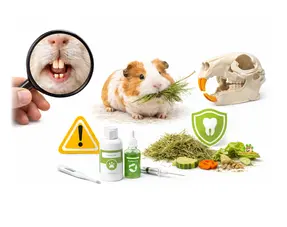
Guinea pig teeth
For information on chewing, eating hay, dental signals, and when to have them checked further.
Guinea pig itching and parasites
For itching, bald spots, scratching, skin checks, and when to seek further examination.
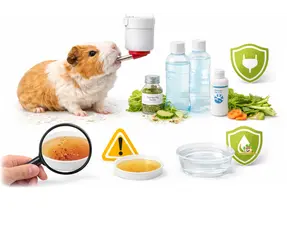
Guinea pig bladder problems
For signs related to urination, urine, discomfort, and daily monitoring.
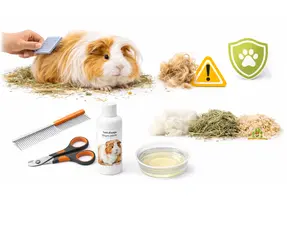
Caring for a long-haired guinea pig
For coat control, preventing tangles, hindquarter hygiene, and suitable bedding.
Daily check: spotting small signals faster
A good guinea pig routine consists of more than just feeding. Check hay, water, wet spots, food remnants, droppings, resting places, and behavior daily. Small changes are more noticeable when you check roughly the same things every day.
✓ Does your guinea pig normally eat hay and guinea pig food?
✓ Are there enough normal droppings?
✓ Is your guinea pig drinking normally and is the water bowl clean?
✓ Are the hay corner, resting areas, and urination spots dry enough?
✓ Does your guinea pig move normally and react as you are used to?
✓ Do you notice reduced appetite, no droppings, diarrhea, pain, shortness of breath, or lethargy? Contact a veterinarian.
Cleaning and daily care
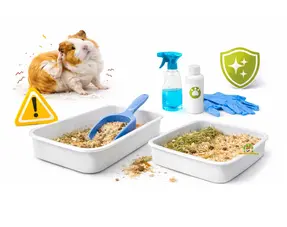
A clean enclosure starts with recognizing designated spots. The hay corner, favorite resting spots, and designated potty spots often get dirty the fastest. You can better maintain these zones with bedding, pee pads, litter box bedding, and litter boxes.
Read more: Cleaning a guinea pig cage • Guinea pig cleaning products • Guinea pig litter boxes • Guinea pig litter box bedding
Useful shopping routes for guinea pig information
Feed & hay
Guinea pig hay • Guinea pig food and nutrition • Guinea pig herbs • Fresh guinea pig herbs • Guinea pig snacks
Accommodation & furnishings
Guinea pig cage • C&C guinea pig cages • Guinea pig houses • Guinea pig tunnels • Guinea pig hay racks
Soil & hygiene
Guinea pig bedding • Guinea pig floor mats and pee pads • Guinea pig toilet bedding • Guinea pig toilets • Guinea pig cleaning products
Care & Health
Guinea pig care • Guinea pig health • Vitamin C Guinea pig • Guinea pig transport box
DRD makes the choice: knowledge as the basis for better product choices
At DRD, we view guinea pig information not as standalone text, but as a decision aid. Good information helps you understand why a product does or does not suit your guinea pigs, your enclosure, and your routine.
The strength lies in coherence. Nutrition, hay, vitamin C, enclosure, bedding, hiding places, behavior, and health belong together. If that foundation is right, product choices become clearer and you avoid bad purchases.
Checklist – strong foundation for guinea pigs
✓ Ensure a spacious enclosure with plenty of usable floor space.
✓ Offer plenty of hay as a regular daily basis.
✓ Choose guinea pig food that is suitable for guinea pigs and pay attention to vitamin C daily.
✓ Keep guinea pigs social, with sufficient space and multiple hiding places.
✓ Use bedding, pee pads, or litter boxes to keep the floor dry.
✓ Check food, drink, droppings, behavior, posture, and movement daily.
✓ Contact a veterinarian if there is no eating, lethargy, pain, shortness of breath, or a noticeable change.
Good to know
This information helps you make better choices regarding nutrition, housing, care, and behavior. For clear health complaints, a veterinarian remains the right step.
In particular, not eating, eating significantly less, heavy breathing, pain, weight loss, or severely abnormal behavior requires prompt action. Do not wait.
Frequently asked questions about guinea pig information
What do you need to know before getting guinea pigs?
Guinea pigs are social ground animals. They need conspecifics, plenty of floor space, ample hay, suitable guinea pig food, vitamin C, hiding places, water, and a dry substrate.
Which guinea pig information is most important for beginners?
Start with housing, nutrition, vitamin C, companions, and daily care. After that, you can delve deeper into bonding, taming, guinea pig language, health, and cleaning.
Where can I find help choosing a guinea pig cage?
Use the guinea pig cage selection guide to look at floor area, layout, hiding places, hay corners, ease of cleaning, and the number of guinea pigs.
Where can I find help with guinea pig nutrition?
Use the guinea pig food selection guide for explanations about hay, guinea pig food, pellets, herbs, snacks, vitamin C, vegetables, and the role of supplementary products.
Why is vitamin C so important for guinea pigs?
Guinea pigs do not produce vitamin C themselves and need it through their diet. Therefore, vitamin C is a constant focus in their daily care.
How do you learn to understand guinea pig language?
Pay attention to sounds, posture, movement, hiding behavior, and group behavior. The information page on guinea pig language helps to better recognize signals.
What do you do if a guinea pig doesn't eat?
Don't wait. Check if your guinea pig is eating hay and food and contact a veterinarian immediately. Not eating is an important warning sign in guinea pigs.
Why are guinea pig droppings important?
Droppings provide practical information about eating, hay intake, and bowel function. Fewer, smaller, soft, or no droppings are signals to take a closer look.
What information helps with daily care?
Information about nail trimming, caring for long-haired guinea pigs, cleaning the guinea pig cage, bedding, litter boxes, droppings, and health signs helps with the daily routine.
What do you combine with guinea pig information?
Combine information with practical categories such as guinea pig food, hay, bedding, guinea pig cages, houses, tunnels, care, cleaning products, and health products.
✓ Guinea pig information on nutrition, housing, behavior, care, and health
✓ Practical buying guides for guinea pig cages, guinea pig food, vitamin C, bonding, and daily care
✓ With direct routes to hay, guinea pig food, bedding, houses, tunnels, care, and health
✓ Ordered before 5 PM, shipped the same day
✓ Specialist since 2011
✓ Delivered from our own stock
Unsure which information or product path best suits your guinea pigs? Feel free to contact us via our contact page . We are happy to help you figure it out.
