Polski


Hamster snack selection guide – healthy rewards, foraging & smart portions
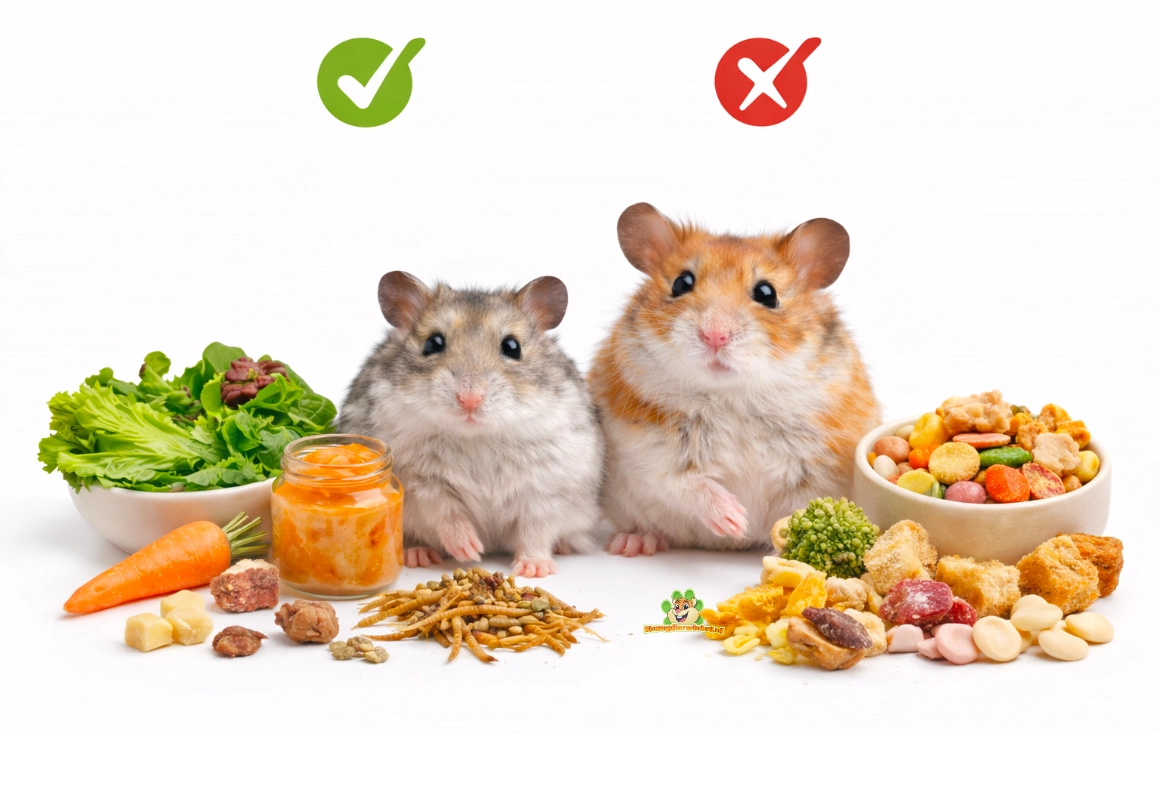 Snacks are ideal for building trust, providing variety, and encouraging foraging behavior. It's all about small portions , smart choices , and a helpful routine . This page explains which types of snacks are best for Syrian and dwarf hamsters, how often to feed them, and how to use snacks as enrichment in the enclosure.
Directly to the assortment? Hamster snacks .
DRD Rodent Shop® has been a specialist since 2011: selected for safety, animal welfare, and practical applicability.
Quickly to
Rewarding without overfeeding
Small portions, cleverly chosen – appropriate for type and size.
Variation that is useful
Herbs and vegetables as a snack that also enriches.
Foraging = activity
Let your hamster search and collect; this provides peace and challenge.
What is a good snack?
A good snack is primarily small , repeatable , and easy to portion . Think of its functions: reward (taming), enrichment (foraging), and the occasional treat. The smaller the hamster, the more important mini-portions are.
Handy to combine with food selection: hamster food and herbs & seeds .
Snack types: what is appropriate when?
1) Herbs, flowers & seeds
These are often the most practical snacks: light, fragrant, and ideal for sprinkling or rewarding individually. See: Hamster herbs & seeds .
2) Dried vegetables
Dried vegetables are easy to portion and convenient as a topping for foraging. See: Hamster Dried Vegetables .
3) Dried fruit
Fruit is usually a real treat. Give it small amounts and not too often. See: Hamster dried fruit .
4) Animal proteins
Many hamsters love insect treats as a reward. Give them small doses and adjust them to their regular diet. See: Hamster animal proteins .
5) Gnawing & activity snacks
Use gnawing and activity items primarily for challenge and destructive behavior, not as an "extra meal." Combine with: hamster gnawing material .
Portions & frequency
Snacks don't have to be big to be effective. On the contrary: mini snacks are ideal for repetition and portion control. Use this as a practical starting point:
- Dwarf hamster: mini-rewards (2–4 times a day is fine), preferably no “big snacks”.
- Golden hamster: slightly larger pieces are fine, but keep them functional and small.
- Fruit: a treat, small and not part of a daily routine.
- Protein snacks: usually a small amount 1–3 times a week, depending on your basic diet.
Tip: If you give snacks, you can give a little less basic food that day, so that the total remains balanced.
Reward & tame
The best training snacks are one-bite: quick to eat, not sticky, and reusable. Good options include loose seeds, small herb pieces, mini vegetables, or a small insect.
- Reward based on timing: immediately when your hamster shows the desired behavior.
- Make it predictable: one fixed training snack often works best.
- Want a peaceful environment? Use a dedicated reward spot with food bowls .
Using snacks for foraging
Foraging is one of the easiest ways to keep your hamster occupied. Instead of "giving," let your hamster search and gather. Useful here: playing and foraging , and inspiration through hamster scaping .
- Sprinkle: spread a pinch of herbs/vegetables through the ground cover.
- Hiding: under cork, behind a house or in tunnels.
- Rotate: Rotate 2–3 foraging options per week for continued interest.
Storage & hygiene
Store snacks in a dry, sealed container. Hamsters like to hoard food; check the nest's inventory occasionally, especially for sticky or perishable snacks. Also, always provide fresh water in bottles and water bowls .
Checklist: How to snack smart
- I choose snacks that are small and repeatable .
- I often use herbs/vegetables as forage toppings.
- I give fruit as a treat, not as a standard routine.
- I give small protein snacks and adjust them to the basic food.
- I let my hamster search (scatter/hide) instead of putting everything in one container.
- I store snacks dry and sealed and check the stock in the nest occasionally.
Maintenance
- Remove any leftover fresh snacks in time (especially if they disappear into the nest).
- Clean food bowls weekly; check/change water daily.
- Also use foraging to spread out “snack spots” so that there is less of a single, fixed cluttered area.
- Combine snack times with a quick check of the enclosure (hiding routes, sand bath, wet spots).
Conveniently combine: ground cover , sand & sand bath .
Safety
- Introduce new snacks one at a time and start with mini portions.
- Do not feed salty, spicy or sweet “people food”.
- Avoid large, sticky, or perishable portions that could disappear into the nest.
- Check gnawing and activity items for size and suitability for your hamster.
- In case of sudden changes in eating, drinking or behaviour: if in doubt, contact a veterinarian.
FAQ – hamster snacks
Which snacks can I give most often?
Herbs/botanicals and small vegetable toppers are often the most practical for regular use, provided you use them in small doses.
What is a good training snack?
Something you can give individually: loose seeds, mini herb pieces, a small vegetable chip or a small insect.
Why does everything disappear into the nest?
Hoarding is normal behavior. Give smaller portions and distribute treats throughout the enclosure instead of in one pile.
Are snacks necessary?
Not "necessary," but very useful for rewarding and enrichment. It works best when you use snacks deliberately and in moderation.
Useful shopping links for smart combinations
- Hamster snacks
- Herbs & seeds
- Dried vegetables
- Dried fruit
- Animal proteins
- Playing & foraging
- Hamster cages
- Houses & tunnels
- Sand & sand bath
✓ Specialist since 2011 | ✓ Smartly selected range | ✓ Fast shipping from our own stock
Would you like us to help you decide which snacks are best suited to your hamster and your regular diet? Check out our customer service page .