Polski

Hamster sleep – day/night rhythm, waking & temperature balance
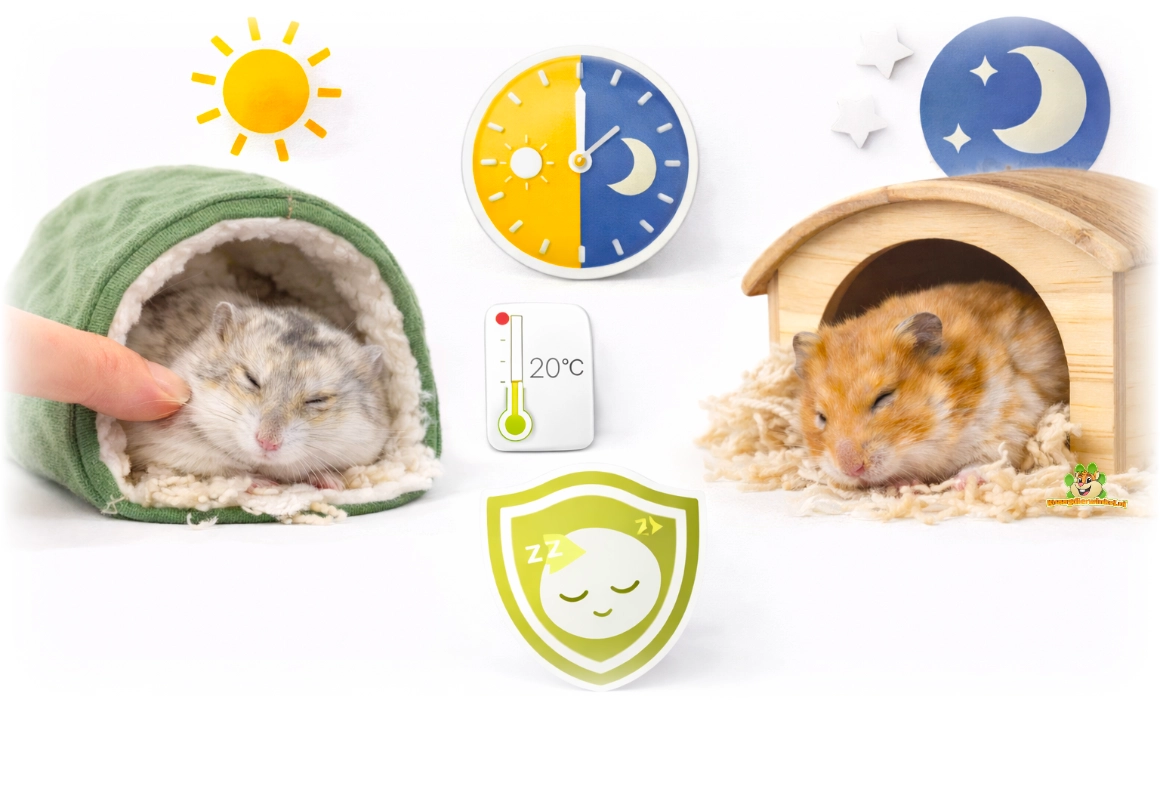 A hamster is naturally active primarily in the evening and night. So sleeping during the day is normal. However, it does raise questions: "Isn't he sleeping too much?", "Can I wake him up?", and "What if he feels cold?" This guide will teach you the difference between healthy sleep behavior and situations where you need to be extra vigilant. We also provide practical tips for a stable environment with plenty of nesting material and safe furnishings. DRD Rodent Shop® has been a specialist since 2011.
Directly to the Hamster shop: Hamster (all) · Nesting material · Houses · Summer products
Quick to:
Checklist: sleep & day/night (quick, good foundation)
- ✓ Sleeping during the day is normal; plan contact moments in the evening .
- ✓ Leave the nesting area alone as much as possible.
- ✓ Provide plenty of nesting material and at least one safe house.
- ✓ Keep the environment stable: no drafts, no extreme heat, quiet place.
- ✓ If you have any concerns about your dog's fitness (not eating or drinking, sitting hunched over, or short of breath), consult your veterinarian.
✓ Night active
A hamster that sleeps during the day is doing exactly what suits him.
✓ Soft contact
Talking calmly, offering a mini snack and letting your hamster choose works best.
✓ Temperature in balance
Too cold or too hot is risky. A stable location in your home prevents many problems.
Day/night rhythm: what is normal?
Most hamsters wake up in the evening and are active (in phases) during the night. During the day, they often sleep deeply in their nests. Some hamsters will briefly check on their food or drink, then dive back down. This is normal behavior.
When to wake up/when not to wake up?
It's best not to wake your child for a "quick cuddle." This can cause anxiety and can trigger startled reactions. It does make sense sometimes, however, for:
- Medical necessity (check-up, veterinarian).
- Moving (e.g. maintenance on the enclosure) – do this carefully with a transport box.
- If you are concerned because he has not been seen for an unusually long time and there are other signs (not eating/drinking, unusual smell, sounds).
How to make safe contact (without fear)
- Speak softly near the enclosure so that he can “hear you coming”.
- Offer a mini snack at the entrance of the house (not deep into the nest).
- If you need to move, use a tunnel or transport box instead of grabbing.
- Work low, calmly, and briefly. Stop if your hamster becomes restless.
Too cold/too hot: recognizing signals
Too warm: lethargic, panting/suffocating, weak, feeling warm. Provide coolness, fresh water, and avoid direct sunlight. Summer help can be found in cooling products.
Too cold: very lethargic, cold to the touch, barely responsive. Warm up slowly (gradually, without a hot heat source) and consult a vet if in doubt. A stable location and good nesting material are the most effective preventative measures.
Safety (peace, nest and environment)
- Place the enclosure in a quiet location (not right next to a TV/speaker/busy walking route).
- Avoid draughts and direct sunlight in the enclosure.
- Provide plenty of nesting material so your hamster can regulate its microclimate.
- Does your hamster's behavior suddenly change or doesn't seem well? Consult your vet.
Useful Hamster shopping links (most relevant)
Nest & shelter:
Nesting material · Houses · Ground cover
Coolness & water:
Summer products · Drinking bottles & water bowls
Move quietly:
Questions? Visit our service page .
For general background information you can also consult the LICG .
FAQ – Hamster Sleeping & Waking Up
My hamster sleeps all day, is that bad?
Usually not. Hamsters sleep during the day and become active in the evening/night. Pay particular attention to their eating, drinking, and activity in the evening.
Can I wake my hamster to play?
Preferably not. Wait until he's awake on his own. That will build more trust and reduce startle reactions.
What helps most to prevent hot/cold problems?
A stable location in the house, away from drafts or direct sunlight, and plenty of nesting material. See: Nesting material .
✓ Understand the natural rhythm (more rest, more fun)
✓ Practical tips for safe contact and movement
✓ Specialist selection assistance since 2011