Polski


Hamster food selection guide – how to choose the right base, snacks & extras
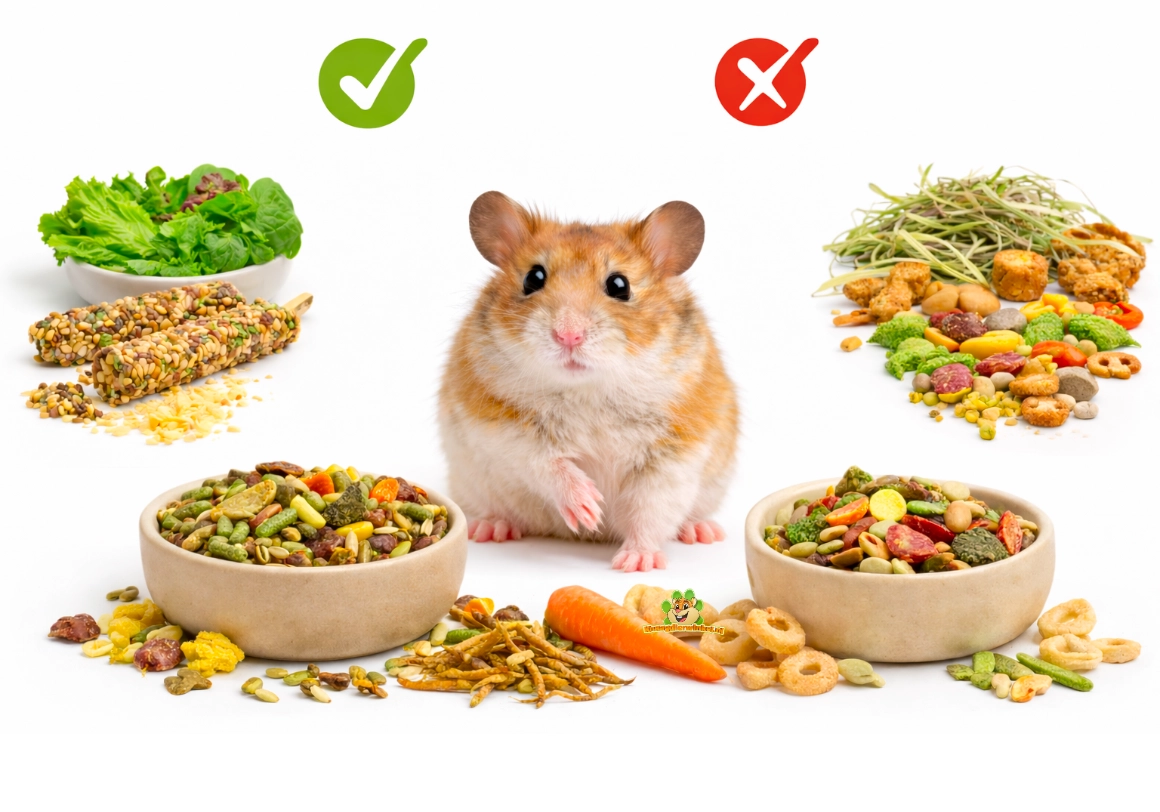 Hamsters (both golden and dwarf hamsters) are active foragers: they love to search, select, and hoard their food. Good food is therefore more than just "something in a bowl": it's the foundation for energy, coat condition, natural activity, and a healthy routine. This guide explains how to choose hamster food wisely, how to understand the label, and which extras (herbs, vegetables, snacks, and animal proteins) are suitable for your hamster. DRD Rodent Shop® has been a specialist since 2011 – we're happy to help you choose from our carefully curated range.
Quickly to
Logical basis
Choose a complete base that suits your hamster and your feeding style.
Choose label-proof
Snap ingredients and analytical values, hassle-free.
Healthy variation
Herbs, vegetables and proteins as a supplement – with clear portion tips.
1) The basics: mixed food or all-in-one (chunks/pellets)
In the Hamster Food category you will find roughly two styles:
- Mixed feeding (mix) – often with seeds, grains, herbs, vegetables, and sometimes animal components. This aligns well with natural foraging behavior.
- All-in-one (kibble/pellet) – each piece is "complete." Convenient for hamsters that are extremely selective, or if you prefer to keep a tight lid on the dosage.
Many owners choose a mixed feed as a base and use an all-in-one as (temporary) support when selective eating is a challenge. Whichever choice is best, pay particular attention to quality, variety, and a suitable energy level .
Tip: Do you have a dwarf hamster and want more specific advice? Then also check out the separate Dwarf Hamster Food Selection Guide page (link to the new page will follow).
2) Reading the label: what should you pay attention to?
The front of a package doesn't tell the whole story. This quick "label scan" will get you a long way:
- Ingredients list : Ingredients are usually listed in order of quantity. Look for recognizable ingredients (seeds, herbs, vegetables) and avoid an excess of "sweet" ingredients.
- Analytical constituents : Check for crude protein , crude fat , and crude fiber . Hamsters generally benefit from a diet that is not excessively fatty and has sufficient structure and fiber.
- Variety : A wide variety helps with natural activities. Too one-sided (only large seeds or mainly one type) is often less interesting and less helpful for portion control.
Practical: The "best" values vary by species, age, activity level, and even by individual. Use the label to avoid extremes (e.g., very fatty, very sweet, or little variety).
3) Extras: herbs, vegetables, snacks & animal proteins
3.1 Animal proteins (as a supplement)
Hamsters are omnivores. Many hamsters thrive with a small addition of animal protein, depending on their basic diet. Consider, for example, dried insects. You can find suitable options in Hamster Animal Proteins .
- Guideline : 1–3 times a week a small amount (for example a few small insects), or less if your basic food is already protein-rich.
- Tip : Use it as a “search snack” by hiding it in ground cover or foraging toys.
3.2 Herbs & seeds
Herb mixes, loose seeds, and botanicals provide variety, scent trails, and extra foraging fun. See: Hamster Herbs and Seeds .
- Use herbs as a topper over the base, or as part of a “feed trail”.
- Loose seeds are useful for rewarding or for tailoring food precisely to activity.
3.3 Vegetables & fruit (fresh or dried)
Vegetables are often a nice addition in small portions. Fruit is also an option, but keep it really limited and treat it as a treat. You'll find options at: Hamster Dried Vegetables , Hamster Dried Fruit , and Fresh Hamster Plants .
- Start small : introduce new items one at a time, so you can see what your hamster likes.
- Portion tip : it is better to give a mini portion more often than a large portion at once (especially with small hamsters).
- Be careful with sticky snacks : they're more likely to end up in the nest. When in doubt, choose dried vegetables or herbs instead.
3.4 Snacks: rewarding without overfeeding
Snacks are perfect for building trust and training, but choose them wisely and portion them out wisely. See: Hamster Snacks .
- Use snacks as a reward (small, frequent) instead of an “extra meal”.
- Do you feed a lot of snacks? Then give slightly less of the basic food that day.
4) Feeding as enrichment: how to make it fun (and convenient)
Hamsters are designed to search. By offering them intelligently, you encourage natural behavior and prevent boredom:
- Scattering : spread (part of) the food through the ground cover.
- Foraging toys : make your hamster work for its food. Check out Hamster Play & Foraging .
- Bowl or water dish : useful for checking and maintaining routines. See Hamster Food Bowl and Hamster Drinking Bottles & Water Bowls .
Practical routine tip: preferably feed the staple food at a fixed time (many hamsters are more active in the evening). Don't automatically "refill" the food; first check what's left and whether your hamster is mainly fishing out the tasty bits.
5) Storage & hygiene: keep fresh without hassle
Storage tips
- Store food in a dry, cool and dark place (preferably in a well-sealed container).
- Check regularly for moisture and unwanted “hitchhikers”.
- Clean food bowls weekly; change/check water daily.
- Do not put fresh food or fresh plants in the nest: give it in mini-portions and remove any leftovers.
Checklist: how to choose your hamster food
- I choose a basic food that suits the species and size (mix or all-in-one).
- I check fat/variation on the label and avoid extremes.
- I use herbs/vegetables as a supplement in small portions.
- I give snacks consciously (reward = small) and adapt the basic food accordingly.
- I offer (part of) the food through foraging for a natural activity.
- I store food dry and sealed and keep water/food bowls fresh.
Safety warnings
- It is best to make food changes gradually (mix the old and new for a few days).
- Provide sticky or perishable items only in small portions and remove leftovers promptly.
- Be careful with salty or spicy human snacks; these do not belong in hamster food.
- If you notice any sudden changes in eating/drinking or behavior, contact a veterinarian if you have any concerns.
FAQ – hamster food
What is better: mixed food or chunks?
Both are possible. Mixed food often complements foraging well; all-in-one food helps with selective eating and precise dosing. Choose what suits your hamster and routine.
How often do I give snacks?
It's better to give small pieces often than large amounts occasionally. Treat snacks as a reward. If you give a lot of snacks, include the regular food in the portions.
Is animal protein necessary?
Many hamsters benefit from a small supplement, especially if their basic diet contains few animal components. Explore suitable options .
My hamster is hoarding food. Should I refill it?
Not automatically. First, check if there's enough variety available and that your hamster isn't just grabbing the favorite pieces.
Read more & combine conveniently
- Hamster cage selection guide
- Hamster bedding selection guide
- Hamster furnishing selection guide
- Hamster exercise wheel selection guide
- Hamsterscaping inspiration
- Hamster information (all types)
Want to choose specifically for dwarf hamsters? Then create a separate selection guide page "Dwarf Hamster Food Selection Guide" and link to it here in this section.
Do you have questions or would you like us to review your situation? Visit our contact page – we're happy to help.