Polski

Chinese dwarf hamster cage & furnishings
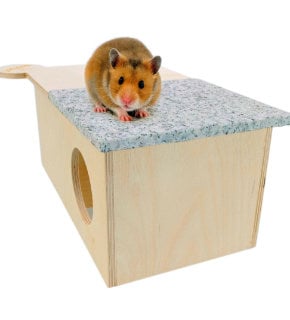 The best cage for a Chinese dwarf hamster is one that allows for deep digging , plenty of hiding places , and provides designated areas (sand bath, exercise wheel, foraging). Below you'll find practical guidelines, plus a sample layout that works well in practice.
Back to the hub: Chinese dwarf hamster information
Quick to:
Checklist – cage that “works”
- ✓ Large surface area (bigger is better).
- ✓ Deep, tunnel-resistant excavation layer.
- ✓ Multiple hiding places + tunnels (above and in the digging layer).
- ✓ Safe running wheel with closed running surface.
- ✓ Sand bath as a permanent zone (keep clean).
Size & type of accommodation
Choose a habitat with ample substrate. A closed tank/terrarium is practical because you can easily build a deep digging layer and create zones. Ensure good ventilation (especially in warm weather).
Sample layout (zones)
- Zone 1 – digging zone: deepest soil layer, tunnels and cork/wood “roofs”.
- Zone 2 – Hiding route: 2+ houses + tunnels, so your hamster never has to walk "out in the open".
- Zone 3 – Sand zone: sand bath (often also a toilet area), easy to keep clean.
- Zone 4 – activity: exercise wheel + foraging (scattering food, hiding snacks).
Inspiration: Hamsterscaping
Excavation layer & ground cover
The substrate should be dust-free and easy to dig. Textured mixes often create the most stable tunnels. Make sure your hamster can also create underground hiding places.
Shop: Ground cover · Selection aid: Ground cover selection aid
Running wheel: size & safety
Always choose a wheel with a closed running surface and ensure it's the right size so your back doesn't arch while running. A stable stance and a smooth-running wheel make a big difference.
Shop: Exercise wheels · Floor: Exercise wheel selection guide
Sand bath & toilet area
Many hamsters enjoy using the sand bath (for grooming and often as a "toilet spot"). Keep it clean and watch for skin irritation; if there are any problems, you can temporarily remove the sand bath and consult a veterinarian if necessary.
Shop: Sand & sand bath
Shoplinks – everything for cage & furnishings
Hamster cages · Houses · Tunnels · Bedding · Exercise wheels · Play & forage
Questions? Visit our service page .
For general background information you can also consult the LICG .
✓ Practical layout that works in practice
✓ Focus on safe running, digging and hiding
✓ Specialist selection assistance since 2011