 Polski

Straw for rodents & rabbits – loose straw and straw pellets
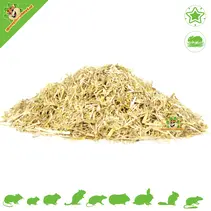
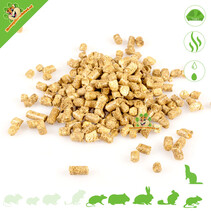
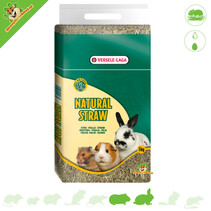
Straw for rodents and rabbits
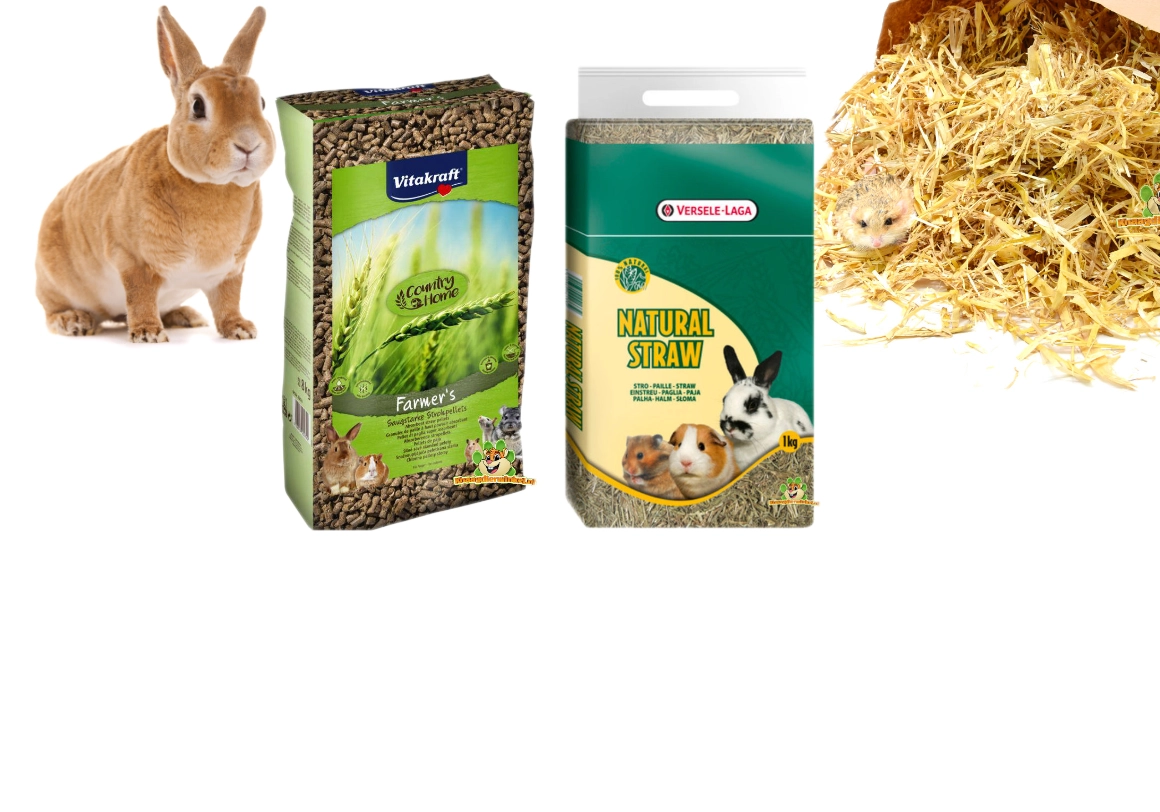 Straw is a practical, natural addition to a home. Many owners use it as an extra layer for comfort, as nesting material (for animals that like to drag and build), or as "filling" in a hideout. In this category, you'll find both loose straw and straw pellets, each with its own specific purpose.
Straw is often combined with other materials from the bedding hub. This allows you to tailor the enclosure to your animal and your maintenance routine. Also see: Bedding & Nesting Material , Bedding , and Hay & Mangers .
Loose straw or pellets: for comfort, corners and daily routine.
Combine straw cleverly with ground cover for a tidy habitat.
Practical selection assistance and fast delivery from our own stock.
Why straw?
- Nice as an extra layer in corners or rest areas.
- Useful as “filling” for hiding places or nesting areas (depending on the animal).
- Practical in outdoor enclosures and cages, often in combination with other ground cover.
What types of straw can you find here?
1) Loose straw
Loose straw is often used to create a cozy corner or as extra layer in a hiding place. For rabbits, straw can also serve as nesting material (for example, during pregnancy), often in combination with hay and their own fur.
2) Straw pellets
Straw pellets are more compact and are often chosen for practical care: they can be handy in toilet areas or in places where you want to change more quickly. Pellets are usually used as a functional layer, not as a "building material."
Selection aid per animal
- Rabbits: Straw is often used as extra bedding or in nesting/resting areas. For a good hay spot, combine it with hay and mangers .
- Guinea pigs: Straw can be nice as an extra layer or to create a sheltered corner, depending on the enclosure and maintenance routine.
- Rats: Rats like to drag; straw can sometimes be used as additional "material," but many rats prefer softer nesting materials.
- Chinchillas & degus: Straw can be used as a supplement or in hiding places; tailor it to their gnawing behavior and your maintenance needs.
- Small rodents (mice, hamster, gerbil): straw is usually a supplement and not the main choice for nest building; choose nesting material that better suits their nesting behavior via Nesting Material .
Combining & layering
- Use straw as an extra layer in a resting area and fill the rest of the enclosure with bedding that suits your animal and your maintenance: Bedding .
- For nesting behaviour and dragging (e.g. rats) additional nesting material is often more practical: Nesting material .
Hygiene
- Remove wet spots daily and top up where necessary.
- Refresh the enclosure at fixed intervals, tailored to the animal, the size of the enclosure, and your substrate mix.
- Do you use straw pellets in a toilet area? Replace that area more often to maintain a fresh base.
Good to know
- Straw works best as a supplement or in zones; many owners choose a combination of both as main and ground covering.
- In each enclosure, watch out for gnawing behaviour: replace any material that becomes frayed or is being pulled on a lot.
- Do you primarily want to support nesting behavior in small rodents? Then also see: Nesting material .
FAQ Straw for rodents & rabbits
Is straw suitable as complete ground cover?
Straw is often used as a supplement or in zones. For many habitats, combining it with other bedding is more practical and refreshing.
When do I choose straw pellets?
Straw pellets are often chosen for practical places, such as toilet areas or corners that you want to clean more quickly.
What if my animal mainly drags straw away or makes a nest of it?
This is normal behavior for some animals. If your animal likes to nest, supplemental nesting material is often helpful.
Ground cover & nesting material
Ground cover
Nesting material
Hay & mangers
Contact & advice
Use straw primarily where it adds value: a resting area, a hiding place, or a practical zone. This keeps the enclosure organized and easy to maintain.
