 Polski

Dried Leaves for Rodents and Rabbits!
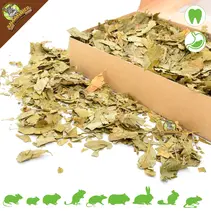
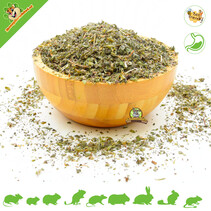

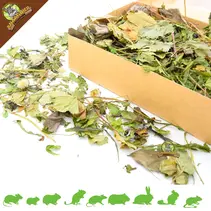
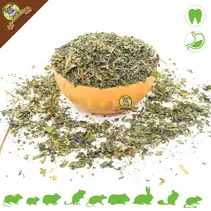
Dried leaves – fiber-rich variety, “leaf structure” & foraging fun
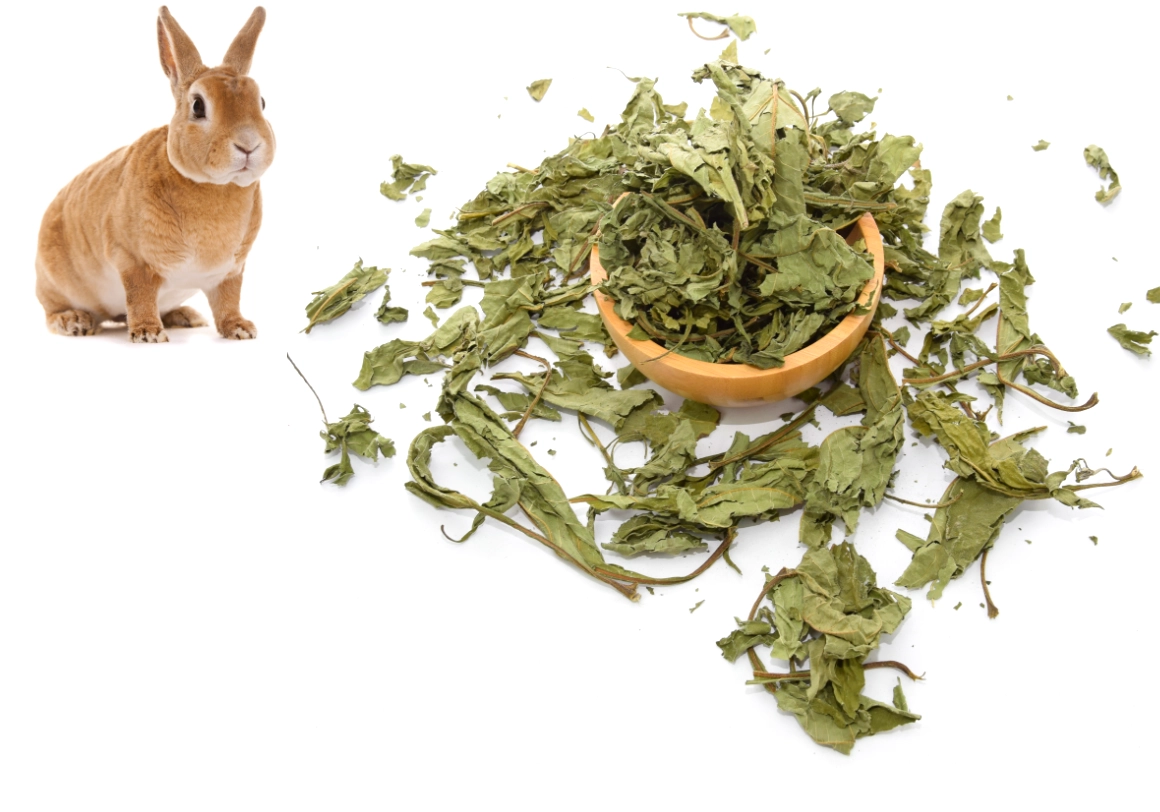 Dried leaves are a lovely, natural addition to both the diet and the enclosure. They add extra leaf texture, encourage browsing and foraging, and are ideal for mixing into hay or using in foraging areas. This category includes leaves such as birch leaves, hazelnut leaves, strawberry leaves, plantain leaves, and more. Herbivores (rabbits, guinea pigs, chinchillas, and degus) particularly enjoy leaves as a diversion in their routine, while omnivores (hamsters, gerbils, mice, and rats) usually enjoy them as enrichment/snacks. Specialists since 2011, so you can choose with confidence and with help.
Leaves provide extra structure to the forage environment and are a good complement for herbivores. For herbivores, always combine with: hay .
Scatter leaves around the enclosure or hide them in "search spots." For more ideas, see Play & Forage .
Combine leaves with flowers or herbs for variety in scent and texture: dried flowers and herbs & roots .
What exactly are dried leaves?
Dried leaves are (edible) leaves from suitable plants/shrubs that are carefully dried for long-term storage and easy portioning. They can be used as a supplement to the diet or as enrichment in the enclosure. They fall into the main herb category: Rodent & Rabbit Herbs .
Prefer a ready-made blend with leaves and other plant parts? Then also see: herb mixes .
Which animals are dried leaves suitable for?
Leaves are particularly well-suited for animals that naturally consume a lot of plant material. In practice, you see this:
- Herbivores (rabbits, guinea pigs, chinchillas, degus): often enjoy it as a variation through hay or as a separate "leaf zone" to choose from.
- Omnivores (hamsters, gerbils, mice, rats): usually as enrichment/snack time; dose in smaller quantities.
Want to add a coarser texture (more "gnawing/searching material")? Then combine it with: branches & stems .
How do you use dried leaves?
Practical methods that work well in many accommodations:
- Through the hay – mix a small amount through the hay for extra scent, texture and search action.
- As foraging material – scatter around the enclosure (do not pile everything in one pile).
- As a “leaf zone” – place a small pile in a fixed place so your animal can choose.
- As a supplement – a small amount in addition to the daily food (useful for animals that like to select).
Tip: Want to keep your feeding area organized? Use a fixed hay rack/feeder and combine it with Hay & Feeders .
Browsing through hay: how to make the hay patch more interesting
Mixing leaves into hay is a simple way to keep animals occupied in their hay patch for longer. This works especially well for herbivores, because hay remains the foundation. Start with a small amount of leaves and use good hay as the base.
- Spread : Mix leaves through several tufts of hay (not all at once).
- Vary : combine occasionally with flowers for scent/colour: dried flowers .
- Make it a “search moment” : hide small tufts of food in a foraging spot (more ideas at Play & Foraging ).
Foraging & enrichment: leaves as “search material”
Dried leaves are ideal as a "scatter material" for foraging: they make the enclosure more interesting and encourage your animal to browse, search, and select. Consider combining them with a few flowers for added variety, or with herbs/roots for a different type of structure.
- Scattering zone : a small number of leaves in an easy-to-clean area.
- Hiding route : small tufts in several places (under a tuft of hay, near a tunnel, in a corner).
- Structural mix : leaf + flower + possibly stems: branches & stems .
Selection guide: which leaves suit your purpose?
Choose mainly based on “structure” and application:
- For hay topping : leaves that are easy to divide and not too coarse.
- For foraging : somewhat coarser leaves that remain “findable” longer.
- For variation : combine leaves with flowers and herbs for a nice mix in scent/texture.
Prefer compact and convenient dosing? Then also check out: herb pellets .
Storage & freshness: how to keep leaves beautiful
Always store dried leaves in a dry, dark, and tightly sealed place . This way, the aroma and texture will last longer. Use a dry spoon or scoop and close the packaging immediately after use.
Maintenance & hygiene
- Work dry : take leaves with dry hands/spoon (moisture shortens the shelf life).
- Remove leftovers : It is better to remove leaves that have been lying in a damp corner for a long time.
- Keeping the hay area fresh : Topping works best if you clean out the hay area regularly (see Hay & Hay Racks ).
- Store closed : dry, dark and away from heat sources.
Checklist: using dried leaves wisely
Before you start, please review this list:
✔ I use leaves as a supplement/enrichment (not as a basis)
✔ I adjust the amount to my animal species (herbivore vs. omnivore)
✔ For herbivores, the basics are taken care of: hay
✔ I create “search moments” with tips through Play & Foraging
✔ I store leaves dry, dark and closed
✔ I remove old leftovers and keep the hay area fresh
Safety warnings
- Only use leaves intended for rodents/rabbits (do not leave picked leaves along roads/gardens where pesticides may have been used).
- Introduce new leaves gradually and start with small amounts, especially for sensitive eaters.
- Store leaves dry ; do not use a product that smells musty or feels damp.
- Leaves are a supplement . The basis remains appropriate forage and (for herbivores) plenty of hay (see Nutrition ).
- Do you suddenly notice a decrease in appetite, unusual stools, or noticeable lethargy? If in doubt, consult a veterinarian.
FAQ – Frequently Asked Questions about Dried Leaves
How often can I give dried leaves?
Use leaves primarily as a supplement: a small amount mixed with hay, as a "leaf zone," or in foraging areas. The appropriate frequency depends on the animal species and the total diet.
Can I mix leaves with hay?
Yes, that's one of the most useful applications. Use good hay as a base: hay .
What is the difference between leaves and flowers?
Leaves primarily provide "leaf structure" and are often coarser/richer in fiber. Flowers primarily provide fragrance and color (see dried flowers ).
Are dried leaves also suitable for hamsters and mice?
Often as enrichment, but usually in smaller quantities than with herbivores. Use it as a "search moment" and keep the basic diet leading.
Where can I find all the herb categories together?
View the main category: Rodent & Rabbit Herbs .
Why buy dried leaves from DRD Rodent Shop®?
✔ Specialist since 2011
✔ Ordered before 5 PM = shipped the same day
✔ Delivered from our own stock
✔ Well-thought-out range with clear selection aid
