 Polski

Mouse feeding bowls – stable, hygienic and convenient for fancy mice


- Voor 17 uur besteld, dezelfde dag verzonden!
- Rodent specialist since 2011
- Dispatched from our own stock





- Voor 17 uur besteld, dezelfde dag verzonden!
- Rodent specialist since 2011
- Dispatched from our own stock
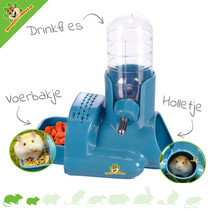

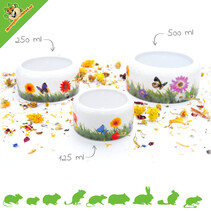
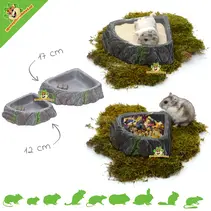
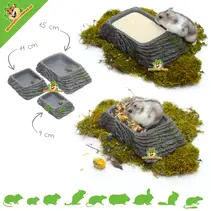
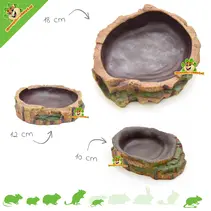


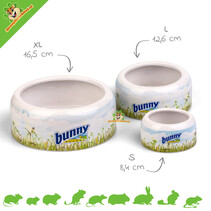
Mouse feeding bowls – clean feeding, less spilling & cleverly combined with foraging
Mice like to eat small portions and are real sniffers. A good food bowl helps you keep the basic food clean, minimize spills, and maintain order (especially with multiple mice). In this category, you'll find a carefully selected range of mouse food bowls: from heavy ceramic bowls and rock bowls to hanging bowls and (group) feeders. Practical, hygienic, and tailored to the natural behavior of mice: foraging, climbing, scratching, and living together.
Place a food bowl in a dry place (preferably on a tray) to prevent bedding and moisture from contaminating the food. Combine it with cage accessories for a neat, practical setup.
Mice are active and can knock over a light bowl. Therefore, opt for heavier ceramic/rock or a hanging bowl. For additional climbing areas (and a clean feeding area), also consider platforms & ladders .
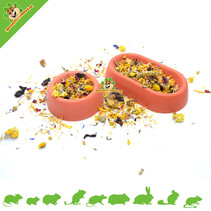
A bowl is ideal for basic food or pellets, while you can also scatter seeds and crumbs. Combine this with the challenge of playing and foraging .
Which food bowl is right for your mice?
Not every feeding dish works the same way in a mouse habitat. The right choice depends on your group, your setup, and how enthusiastically they dig and climb. In this category you'll find, among other things:
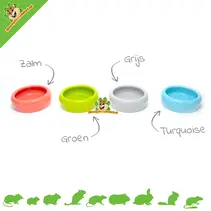
- Ceramic & terracotta – heavier, stable, and easy to clean. Ideal for basic food or kibble.
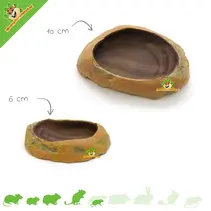
- Rock/concrete look containers – extra sturdy and spill-resistant; handy for active groups.
- Hanging feeders (crock/clip) – smart if you like to feed at height or want to keep bedding out of the food.
- Wooden (group) feeding bowls – fun and natural; especially suitable if you're willing to clean more often.
- Combination solutions – for example, a “snack bar” with a fixed place for bowls and a drinking bottle, useful if you want permanent feeding stations.
Tip: Do you have a group of mice? Choose several small bowls instead of one large one, so everyone can eat in peace.
Feeding plan & portions: clean feeding and natural behavior
Mice benefit from variety. Use a food bowl primarily for the "solid" portion (e.g., pellets or a portion of the mix) and encourage natural behavior by letting them forage for some of the food:
- Basic food in the bowl or partly in the bowl, partly scattered: see mouse food .
- You can offer seeds, herbs and small additions (partially) as a foraging moment: hay, herbs & seeds .
- Snacks should be dosed and in a “search” manner: mouse snacks .
Do you also provide fresh food? Offer small portions and remove leftovers promptly. This keeps the enclosure fresh and prevents unwanted insect attraction.
Smart placement in the cage: clean, accessible and spill-free
The location of the food bowl often makes as much of a difference as the bowl itself. Here's how to set it up practically:
- On a tray or firm surface (e.g. tile/platform) to keep bedding out of the food.
- Not next to the toilet corner and not under a "ceiling" where a lot of nesting material falls down.
- Multiple feeding stations for larger groups to prevent crowding.
- Combine with a logical drinking point nearby: drinking bottles and water bowls .
Extra tip: Mice love to climb. A feeding area at a height can feel very natural, provided you provide safe routes with platforms, ladders, and possibly a soft "fall breaker."
Maintenance & hygiene
- Check daily : remove any peels, wet bits or spilled food.
- Regular cleaning : ceramic/stainless steel can often be easily rinsed with hot water; always allow to dry thoroughly before replacing.
- Wooden food bowls : do not soak them; wipe/brush them and let them dry thoroughly.
- For a fresh total routine, also see mouse care .
Checklist: how to choose the right mouse food bowl
Before you choose, please review this list:
✔ Is the container stable (not too light / not too fast to push)?
✔ Does it match your interior (on a tray, on a base or as a hanging basket )?
✔ Do you have a group? Then choose multiple containers or a suitable group solution.
✔ Is it easy to clean (hygiene = fresher stay)?
✔ Do you combine it with scatter feeding/foraging for natural eating behaviour?
Safety warnings
- Use a feeding bowl with smooth edges and without sharp parts or loose coating.
- Do not place heavy containers on a wobbly high point ; prevent them from falling.
- Hanging basket? Check that it's securely fastened and that mice can't get trapped .
- Check regularly for wear (scratches/cracks) and replace if in doubt.
FAQ – Frequently Asked Questions about Mouse Feeders
Do mice need a food bowl?
It's highly recommended. You can also (partially) feed with scattering for a challenge, but a bowl helps keep the basic food clean and allows you to monitor whether they're eating properly.
What's better: ceramic or a hanging basket?
Ceramic is often the most stable and easy to clean. A hanging basket is ideal if you use a lot of bedding or prefer to feed at height. Many holders combine both.
How many food bowls do I need for a group?
As a starting point, calculate at least 1 bowl per 2 mice (and preferably extra for larger groups), so that everyone can eat quietly.
How do I prevent bedding from getting into the feed?
Place the container on a tray/tile or choose a hanging container. Combine this with a logical layout using cage accessories .
Why buy mouse food bowls from DRD Rodent Shop®?
✔ Specialist since 2011
✔ Ordered before 5 PM = shipped the same day
✔ Delivered from our own stock
✔ Smartly selected range for well-being & safety
