 Polski

Is a hamster ball good for your hamster? Here's why a run is a better fit.
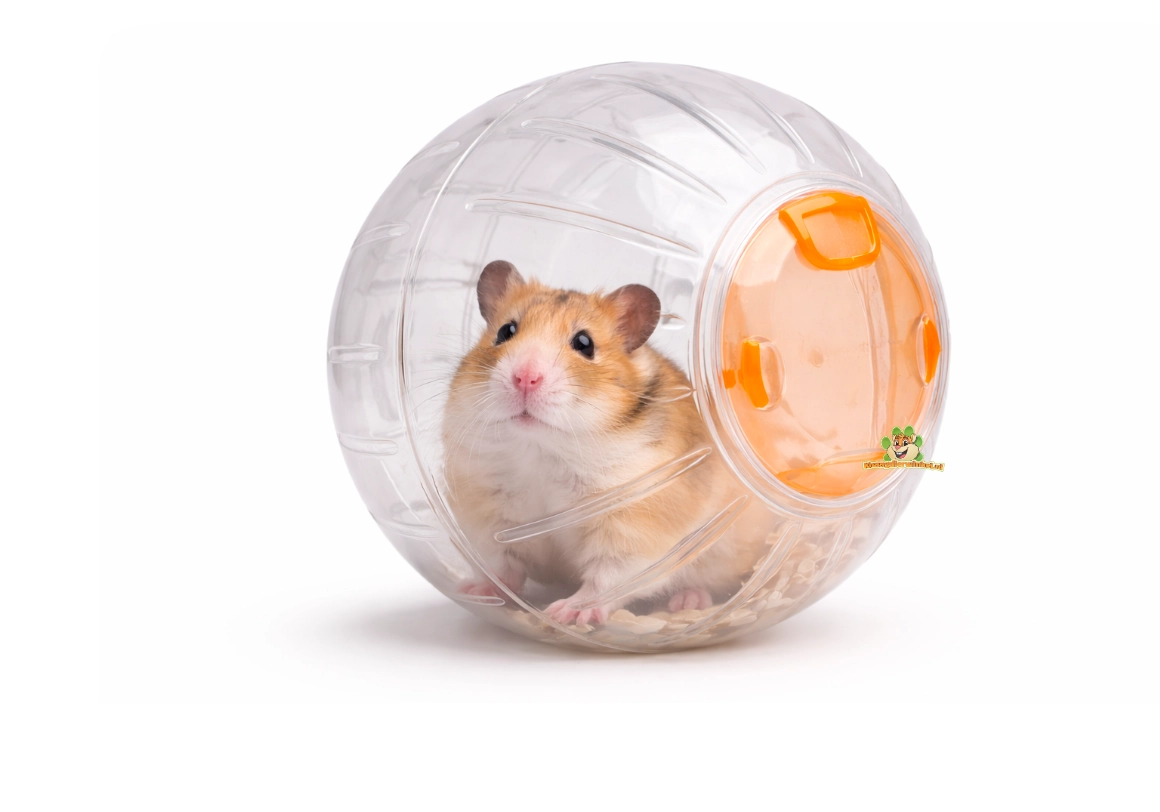 A hamster ball (also known as a "hamster ball toy") seems convenient at first glance: your hamster "walks around" and you don't have to do much. In practice, however, a hamster ball doesn't fit well with hamsters' natural behavior . Hamsters navigate primarily by scent, touch (whiskers), and familiar routes. In a ball, orientation becomes more difficult, your hamster can't hide, and has less control over stopping or resting. That's why you won't find hamster balls at DRD Rodent Shop®. We consciously choose animal-friendly alternatives that do enrich your hamster's life. DRD Rodent Shop® has been a specialist since 2011 and is happy to help you choose based on well-being and practicality.
Directly to responsible play: Hamster run · Play & foraging · Tunnels · Houses · Exercise wheels
Quick to:
✓ Hamsters want to choose
A hamster feels safest when it can stop, hide, and choose its own route. That's exactly what a run offers.
✓ Senses = navigation
Hamsters have limited vision and rely primarily on smell and touch (whiskers). In a ball, orienting themselves and safely "reading" their surroundings becomes more difficult.
✓ Enrichment works better
Tunnels, houses, foraging and a good running wheel provide natural activity: exploring, collecting and running at their own pace.
What is a hamster ball?
A hamster ball is a plastic ball in which a hamster is placed, allowing it to roll freely around the room. It usually has ventilation holes and a flap to open the ball. The idea: movement without your hamster escaping. In practice, the biggest problem lies in control, orientation, and safety .
Why a hamster ball is usually not a good choice
Hamsters are prey animals. They feel safe when they can hide , stop , and "read" their surroundings with their senses. A hamster ball works the other way around: your hamster moves because the ball rolls, but has less control over where it lands and when it pauses.
- Orientation becomes more difficult: hamsters have limited vision and rely heavily on scent and touch. Stimuli are perceived differently in a ball, and "route reading" becomes more difficult.
- No hiding place: if your hamster gets scared, it can't quickly disappear under a house or tunnel. That will cause tension more quickly.
- Limited control: Stopping or calmly exploring is more difficult when the ball keeps rolling. Some hamsters keep moving because that seems like the only way out.
- Safety hazards: bumping into furniture, edges and thresholds, getting stuck, or feet/toes that can get in the way of openings (depending on the type of ball).
- Practically inconvenient: no water/food, no toilet area, and ventilation is always more limited than in an open run.
Why don't we sell hamster balls?
We find that hamster balls are often purchased with good intentions ("extra exercise"), but the effect doesn't meet what hamsters need: safety, freedom of choice, and enrichment . Therefore, we prefer to recommend a run and toys that encourage natural behavior.
“Hamster ball 30 cm” or “large hamster ball”: does it make a difference?
A larger ball can sometimes look a bit more comfortable in terms of body position (especially with a golden hamster), but it doesn't address the most important points: orientation, shelter, control, and safety . Therefore, our advice remains the same: opt for a run with furnishings.
Better alternative: a hamster run with nice furnishings
Want to give your hamster extra space outside its enclosure? Then a hamster run is a much better choice. In a run, your hamster can move around, sniff, stop, and hide at its own pace. This often leads to calmer, more natural behavior.
Shop now: Hamster run · Play & forage · Tunnels · Houses · Exercise wheels
How to set up a pet-friendly run
- Create hiding routes: place at least two hiding places (house/tunnel) so your hamster can retreat safely.
- Add a challenge: a tunnel route, a cardboard maze or foraging spots with scattered food.
- Hamster-style exercise: a good running wheel is better than “rolling”.
- Choose a quiet place: no loud music, no crowds, and no other pets “watching”.
- Short, positive sessions: stop if your hamster becomes restless and build up slowly.
Tip: Sprinkle a small amount of food or herbs in the run. Foraging is a natural "mental sport" for hamsters.
Checklist: Safe access & enrichment (without hassle)
- ✓ Use a run instead of a ball: your hamster can hide and take breaks.
- ✓ Place 2–3 shelters (houses/tunnels) for safe routes.
- ✓ Create foraging areas : scatter food, sniffing items, cardboard.
- ✓ Choose a safe exercise wheel with a closed running surface (size suitable for your hamster).
- ✓ Keep the environment calm and let your hamster set the pace itself.
Need help choosing?
Not sure what's right for your hamster (golden or dwarf hamster), or want to furnish a cage with safe items? Check out our service page and feel free to contact us.
FAQ – hamster ball
Is a hamster ball good for a Syrian hamster?
For golden hamsters, a ball is also less compatible with natural behavior. A run with hiding places and enrichment is usually a better fit.
My hamster likes to "run" in the ball. Does that mean he enjoys it?
Hamsters are highly adaptable. Moving in a ball can also occur because stopping and orienting themselves is more difficult. Instead, look for signs of relaxation: calm sniffing, short breaks, grooming, foraging, and even seeking shelter.
Is a larger hamster ball (e.g. 30cm) okay?
A larger size doesn't change much about the core: limited control, no hiding place, and more difficult orientation. That's why we recommend a run.
What is the best alternative to hamster ball toys?
A combination of runs , tunnels , houses, and foraging . This encourages searching, exploring, and moving at your own pace.
For general background information you can also consult the LICG .
✓ Clear explanation of why a hamster ball is not suitable for hamster behavior
✓ Direct shopping links to animal-friendly alternatives
✓ Practical selection aid from a specialist since 2011

