 Polski

Compare rabbit food: 5 muesli mixes explained
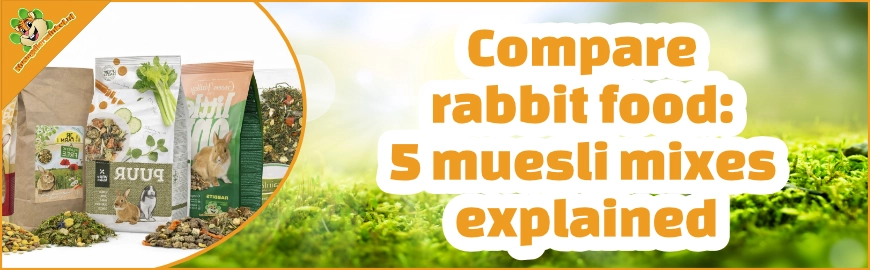
Compare 5 mixed rabbit feeds by ingredients, crude fibre, protein and fat—plus a choice guide, selective eating tips and clickable product cards.
Compare rabbit food: 5 mixed feeds explained (based on ingredients)
Are you deciding between Little One Green Valley, Witte Molen Puur, JR Farm without pellets, Russel Rabbit Tasty Mix and JR Farm Grainless Herbs? In this blog, we list the differences in a calm and practical way. We mainly look at what’s on the label: the ingredients list and the analytical constituents (such as crude fibre, protein and fat).
Choose in 1 minute: which direction fits you best?
Mixed feeds can work very well, as long as your rabbit isn’t consistently “picking favourites” and hay remains the foundation. This often helps when choosing:
- Looking for a mix with a strong focus on grasses and a high crude fibre value? Then Little One Green Valley stands out in this comparison.
- Grains in the ingredients list are fine for you and you want a mix with fibre around 20%? Then Witte Molen Puur Rabbit often fits that preference.
- You prefer a pellet-free mix with lots of “meadow/plant” components (and no grains/pellets mentioned)? Then JR Farm Natural without pellets is a logical candidate.
- You’re looking for a very palatable, muesli-style mix (with grains in the ingredients) and you pay extra attention to portion size and hay? Then Russel Rabbit Tasty Mix is often the match.
- You want a herb-rich, grain-free mix with fibre just under 20% and relatively higher protein/fat on the label? Then JR Farm Grainless Herbs often fits well.
Reading the label: what matters for mixed feeds?
On the label you typically see two parts that are very useful to compare side by side: the ingredients list and the analytical constituents (the “numbers” such as crude fibre, protein and fat).
Crude fibre
For rabbits, crude fibre is a practical yardstick when comparing foods. In this selection, values range from clearly lower (12%) to high (24%). A higher number doesn’t automatically mean “better”, but it helps you compare products fairly.
Protein and fat
Protein and fat add context: a slightly higher fat value can fit a “richer” mix profile, while a lower fat value often feels more “lean”. How that plays out also depends on portion size, activity and how much hay your rabbit eats.
Grain-free or not
“Grain-free” is mainly a choice in ingredients. It helps to look at what’s actually listed (for example wheat/maize/oats as flakes) and weigh that against your own preference and how your rabbit responds in everyday feeding.
Selective eating with mixed feeds: what it means and what can help
Mixed feeds are varied. That’s nice for foraging enrichment, but sometimes a rabbit mainly goes for the tasty parts and other components are left behind. If that happens consistently, the balance of the diet in practice can differ from what’s intended.
- The same pieces often remain in the bowl.
- Some items disappear quickly, others are left behind.
- Refilling feels necessary, even though plenty is still there.
- Weighed portions quickly show what’s truly being eaten.
- Many owners prefer to refill only when the bowl is (almost) empty.
- If selective eating keeps coming back, some choose (temporarily or partly) a more uniform base feed.
Label comparison: fibre, protein, fat and ingredients
Below are the key label values per product, followed by a short explanation of what stands out in the ingredients list. This is meant as a practical comparison.
- Little One Green Valley: crude fibre 24%, protein 14%, fat 3.2%. Ingredients include lots of meadow grasses (60%) plus additions like vegetable/fruit flakes and (extruded) pellets.
- Witte Molen Puur Rabbit: crude fibre 20%, protein 13%, fat 2.8%. Ingredients include grains, vegetables (4%) and alfalfa (plant-derived by-products).
- JR Farm Natural without pellets: crude fibre 16.1%, protein 13.6%, fat 3.2%. Ingredients include 41% (Alpine) meadow vegetation and various herbs/vegetables; no grains/pellets mentioned.
- Russel Rabbit Tasty Mix: crude fibre 12%, protein 14%, fat 4%. Ingredients include wheat, maize (flakes), oats and timothy hay; colourings are listed on the label.
- JR Farm Grainless Herbs: crude fibre 19.5%, protein 15.7%, fat 4.4%. Ingredients are mainly grasses/herbs/plant parts with vegetable components; no wheat/maize listed.
The 5 foods (with a short choice guide per mix)
Below you’ll find a short, practical overview per mixed feed. It should help you decide which direction fits your rabbit and your feeding routine.
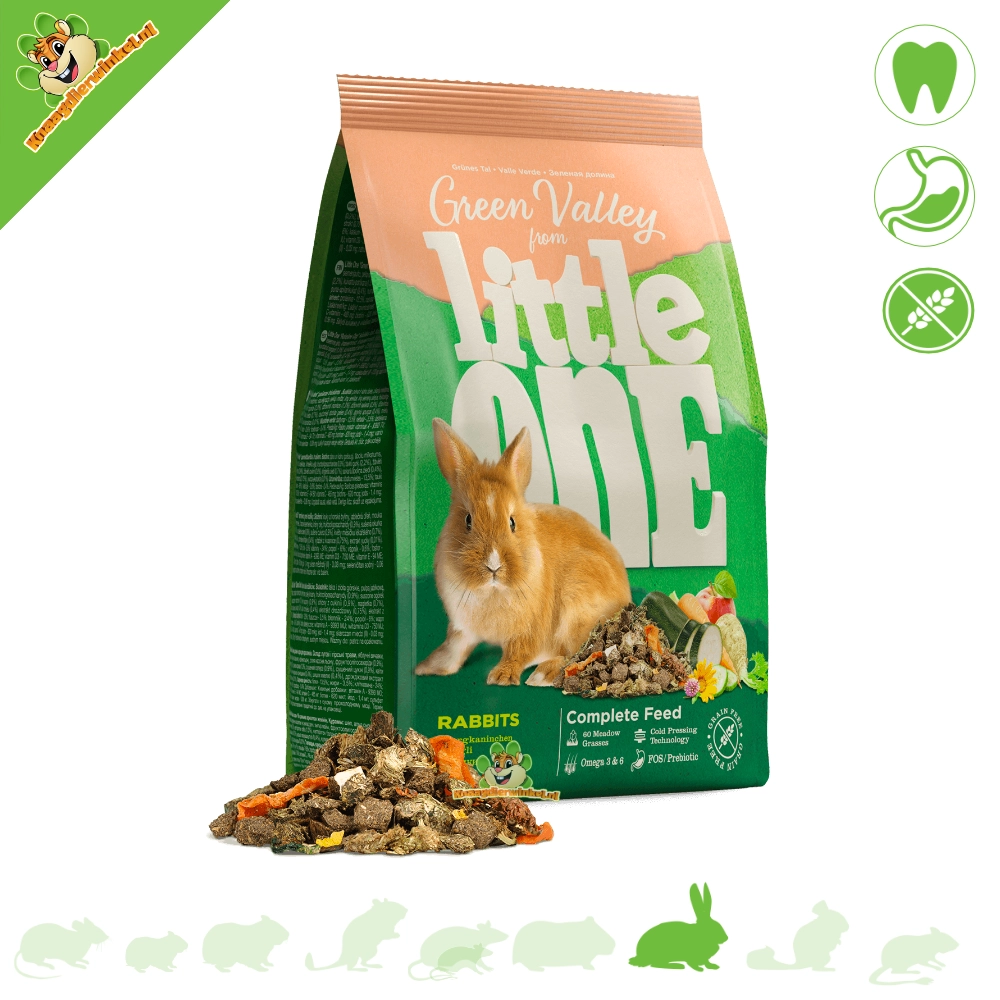
- Label: crude fibre 24% • protein 14% • fat 3.2%.
- Meadow grasses (60%) as the base, with vegetable/fruit flakes.
- Often fits: preference for a grass-focused mix with a higher fibre value within this comparison.

- Label: crude fibre 20% • protein 13% • fat 2.8%.
- Ingredients include grains, vegetables (4%) and alfalfa.
- Often fits: a classic mixed-feed profile with fibre around 20%.

- Label: crude fibre 16.1% • protein 13.6% • fat 3.2%.
- Meadow vegetation (41%) with plenty of plants, herbs and vegetables.
- Often fits: preference for a pellet-free mix with lots of botanical variety.

- Label: crude fibre 12% • protein 14% • fat 4%.
- Ingredients include wheat, maize (flakes), oats, timothy hay and alfalfa; colourings are listed.
- Often fits: a very palatable mix where portion size and hay are extra important in the routine.
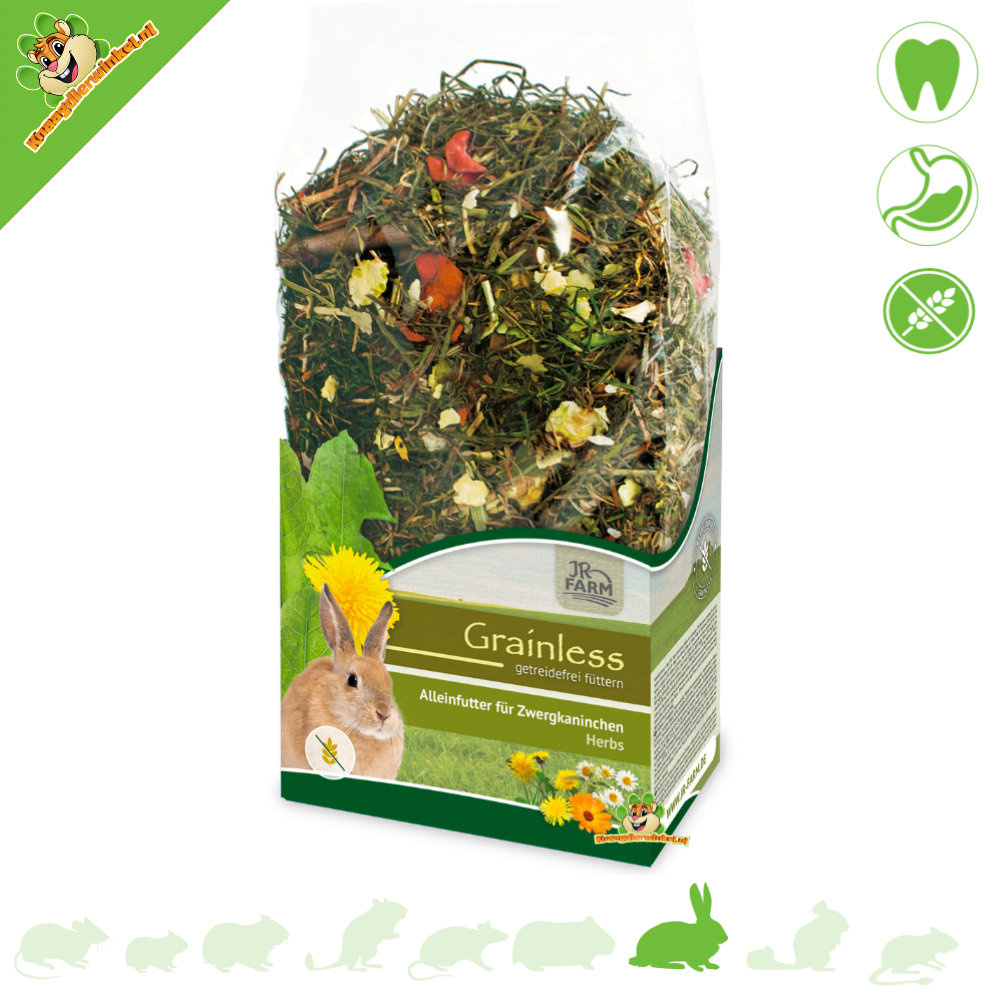
- Label: crude fibre 19.5% • protein 15.7% • fat 4.4%.
- Herb-rich, grain-free mix with lots of plant parts and vegetable components.
- Often fits: preference for a herb-rich grainless mix with fibre just under 20%.
Shop more (handy routes to support your choice)
FAQ – frequently asked questions
Is mixed feed “complete” enough as a main food?
Many mixed feeds are marketed as complete diets, but for rabbits hay always remains the foundation. In practice, mixed feed is typically the supplement. The label (crude fibre/protein/fat) helps compare products.
What if my rabbit mainly eats the tasty bits?
A more uniform base can be helpful. Many people then look at all-in-one food or selective rabbit food, so each bite is more evenly composed.
Is grain-free always the best choice?
Not necessarily. It’s mainly a choice in ingredients. Compare the whole picture: the ingredients list and the analytical constituents (such as fibre, fat and protein) and see what works practically in your routine.
What’s the best way to switch to a different food?
Gradually mixing over several days (or longer if your rabbit is sensitive) works well for many rabbits. Not sure what’s best for your situation? Feel free to contact our customer service.
There isn’t one single “best” mixed feed; the best option is the food that suits your rabbit and is also genuinely eaten well in practice (without consistent picking), within a routine where hay stays central. Not sure what to choose? We’re happy to help. Specialist since 2011.







Comments
Be the first to comment...