Polski

Sugar Glider housing – cage/aviary, furnishings and safety
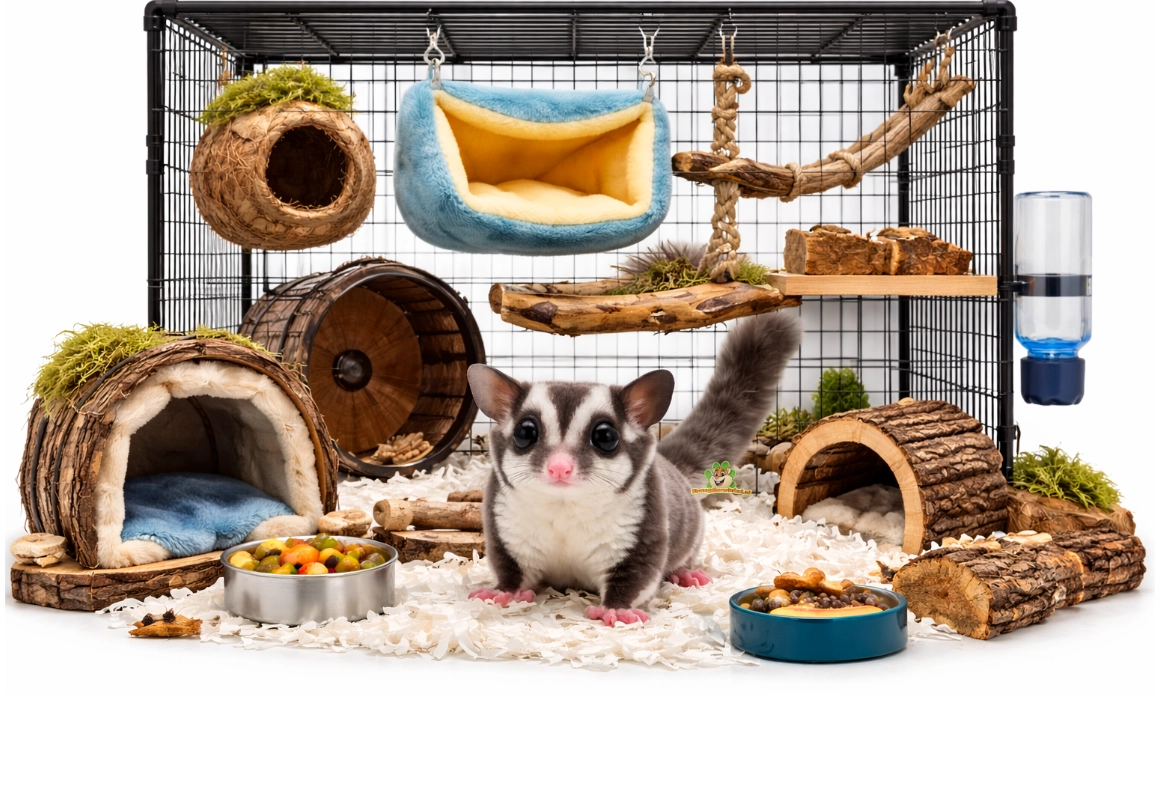 Good sugar glider housing revolves around three things: height (climbing and gliding), safety (preventing escape), and tranquility (sheltered sleeping areas). This page explains what to consider when choosing a sugar glider cage/aviary , which setup works in practice, and how to keep the enclosure clean and tidy. DRD Rodent Shop® has been a specialist since 2011 and is happy to help you make smart choices that align with the natural behavior of active, nocturnal animals.
Directly to the range: Sugar Glider · Sugar Glider Food & Snacks · Sugar Glider Information · Tag: Sugar Glider
Quick to:
- Choosing a cage/aviary: size, bars & closures
- Placement in the house: peace, light & draft
- Facilities: routes, sleeping places & enrichment
- Soil & hygiene: collection tray, substrate and cleaning
- Safety: common mistakes and practical checks
- Useful shopping categories (links)
- FAQ Sugar Glider housing
Sugar Glider Cage & Housing Checklist (Quick Start)
- ✓ Choose a high enclosure with plenty of climbing routes (height is more important than “just ground space”).
- ✓ Pay attention to bar spacing and tight closures (Sugar Gliders are smart and escape faster than you think).
- ✓ Provide several sleeping places (nesting bags/hammocks) so they can choose and rest together.
- ✓ Set up with routes : ropes/branches/platforms, stably attached and without sharp edges.
- ✓ Make maintenance easy: fixed feeding place , remove leftovers, wash textiles regularly and check for wear and tear.
✓ Height & routes
Sugar Gliders move vertically. Think of them as "climbing and crossing lines" instead of separate toys.
✓ Prevent escape
Good closures, appropriate bar spacing and regular checking for gaps/wear make all the difference.
✓ Rest & routine
Sheltered sleeping places + a quiet place in the house usually immediately provide more stability in behavior.
Choosing a cage/aviary: size, bars & closures
A Sugar Glider cage ideally requires a sturdy, barred enclosure (good ventilation, climbing possibilities) that is especially tall . In practice, bigger and taller is almost always better , especially when keeping a group and wanting to offer multiple sleeping and feeding areas.
Practical things to look out for:
- ✓ Height : space to climb, jump and slide (more levels/routes).
- ✓ Bar spacing : not too wide (especially for young or small animals) and evenly spaced throughout.
- ✓ Locks : preferably doubly secure; check doors and hatches extra.
- ✓ Material : smooth, easy-to-clean surfaces and no sharp edges or loose parts.
Find suitable accommodations at: Rodent Cages & Enclosures . (Tip: For sugar gliders, ventilation and climbing are crucial; a closed terrarium is usually less suitable than a well-secured wire cage.)
Placement in the house: peace, light & draft
Place the cage in a quiet location where they can sleep during the day and be active in the evening without stress. Avoid drafts, direct sunlight, and large temperature fluctuations. Many owners find that a consistent routine (same location, same order of care) creates a more peaceful environment within the group.
Facilities: routes, sleeping places & enrichment
Set up a sugar glider enclosure as a "route network": multiple ways to go up and down, cross the road, and rest safely. Combine climbing branches , ropes , platforms , and hanging spots . Always provide multiple sleeping areas (especially for multiple animals) to minimize clutter around one favorite spot.
Useful categories for furnishing: Cage furnishing · Hammocks · Natural furnishing · Play & foraging
Layout rules that almost always work:
- ✓ At least 2–3 resting places (preferably more in a group) + spread throughout the cage.
- ✓ Routes before “loose toys” : a rope/branch/platform that is actually used is more valuable than 10 loose items.
- ✓ Secure mounting : everything is stable, no rotating/loose hooks where legs can get caught.
- ✓ Checking for fraying (textiles) and wear (ropes/knots) is part of your weekly routine.
Soil & hygiene: collection tray, substrate and cleaning
A wire cage often has a drip tray at the bottom. Choose a practical substrate: easy to replace, not dusty, and compatible with a designated "dirty corner." Many Sugar Gliders also prefer soft material to line their sleeping area. It's best to work on a targeted area (near the resting area) rather than everywhere at once.
For substrate and nesting materials, please see: Substrate & nesting material · Nesting material
Safety: Practical Checks (Escape & Accident Prevention)
- ✓ Check locks : Doors/hatchways should not be able to be pushed open. Use additional security if necessary.
- ✓ Cracks & corners : check for places where they can pinch or gnaw.
- ✓ Textiles & ropes : replace frayed threads, loose threads and worn buttons immediately.
- ✓ Feeding areas : remove leftovers in time (especially soft/moist food) and clean bowls/platforms thoroughly.
- ✓ Rest zone : make sure the sleeping area is really sheltered (less stress, less “chaos” in the cage).
Maintenance & hygiene (practical schedule)
- ✓ Daily: remove leftovers, change drinking water, visually check feeding area.
- ✓ Weekly: clean dirty areas, wash textiles (hammock/nest bag) according to material recommendations, check routes/closures.
- ✓ Periodically: Clean more thoroughly without aggressive agents; allow everything to dry completely before replacing.
Useful shopping categories for Sugar Glider housing
Want to structure your stay logically right away? These are the categories that will most immediately help with accommodation, furnishings, and daily routines:
✓ Main Category Sugar Glider
Everything we offer for Sugar Gliders – clearly presented.
✓ Cages & enclosures
Look for suitable cages/enclosures and then continue to build routes and resting places.
✓ Cage furnishings & hammocks
Sleeping places, platforms, tunnels and hangouts – the basis for routes and rest.
Additional (useful for routine & enrichment): Natural decor · Play & foraging · Bedding & nesting material · Gnawing material
FAQ – Sugar Glider Housing
What's more important: height or floor space?
For Sugar Gliders, height is usually the biggest advantage, as they move vertically (climbing/crossing). Combine height with multiple routes and rest areas to ensure the space is truly utilized.
What design makes the cage immediately “workable”?
Start with multiple sleeping spots (hammock/nest bag), then add routes (rope/branch/platform) and create a single, clearly defined feeding area. After that, you can cleverly expand enrichment through play and foraging .
Do Sugar Gliders need bedding?
In a wire cage, you often use a practical substrate in the collection tray at the bottom. Keep things clean and organized, and choose materials that are easy to replace. For nesting and comfort, you can use targeted nesting materials at the roosting area.
How do I prevent escape?
Good seals, appropriate bar spacing, and a consistent inspection routine. Check all doors/hatchways, edges, and textiles weekly. Sugar Gliders are curious and love to test what's possible.
Tip: Want to get your entire foundation in order (housing and routine)? Start with Sugar Glider Information and combine it with Sugar Glider Food & Snacks . DRD Rodent Shop® has been a specialist since 2011 and is happy to help.
✓ Practical housing tips that match natural behavior
✓ Smart internal links to cages, furnishings, enrichment and basic supplies
✓ Specialist selection assistance since 2011