Polski

Herbal Pellets for Rodents and Rabbits
- Voor 17 uur besteld, dezelfde dag verzonden!
- Specialist sinds 2011
- Delivery from our own stock
- Voor 17 uur besteld, dezelfde dag verzonden!
- Specialist sinds 2011
- Delivery from our own stock
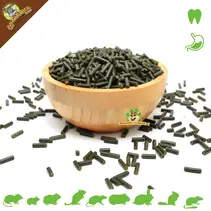
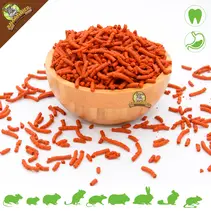
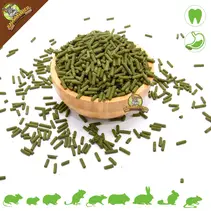
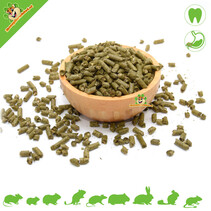
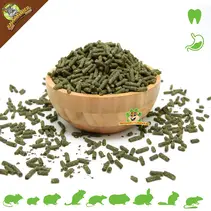
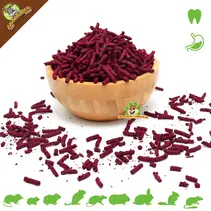
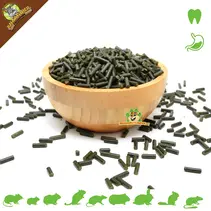
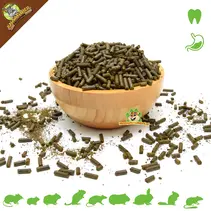
Herb pellets – compact, easy to dose & perfect for foraging
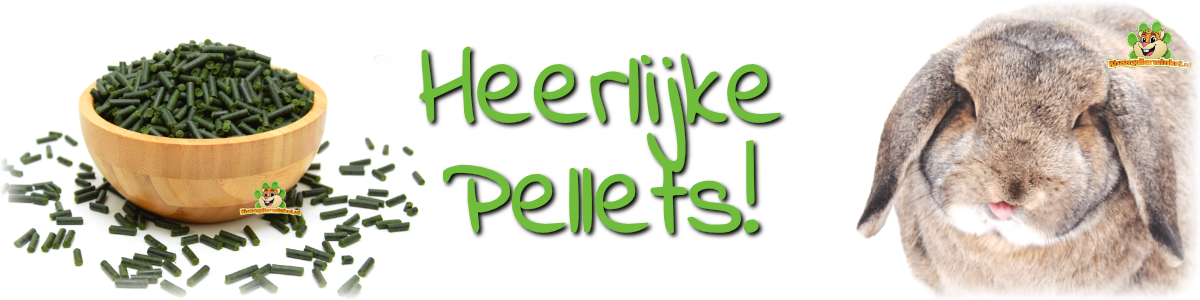
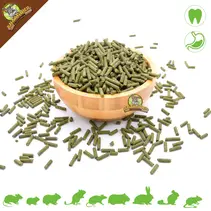
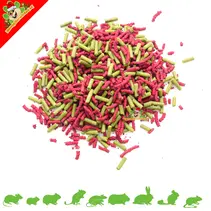
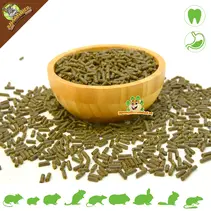
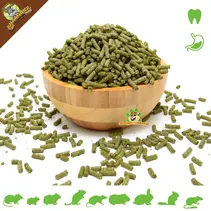
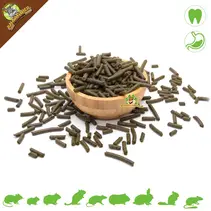
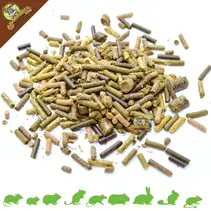
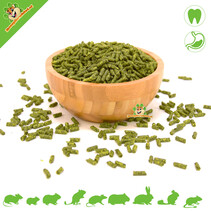
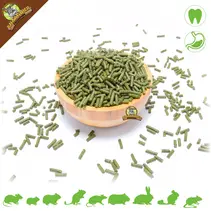
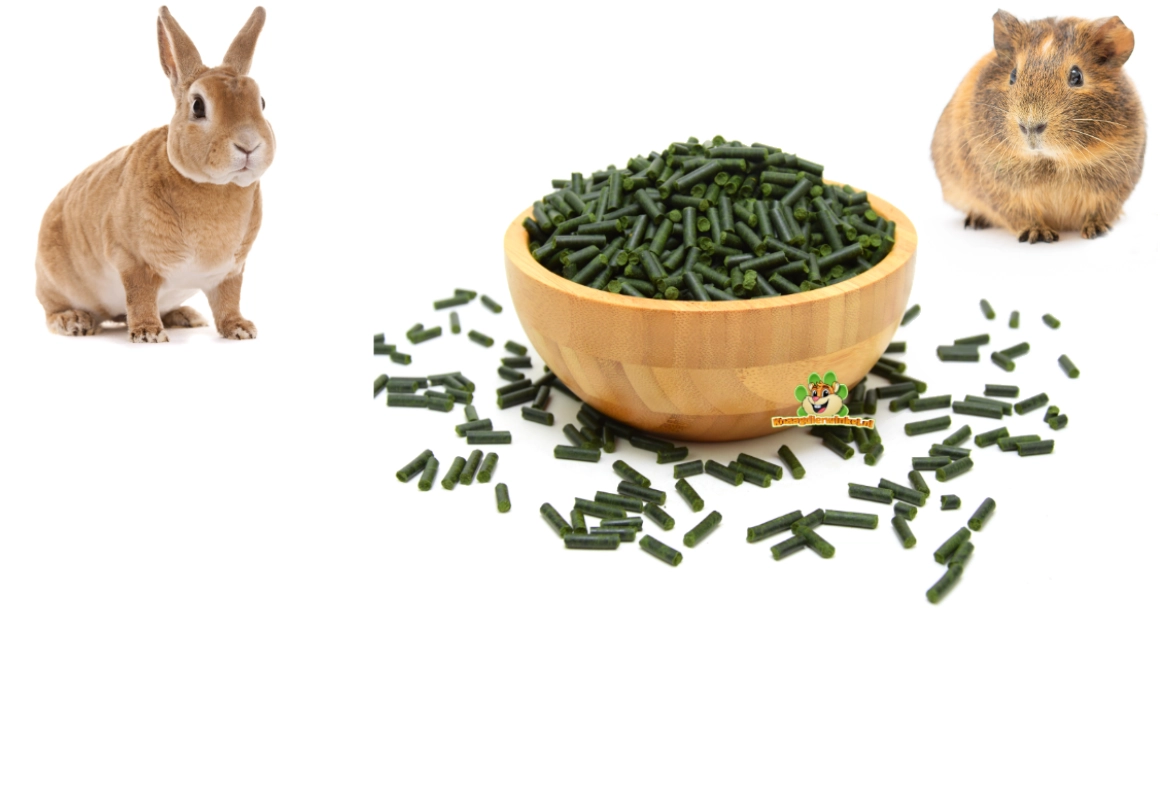 Herb pellets are small, compact pieces made from dried ingredients (herbs, vegetables, leaves, etc.). They're ideal for enrichment because they're easy to portion and can be offered in a variety of ways: with hay, in a snack tray, on a sniffing mat, or simply scattered throughout the enclosure. In this category, you'll find pellets with herbs, vegetables, or fruit (depending on the product), allowing you to easily vary the scent, texture, and "searching" moments. Specialists since 2011, so you can choose with confidence and with help.
Pellets are compact and therefore ideal as a "little extra" snack. Handy if you want enrichment without the hassle of large chunks. For a complete herb setup, also see the main category: Rodent & Rabbit Herbs .
Sprinkle a few pellets through hay or in a foraging area, or use them in foraging toys. Find more ideas at Play & Foraging .
Create variation in structure by combining pellets with dried flowers and dried leaves .
What are herbal pellets?
Herb pellets are pressed, dried ingredients in pellet form. Depending on the product, they're made from herbs, vegetables, or fruit. The advantage: they're incredibly easy to portion and use as enrichment or a reward, without having to give a large snack right away.
Why use herbal pellets?
- Compact & practical – small portions, quick to scatter or hide.
- Enrichment – ideal for search moments, especially for animals that like to forage.
- Variety – you can easily vary the smell and taste (depending on the type of pellet).
Which animals are herbal pellets suitable for?
Pellets are often used for enrichment with rabbits, guinea pigs, chinchillas, and degus. Pellets can also be a fun "search reward" for hamsters, gerbils, mice, and rats. The key is to treat them as a supplement and adjust the amount to the species and the overall diet.
For basic nutrition and daily menus, see: Nutrition .
How do you feed herbal pellets?
A few practical methods that work well in many accommodations:
- Scatter around the enclosure – let your pet search for it instead of “eating it all at once”.
- Through hay – especially nice for herbivores that spend a lot of time in the hay patch.
- In a snack plate/snuffle mat – ideal as a reward or training moment.
- In foraging toys – combine with search and puzzle ideas from Play & Foraging .
Foraging & rewarding: how to make snacking more fun
Pellets are small and therefore perfect for "many small moments of success." This often works better than one large snack:
- Distribution : 6–10 small spots in the enclosure (depending on animal and group).
- In layers : a few pellets under a handful of hay or between leaves/flowers.
- Snack plate : combine with different textures for variety.
Combining herbs: how to build up variation
Pellets are extra fun when you combine them with other herb categories:
- Herb mixes (ready-made): rodent herb mixes
- Dried flowers (scent/color): dried flowers
- Dried leaves (leaf structure): dried leaves
- Herbs & Roots (firm pieces): dried herbs & roots
- Branches & stems (extra structure): dried branches & stems
Selection guide: which pellets are right for your pet?
- For quick spreading : choose small pellets that you can easily distribute.
- For snack board/searching : pellets with a distinct scent often work extra well (especially with foragers).
- For variety : combine pellets with flowers, leaves and mixes for different textures.
Want to further develop the menu? Also see: Nutrition and (for herbivores) plenty of hay .
Save
Always store pellets in a dry, dark, and tightly sealed container . This way, they retain their pleasant aroma and texture. Use a dry spoon/scoop and close the container immediately after use.
Maintenance & hygiene
- Remove any leftovers : remove any pellets that have become wet (for example from water).
- Work dry : take pellets with dry hands/spoon and close the packaging immediately.
- Clean snack areas : Clean snack plates/sniffing mats regularly for fresh use.
Checklist: Using herbal pellets wisely
Just run through this list:
✔ I use pellets as enrichment/reward
✔ I scatter or hide them (not all at once in one place)
✔ For herbivores, the basics are taken care of: hay
✔ I combine with flowers/leaves for variation
✔ I keep everything dry, dark and closed
✔ I remove wet leftovers and keep snack areas clean
Safety warnings
- Introduce new pellets gradually and start with small amounts.
- Use as a supplement: the basis remains suitable food and (for herbivores) plenty of hay.
- Store dry; do not use a product that smells musty or feels damp.
- Do you suddenly notice a decrease in appetite, unusual stools, or noticeable lethargy? If in doubt, consult a veterinarian.
FAQ – Frequently Asked Questions about Herb Pellets
Are herbal pellets staple food?
No, this is meant as enrichment/reward. The basics can be found in food and (for herbivores) plenty of hay .
Can I mix pellets with hay?
Yes, that works very well. It makes the hay patch more interesting and encourages searching.
What is a fun way to offer pellets?
A snack board, sniffing mat, foraging toys, or something scattered throughout the enclosure. Tips and products can be found under Play & Foraging .
Where can I find all the herb categories together?
View the main category: Rodent & Rabbit Herbs .
Why buy herbal pellets from DRD Rodent Shop®?
✔ Specialist since 2011
✔ Ordered before 5 PM = shipped the same day
✔ Delivered from our own stock
✔ Well-thought-out range with clear selection aid