 Polski

Health & care for rodents and rabbits


Health & care for rodents and rabbits
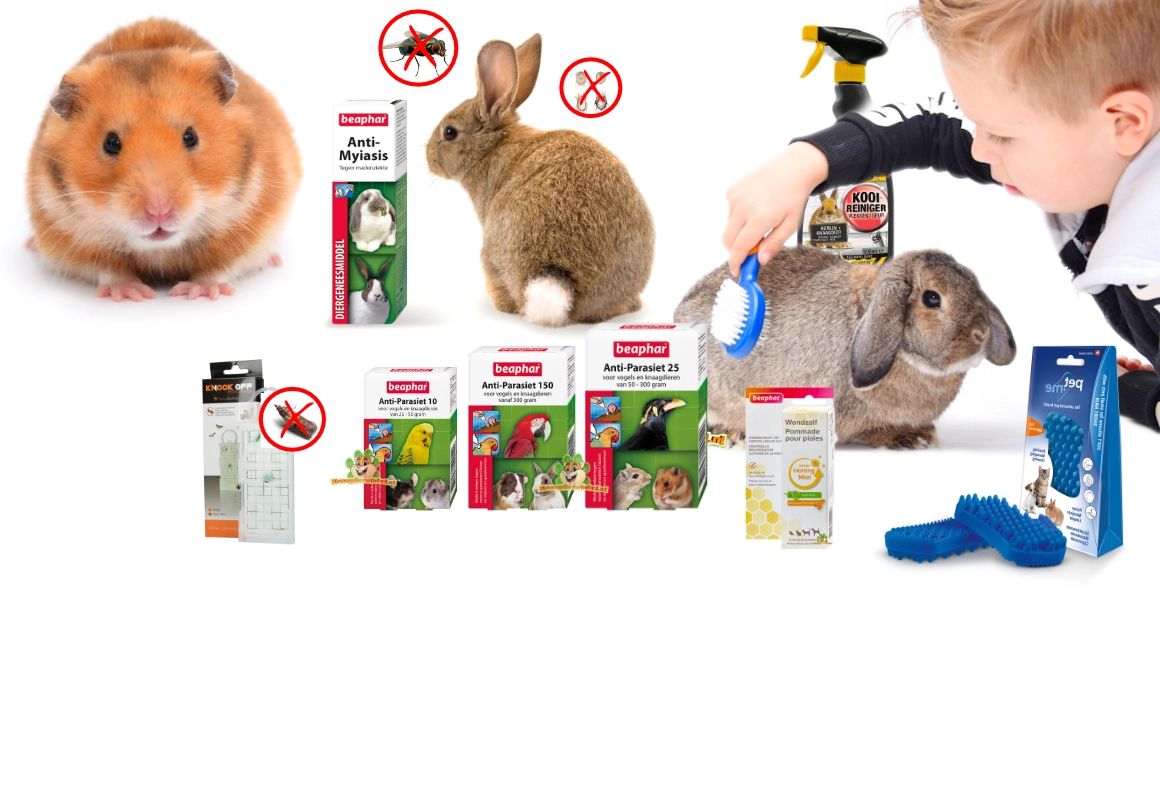 Are you looking for grooming products for your rodent or rabbit? In the Health & Care category, you will find products for daily check-ups, skin and coat, nails, hygiene, vitamins, supplements, and practical support. Think of health products , skin and coat care , parasites & pests , vitamins & supplements , nail care , and hygienic cleanliness .
When it comes to health and care, DRD focuses primarily on practical, species-specific, and careful use. A care product must suit the animal, the situation, and the daily routine. Therefore, this category helps you not only find products but also make better choices: when is something daily care, when is it about hygiene, and when is it wise to consult a veterinarian?
In short
✓ Care begins with daily observation: eating, drinking, behavior, coat, skin, nails, and hygiene.
✓ Always choose grooming products based on animal species, application, dosage, and product instructions.
✓ Care products support the routine, but do not replace a veterinarian in case of illness, pain, or rapid deterioration.
Quick links
Subcategories | Why care? | By species | Daily routine | Combining | Checklist | Good to know | FAQ
Health
Practical products for daily checks, support during grooming moments, and recovery routines. In case of doubt, veterinary advice remains important.
Skin and coat care
For brushing, combing, shedding, long hair, and coat checks. Especially useful for animals requiring extra attention due to tangles, loose hair, or coat changes.
Parasites and pests
For situations where the animal, enclosure, or environment requires extra attention. Always read carefully for which animal species and application the product is intended.
Vitamins and supplements
For targeted supplementation when there is a clear reason for doing so. For guinea pigs, sufficient vitamin C is part of normal care.
Nail care
For checking and maintaining nails with appropriate tools. Handy for rabbits, guinea pigs, rats, and other animals whose nails can become too long.
Hygienically clean
For keeping the accommodation, toilet area, accessories, and surroundings clean. A fresh base makes daily care easier.
Why daily care is so important
Rodents and rabbits do not always clearly show discomfort. That is precisely why a fixed grooming routine helps. By regularly checking their coat, skin, nails, weight, appetite, droppings, breathing, posture, and behavior, you will notice sooner when something is different than normal.
Products in this category assist with that routine: brushing during shedding, checking nails, keeping the enclosure clean, keeping drinking and feeding areas fresh, or providing targeted replenishment when appropriate for the species. They are intended as practical support, not as a substitute for diagnosis or treatment.
Do you see clear signs such as not eating, lethargy, shortness of breath, pain, blood, severe diarrhea, sudden intense itching, or rapid deterioration? Then that is no longer just a webshop selection guide, but a reason to contact a veterinarian.
Health & care by animal species
Hamsters and dwarf hamsters
For hamsters and dwarf hamsters, care primarily revolves around daily observation, monitoring weight and condition, coat, skin, nails, and behavior. Because small animals can deteriorate rapidly, timely action is important when something is wrong. See also hamster care and hamster health .
Gerbils
For gerbils, a dry, clean base is important, along with checking their coat, teeth, nails, and behavior. Also pay attention to changes in digging, eating, group behavior, and activity. See also gerbil care and gerbil health .
Mice
Mice are small and fast. Therefore, check calmly for fur, skin, eyes, nose, breathing, activity, and group behavior. Keep products organized and always choose by animal species and dosage. Also view mouse care and mouse health .
Rats and pygmy rats
For rats and dwarf rats, pay attention to breathing, fur, skin, nails, weight, odor, behavior, and group dynamics. Rats actively use their enclosure, so hygiene, textile checks, and cleaning of hanging spots are important. Dwarf rats can vary in size; therefore, choose aids based on the individual animal. Also view rat care and rat health .
Guinea pigs
For guinea pigs, daily appetite, droppings, weight, coat, nails, and vitamin C routine are important checkpoints. Long-haired guinea pigs require extra coat checks, and for outdoor housing, dryness, shade, and hygiene remain important. See also guinea pig care and guinea pig health .
Rabbits
For rabbits, diet, droppings, weight, coat, nails, dental signs, and behavior are important daily points of attention. Extra grooming can be beneficial during shedding. Outdoor rabbits require extra monitoring regarding hygiene, warmth, and flies. Also view rabbit care products and rabbit health .
Chinchillas and degus
For chinchillas and degus, care revolves around a dry, clean environment, appropriate use of sand, and monitoring of teeth, nails, coat, and behavior. Chinchillas are sensitive to heat and moisture; degus require a simple, fiber-rich routine. See also chinchilla care , chinchilla health , and degu care & health .
Daily and weekly care routine
A simple routine helps you recognize changes more quickly. Every day, check if your animal is eating, drinking, moving, and responding normally. Also check wet spots, food remnants, litter boxes, and the drinking area. For guinea pigs and rabbits, hay intake and droppings are particularly important signals.
You can take a slightly more thorough look weekly: coat, skin, nails, weight, signs of dental alignment, paws, eyes, nose, and general condition. For long-haired animals, older animals, or animals with a more sensitive grooming routine, checking more often may be more pleasant.
Use products according to the packaging and product description. The label is the guiding principle regarding dosage, frequency of use, or suitability for the animal species. Do not use multiple products interchangeably unless clearly advised to do so.
Combine beautifully with health & care
Hygiene in the accommodation
A clean base makes daily care more manageable and helps you spot wet spots faster.
Ground cover
Suitable bedding supports hygiene, comfort, and daily checks.
Power supply
Good care also begins with species-appropriate basic nutrition and a clear daily routine.
Transport boxes
Handy for vet visits, check-ups, temporary care, or safe transport.
Checklist: choosing a skincare product
✓ Is your animal species clearly mentioned with the product or in the product description?
✓ Is the goal clear: coat, skin, nails, hygiene, vitamins, accommodation, or temporary support?
✓ Is the dosage appropriate for your animal's weight, age, and situation?
✓ Have you read the label and the instructions for use completely?
✓ Do you also include the enclosure, textiles, bedding, and surroundings in case of parasites or pests?
✓ Are you not using multiple medications at the same time unnecessarily?
✓ Do you call a veterinarian in case of pain, loss of appetite, shortness of breath, blood, severe diarrhea, or rapid deterioration?
Good to know regarding health & care
Product information is leading.
Always read the product description, packaging, and instructions for use. Pay attention to animal species, age, dosage, application, and any restrictions.
Don't just combine
Do not mix grooming products without a clear reason or instruction. This applies especially to products for parasites, skin, coat, or supplements.
For actual symptoms: veterinarian
Grooming products can help with the daily routine, but a veterinarian is necessary in case of clear illness, pain, loss of appetite, shortness of breath, or rapid deterioration.
Hygiene and comfort work together
A clean enclosure, suitable bedding, a dry resting place, and clearly arranged feeding and drinking areas make care easier and help you spot changes more quickly.
Frequently asked questions about health & care
Which grooming products do I need for my rodent or rabbit?
That depends on the animal species. Basic products are often aimed at hygiene, coat control, nail care, feeding and drinking areas, and any species-specific supplements. Always choose based on the animal species and application.
When should I go to the vet?
Contact a veterinarian if there is no eating, lethargy, shortness of breath, pain, blood, severe diarrhea, sudden severe itching, rapid deterioration, or if you are unsure whether something is serious.
Should I treat preventively against parasites?
Not standard. Consider the situation, the risk, whether to keep indoors or outdoors, contact with other animals, and the product instructions. Use only products suitable for your animal species.
When are vitamins or supplements useful?
It is best to use vitamins and supplements specifically. Guinea pigs need sufficient vitamin C as part of their normal care. For other animals, the rule is: choose based on a clear reason and product advice.
How often should I check my nails?
Check nails regularly. How often trimming is necessary varies by animal, surface, and wear. Cut small pieces and have a veterinarian or experienced groomer demonstrate if you are unsure.
Which animals need coat care?
Long-haired guinea pigs, rabbits during shedding, and animals with coats that tangle or trap dirt more easily require extra coat checks. Always use combs or brushes suitable for the animal.
How do I keep the accommodation hygienically clean?
Regularly remove wet spots and food residue, keep drinking and feeding areas clean, and use suitable cleaning products where necessary. Always allow accessories to dry thoroughly before replacing them.
May I use grooming products for dogs or cats?
Use only products that are clearly suitable for your animal species. Rodents and rabbits are not small dogs or cats; dosage, application, and sensitivities can be very different.
Buy Health & Care at DRD Knaagdierwinkel®
At DRD Knaagdierwinkel®, you will find grooming products for rodents and rabbits suitable for daily check-ups, hygiene, coat care, nail care, and species-specific support. We select based on application, species, clear usage, and practical value in the grooming routine.
Would you like to look further specifically? Then go to Health , Skin and Coat Care , Parasites and Pests , Vitamins and Supplements , Nail Care , or Hygienic Clean .
✓ Specialist in care for rodents and rabbits since 2011
✓ Carefully selected assortment: DRD chooses what is truly right for the animal, enclosure, and use
✓ Delivered from our own stock and shipped from the Netherlands to the Netherlands, Belgium, Germany, and other EU countries
