 Polski

Bedding and nesting material for rodents and rabbits


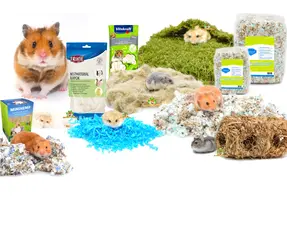
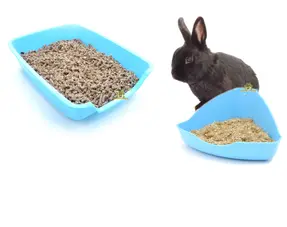



Bedding & nesting material for rodents and rabbits
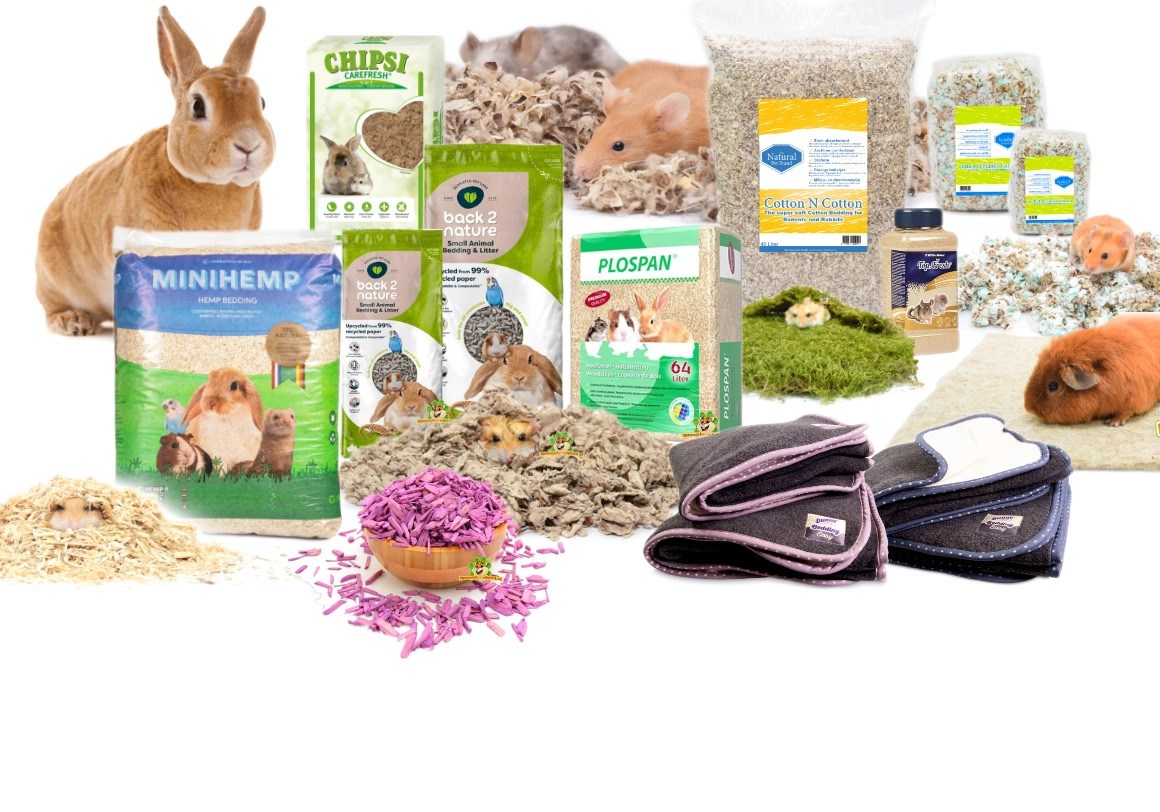 Are you looking for good bedding or nesting material for your rodent or rabbit? In this category, you will find everything for a dry, comfortable, and species-appropriate base in the enclosure: from bedding , cotton , paper and cardboard , hemp , wood , and flax to sand , nesting material , mats, pee pads , and straw .
When it comes to bedding, DRD looks not only at absorption but, above all, at its function within the enclosure. A hamster or gerbil requires a different substrate than a guinea pig, rabbit, rat, mouse, chinchilla, or degu. The right bedding contributes to comfort, hygiene, digging, running, nesting, foraging, and daily checks. In this way, the substrate becomes not just a base layer, but the foundation of the entire enclosure.
In short
✓ Choose bedding based on animal species, enclosure type, low-dust use, absorption, digging behavior, and maintenance.
✓ Nesting material is especially important for small rodents that like to build their own sleeping and hiding places.
✓ Mats, pee mats, toilet bedding, sand, and straw each play a specific role in hygiene, comfort, and furnishing.
Quick links
Subcategories | Why bedding? | Choosing materials | By animal species | Calculation aid | Layer structure | Maintenance | Combining | Checklist | Good to know | FAQ
Ground cover
The main route for bedding and substrates that support comfort, absorption, hygiene, digging, or scaping.
Cotton
Soft, natural bedding that is often pleasant as a base, top layer, or in combination with other materials.
Paper and cardboard
Light, soft, and easy to combine. Useful as a nesting layer, top layer, digging material, or soft soil zone.
Wood
From wood fiber to wood pellet: suitable for absorption, litter boxes, or specific floor zones, depending on the animal species and product.
Flax
Fibrous, practical, and suitable as a base layer or combination in enclosures where comfort and absorption are important.
Sand
For a sand bath, sand zone, or digging area for animals that use sand, such as hamsters, gerbils, chinchillas, and degus.
Nesting material
For animals that build their own nests. Choose short, soft, and easy-to-work material without long, stringy fibers.
Mats and pee pads
Comfortable and washable or absorbent solutions for dry zones, C&C areas, toilet corners, and resting places.
Straw
For extra structure, a top layer, or warmer zones, especially for larger animals and outdoor setups where this is suitable.
Why is bedding so important?
Bedding largely determines how your animal uses its enclosure. Good bedding aids in walking, lying down, digging, nesting, foraging, scent perception, and hygiene. For burrowing animals such as hamsters and gerbils, the bedding is even an important part of their natural behavior. For guinea pigs, rabbits, and rats, a dry, practical, and low-dust base is important for comfort and a clear view.
Nesting material has a different role than bedding. It is intended as an extra-soft and workable layer that allows small rodents to create their own sleeping or hiding place. Hamsters, dwarf hamsters, mice, and gerbils, in particular, actively use nesting material. When choosing this material, select one that is short, soft, and easy to pull apart.
Mats, pee mats, sand, and straw are distinct aids. A pee mat can create a dry zone, sand supports a sand bath or sand zone for suitable animals, and straw can provide extra structure for larger animals or outdoor setups. Therefore, the best bedding is often not a single product, but a logical combination of layers and zones.
Which type of bedding do you choose?
Cotton bedding
Cotton is soft and comfortable and is often chosen as a natural bedding, top layer, or in combination with other bedding materials. It suits owners well who are looking for a pleasant, soft texture.
Paper and cardboard
Paper and cardboard are lightweight, soft, and easy to work with. They are often used as a digging layer, nesting filler, top layer, or combination product in natural enclosures.
Hemp
Hemp is practical, absorbent, and well-suited as a dry base. It is widely used in accommodations where hygiene, absorption, and daily maintenance are important.
Wood
Wood products can be suitable as absorbent flooring, toilet filling, or for specific zones. Always pay attention to low-dust use, structure, and animal species suitability for each product.
Flax
Flax is fibrous and practical. It can be used as a comfortable base layer and combines well with other materials when you want more structure or absorption.
Sand
You do not use sand as general bedding, but as a sand bath, sandbox, or sand zone for animals that need or enjoy using sand, such as hamsters, gerbils, chinchillas, and degus.
Mats, pee mats and straw
Mats and pee mats are useful for dry zones, clean-and-containment setups, resting areas, and toilet corners. Straw is primarily used as extra structure, a top layer, or a warmer layer when suitable for the animal and the housing.
Ground cover per animal species
Hamsters and dwarf hamsters
Hamsters and dwarf hamsters benefit greatly from a deep, burrowable layer. For example, combine a stable base with a soft top layer, nesting material, and natural zones. Layer thickness is important for hamsterscaping, as hamsters like to create tunnels and chambers. Also check out hamster bedding and hamster nesting material .
Gerbils
Gerbils are true diggers. They actively use bedding for tunnels, passages, and nesting sites. A mix of diggable materials, hay texture, and sturdy furnishings often works well for gerbilscaping. Also check out gerbil bedding and gerbil nesting material .
Mice
Mice benefit from a low-dust, soft substrate with sufficient nesting material, cover, and small routes. They enjoy building nests and use bedding to sniff, walk, and hide. See also mouse bedding and mouse nesting material .
Rats and pygmy rats
Choosing low-dust bedding is especially important for rats. Rats have sensitive airways and frequently use the substrate for hygiene, sniffing, and digging. For dwarf rats, the choice may differ slightly when they are kept in a large terrarium or Black Scape-style setup; in this case, Ratscaping with deeper zones, digging boxes, and natural structures can be beneficial. See also rat bedding , dwarf rat bedding , and Ratscaping .
Guinea pigs
Guinea pigs primarily need a dry, comfortable, and highly absorbent base. Mats, pee pads, litter bedding, and soft top layers can be useful, especially for C&C enclosures or long-haired guinea pigs. Also check out guinea pig bedding , guinea pig floor mats and pee pads , and bedding for long-haired guinea pigs .
Rabbits
Rabbits use bedding primarily in toilet areas, resting zones, and indoor or outdoor enclosures. A dry, practical bedding helps keep the hay corner, toilet area, and resting spot tidy. See also rabbit bedding , rabbit toilets, and rabbit toilet bedding .
Chinchillas and degus
Chinchillas and degus require a dry, clean base and a suitable sand bath. Sand is important for coat care for these animals. Always choose bedding and sand based on low dust use, dryness, and easy accessibility. Also view chinchilla bedding , degu bedding , and degu sand and sandboxes .
How much bedding do you need?
Do you want to quickly estimate how many liters of bedding you need? Then use this simple calculator. Preferably measure the inside dimensions of the enclosure and then choose the desired layer thickness.
Formula:
(length × width × layer thickness in cm) ÷ 1000 = liters
✓ Measure the interior dimensions of your enclosure: length × width.
✓ Choose the layer thickness based on animal species and behavior.
✓ Calculate a little extra for deep excavation layers, as the ground cover may settle after landscaping.
✓ Calculate the number of bags by dividing the required liters by the capacity per bag.
Example: an enclosure of 100 × 50 cm with a layer of 20 cm requires: 100 × 50 × 20 ÷ 1000 = 100 liters.
| Base measure | 10 cm | 15 cm | 20 cm | 30 cm |
|---|---|---|---|---|
| 80 × 40 cm | 32 L | 48 L | 64 L | 96 L |
| 100 × 40 cm | 40 L | 60 L | 80 L | 120 L |
| 100 × 50 cm | 50 L | 75 L | 100 L | 150 L |
View all types of bedding & nesting material to choose the right layer structure.
Layer structure: base layer, digging layer, top layer, and nesting material
A good substrate can be built up in layers. For hamsters, gerbils, and mice, a deeper digging layer can be beneficial, possibly combined with hay, paper, cardboard, or cotton for structure. For guinea pigs and rabbits, a practical layout with dry zones, toilet areas, and resting spots often works better. For rats and dwarf rats, the emphasis is on being low-dust, hygienic, and easily inspectable.
Use nesting material as a separate soft layer, not as a complete base. Place it in a spot where your animal can choose what to do with it. Do not use stringy, long fibers or cotton-like material that can get caught around the paws or neck.
Excavation layer
For hamsters, gerbils, and mice that like to dig, make tunnels, or use a more natural enclosure.
Dry zone
For guinea pigs, rabbits, and rats where comfort, absorption, and daily checks are important.
Nesting site
For small rodents that want to build a warm, sheltered sleeping place themselves.
Hygiene and maintenance of bedding
How often you need to change the bedding depends on the animal species, enclosure size, number of animals, material, and setup. For many animals, spot cleaning works well: regularly remove wet spots, litter boxes, and food remnants, without making the entire enclosure odorless every time. This provides peace of mind and keeps the floor tidy.
For mats and pee pads, follow the product instructions for washing and drying. Always allow textiles to dry completely before putting them back. For washable products, also check for fraying, loose threads, shrinkage, or wear.
Replace the sand when it is dirty, wet, or strongly scented. For chinchillas and degus, dry, clean sand is important for the sand bath. For hamsters and gerbils, keep the sand zone practical and controllable.
Combines nicely with bedding & nesting material
Natural design
Cork, tunnels, bridges, and wood make routes and excavation zones much more interesting.
Houses and tunnels
Hiding places and tunnels give the soil more function and make zones clearer.
Playing & foraging
Scatter food or herbs throughout the soil to encourage searching and sniffing.
Checklist: choosing bedding
✓ Does the bedding suit the animal species and the type of enclosure?
✓ Do you primarily want absorption, comfort, diggability, nest building, or a dry zone?
✓ Is low-dust use important for your animal, for example for rats or those with sensitive airways?
✓ Do you have enough liters for the desired layer thickness?
✓ Can you easily check for wet spots, food residue, and litter spots?
✓ Do you use nesting material without long, stringy fibers?
✓ Does sand, straw, mats, or toilet bedding really suit the application for which you want to use it?
Good to know regarding bedding & nesting material
Choosing dust-free options is especially important for some animals.
For rats, pygmy rats, and animals with sensitive airways, low-dust bedding is especially important. Choose materials that are suitable for the animal and check that the bedding does not become too dusty during use.
Sand is not a sand bath for all animals.
Sand makes particular sense for hamsters, gerbils, chinchillas, and degus. Rats, guinea pigs, and rabbits do not need a sand bath for grooming. Moreover, fine sand can be taxing on the respiratory system of rats.
Keep nesting material short and easy to work with.
For nest building, choose material that is soft, short, and easy to pull apart. Avoid cottony or stringy material with long fibers.
Place heavy fixture stably first.
With deep bedding, preferably place heavy houses, stones, ceramics, and platforms on the bottom of the enclosure or on a sturdy support. This prevents parts from sinking when your animal digs.
Frequently asked questions about bedding & nesting material
Which bedding is best for rodents?
The best bedding depends on the animal species, the enclosure, and the purpose. Hamsters and gerbils benefit from layers they can dig in, rats from low-dust substrates, guinea pigs from dry and comfortable zones, and rabbits from practical toilet and resting areas.
How much bedding do I need?
You calculate that using: length × width × layer thickness in cm ÷ 1000 = liters. For an enclosure of 100 × 50 cm with a 20 cm layer, you need approximately 100 liters.
Which bedding is suitable for hamsters?
For hamsters, preferably choose a deep, burrowable layer with sufficient structure. Combine bedding with nesting material, tunnels, natural decorations, and a stable structure.
Which bedding is suitable for guinea pigs?
For guinea pigs, a dry, comfortable, and absorbent base is important. Mats, pee pads, litter bedding, and soft topcoats can work well, depending on the enclosure and your guinea pig's coat.
Which bedding is suitable for rats?
For rats, choose low-dust bedding that remains easy to inspect and hygienic. Rats have sensitive airways, so avoid dusty floors and fine sand as standard material.
Is nesting material the same as bedding?
No, bedding forms the basis of the enclosure. Nesting material is extra material with which small rodents can build a sleeping or hiding place themselves.
Which animals need a sand bath?
A sand bath is particularly suitable for hamsters, gerbils, chinchillas, and degus. Guinea pigs, rabbits, and rats do not need a sand bath for grooming.
How often should you change the bedding?
That depends on the animal species, number of animals, enclosure size, and material. Regularly remove wet spots and food residues, and refresh periodically based on odor, moisture, and soiling.
Can you combine different types of bedding?
Yes, combining often works really well. Think of an absorbent base layer, a diggable layer, a soft top layer, and nesting material in a separate sleeping zone.
Buy bedding & nesting material at DRD Knaagdierwinkel®
At DRD Knaagdierwinkel®, you will find bedding and nesting material for rodents and rabbits that suits the animal, the enclosure, and the intended use. We select based on comfort, absorption, low-dust use, digging ability, nest building, hygiene, and practical value in daily care.
Do you want to look further specifically? Then go to Bedding , Cotton , Paper and Cardboard , Hemp , Sand , Nesting Material or Mats and Pee Mats .
✓ Specialist since 2011 in bedding, nesting material, and species-specific enclosure hygiene
✓ Carefully selected assortment: DRD chooses what is truly right for the animal, enclosure, and use
✓ Delivered from our own stock and shipped from the Netherlands to the Netherlands, Belgium, Germany, and other EU countries
