Polski

 Hamster (Crow Wolf or European Hamster)
The European hamster (Korenwolf), also known as the corn wolf, is a fascinating rodent that was once common in Europe but is now sadly endangered. This comprehensive guide will provide you with all the necessary information about the European hamster, including its characteristics, habitat, diet, behavior, and what you can do to help preserve this special species.
Where do Corn Wolf Hamsters live in the wild?
European hamsters can be found in the wild in some parts of Europe, although their native range has shrunk significantly over the years. Today, they are mainly found in countries such as France, Germany, Austria, Switzerland, Hungary, Romania, and Russia.
In France, European hamsters are found in Alsace, Lorraine, and parts of the Loire Valley. In Germany, they are primarily found in the Rhine-Meuse Valley and some adjacent areas. Austria hosts European hamsters primarily in the eastern regions of the country, along the Danube and March rivers. In Switzerland, they are found in the Basel and Zurich regions.
There are also smaller populations in Hungary, Romania, and Russia. In general, European hamsters prefer open grasslands, fields, and wastelands where they can dig and create tunnels for their nests.
It's important to note that European hamsters are threatened with extinction in many of these areas due to habitat loss, intensive agricultural practices, and other human activities. Therefore, conservation efforts are crucial to protect these unique rodents and maintain their populations.
Characteristics - What are the characteristics of the Corn Wolf Hamster?
Size: The European hamster is larger than typical pet hamster species. Adults can reach 20 to 34 cm (8 to 13 in) in length, including the tail.
Coat: They have a dense coat that can vary from grayish-brown to yellowish or reddish-brown depending on the season.
Tail: Unlike many other hamster species, the European hamster has a relatively short tail.
Hibernation: During the winter months, European hamsters enter a deep state of hibernation, where their body temperature drops and their metabolism slows. This allows them to survive on scarce food supplies and conserve energy during the coldest part of the year.
Although European hamsters lack well-developed eyesight, they rely heavily on their excellent sense of smell and hearing to find food and detect predators. They also use scent markings to define their territory and communicate with other hamsters.
Despite their vulnerability to habitat loss, European hamsters are remarkably adaptable to changing conditions. For example, they can migrate to new areas in response to changes in land use or food availability.
Habitat - Where does the Corn Wolf Hamster live?
The European hamster is native to parts of Europe, including France, Germany, Austria, Eastern Europe, and Russia. It prefers open areas with grasslands, fields, and fallow land where it can dig and tunnel for nesting.
What does the Corn Wolf Hamster eat?
The European hamster is omnivorous and eats a varied diet consisting of grains, seeds, roots, insects, and occasionally small animals. They are primarily active at dusk and at night, when they forage for food.
Behavior - What is the behavior of the Corn Wolf Hamster?
Digging: European hamsters are master diggers and can dig complex tunnel systems up to five feet deep. These tunnels serve as nests and offer protection from predators and extreme weather. They dig deep tunnel systems in which they build nests and store food.
Solitary: Although they are solitary animals and exhibit territorial behavior, European hamsters may sometimes share communal nests, especially during hibernation.
Communication: They communicate with each other through sounds, scents and body language, including growling, squeaking and marking their territory with scents from their glands.
Reproduction: European hamsters have a relatively short gestation period of about three weeks. A female can have several young a year, usually in spring and summer. A typical litter consists of 5 to 15 young, which open their eyes after about three weeks and are weaned after about six weeks.
Conservation - Is the Corn Wolf Hamster Endangered?
Sadly, the European hamster is threatened by habitat loss, intensive agricultural practices, and predation. Several measures can be taken to help conserve this beautiful species, including:
Habitat Protection: Maintaining and restoring suitable habitats for the European hamster, such as fallow fields, is essential for their survival.
Farming practices: Promoting farming methods that consider the needs of wildlife, such as leaving edges and strips of natural vegetation, can help reduce the impact of agriculture on European hamsters.
Awareness: Raising awareness of the value of European hamsters and the threats they face can contribute to their protection and conservation.
With the right effort and attention, we can help prevent the European hamster from becoming extinct and ensure that future generations can continue to enjoy these beautiful animals.
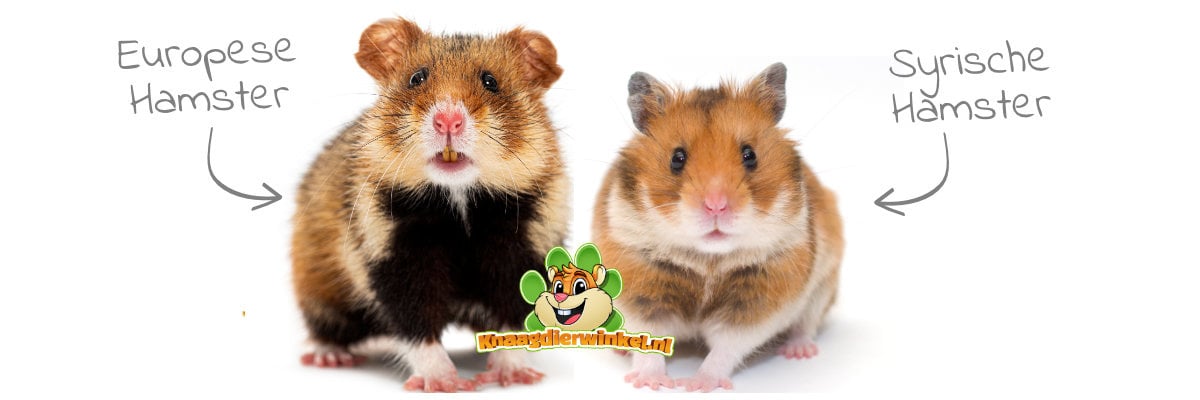
Are the European Hamster (Corn Wolf) and the Syrian Hamster (Golden Hamster) related?
Both the European hamster (Cricetus cricetus) and the Syrian hamster (Mesocricetus auratus) belong to the Cricetidae family, which is known as the hamster family. Although they belong to the same family, they are in different genera and are not closely related.
The European hamster (Cricetus cricetus) belongs to the Cricetus genus, while the Syrian hamster (Mesocricetus auratus) belongs to the Mesocricetus genus. Although they share some similarities in appearance, they have different characteristics and lifestyles.
The European hamster is larger, has a broader head, and has a shorter tail than the Syrian hamster. They also have different habitat preferences. The European hamster lives primarily in open grasslands and farmland, while the Syrian hamster is native to drier, steppe-like regions of the Middle East.
Although they look similar and belong to the same family, the European hamster and the Syrian hamster each have their own unique characteristics and lifestyles.
For extensive information on rodent care, see LICG